

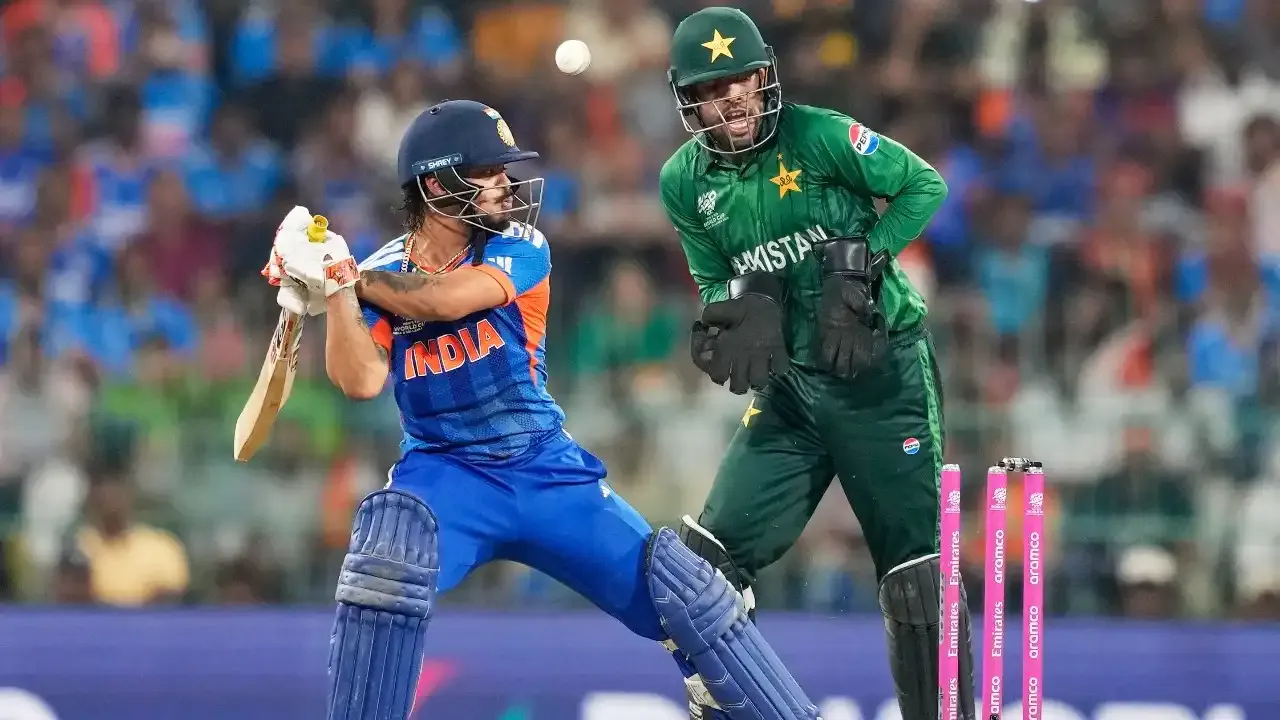

India have entered the Super 8 stage of the ICC Men’s T20 World Cup 2026 unbeaten, reinforcing their status as strong title contenders. However, beneath the impressive results lies a growing tactical concern — the team’s vulnerability against off-spin bowling.
In a format where scoring rates typically exceed eight runs per over, India have managed just 6.23 runs per over against off-spin during the group stage. They faced 102 deliveries of off-spin — the highest among all teams — and their scoring rate is better only than Nepal and Oman among sides that have faced at least six overs of this bowling type. More concerning is the average of 13.25, indicating frequent wickets alongside slow scoring.
Left-handed top order invites spin pressure
India’s batting structure has made it easier for opponents to deploy off-spin early. Six left-handers feature in the top eight, including openers Abhishek Sharma and Ishan Kishan and No. 3 Tilak Varma. This composition offers opposing captains a clear strategy: introduce off-spin early and maintain pressure by bowling into the left-handers.

Namibia captain Gerhard Erasmus was among the first to apply this tactic effectively, using varied angles and release points to disrupt rhythm. Pakistan’s Salman Agha, Usman Tariq and Saim Ayub followed a similar approach, relying on subtle pace changes and disciplined lengths rather than mystery deliveries.
The Netherlands executed the strategy with precision when Aryan Dutt bowled three powerplay overs and claimed key wickets, including Abhishek Sharma and Ishan Kishan. Bowling at consistent speeds with tight control, Dutt exploited skid and accuracy to restrict scoring.
Technical and tactical concerns emerge
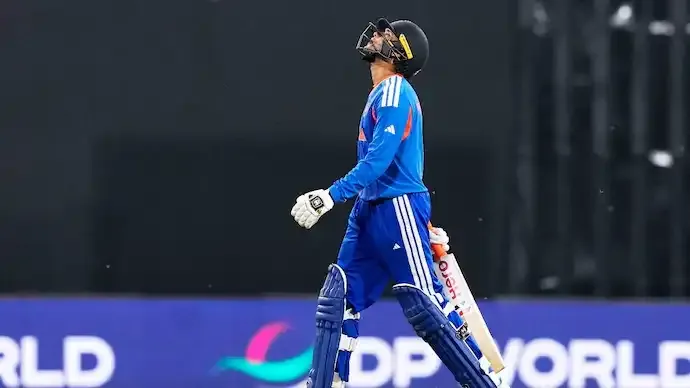
Abhishek Sharma’s tournament struggles reflect the broader challenge. He has recorded three consecutive ducks, with dismissals often occurring while attempting attacking strokes against off-spin. When dismissals cluster against one bowling type, the issue can become both technical and psychological.
India’s assistant coach Ryan ten Doeschate acknowledged the concern following the team’s win over the Netherlands. He noted that the left-heavy batting order makes planning easier for opponents but emphasised that the team remains confident in its chosen lineup. He added that the challenge extends beyond off-spin to a broader need for improved approach against finger spin.
Strategic adjustments under consideration
The Super 8 stage will likely present similar challenges. South Africa can use Aiden Markram’s off-spin, Zimbabwe may rely on Sikandar Raza, West Indies have Roston Chase, and New Zealand possess multiple finger-spin options. The tactical template is now well established.
Questions also surround batting order adjustments. Tilak Varma has largely batted at No. 3, while Suryakumar Yadav anchors the middle overs. Tilak’s role in absorbing early pressure contrasts with Suryakumar’s acceleration later in the innings, complicating straightforward reshuffles.
Pitch conditions have also influenced outcomes. The transition from slower Colombo surfaces to skiddier pitches required adjustments, with bowlers exploiting skid and trajectory to challenge India’s shot selection.
Super 8 stage presents defining test
Despite the concerns, India’s unbeaten run indicates strength in other areas, including pace bowling, fielding, and match control. However, tournaments often hinge on exploiting repeatable weaknesses, especially during knockout stages.
To succeed in the Super 8 phase, India will need improved strike rotation, smarter shot selection, and proactive methods against finger spin to prevent stagnation. If they adapt effectively, they remain strong contenders. If not, a quiet but consistent tactical weakness could prove decisive when the stakes rise in the latter stages of the tournament.






Conversation
Be kind and stay on topic. Comments are moderated; abuse, spam and personal attacks are removed. Report a problem