

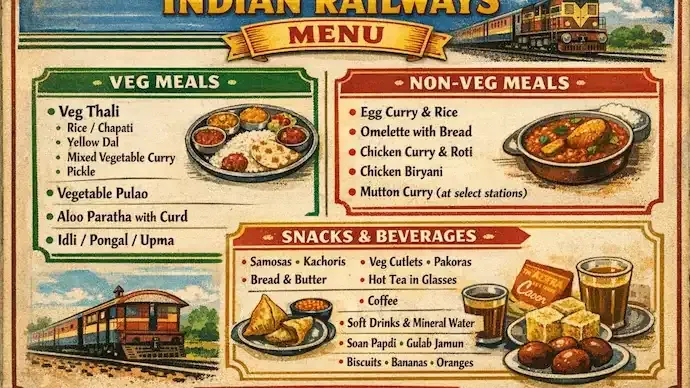

Long before QR-code menus and app-based meal deliveries became part of train journeys, food on Indian Railways carried a distinct charm rooted in simplicity, regional flavours, and shared travel experiences. For passengers in the 1990s, railway meals were not just about convenience — they were an essential part of the journey itself, shaping memories that still evoke nostalgia today.
During that period, railway catering operated without centralised coordination. Years before the formation of Indian Railway Catering and Tourism Corporation (IRCTC), food services were managed by zonal railways, pantry cars, station refreshment rooms, and private vendors. Menus varied depending on the route, onboard facilities, and the resources available at specific stations.
Meals were typically served on steel trays or melamine plates, while tea was poured into thick glass tumblers that became iconic symbols of railway travel. The aroma of freshly fried cutlets often reached coaches before vendors appeared, creating anticipation among passengers. Food did more than satisfy hunger — it marked the rhythm of travel, signalling morning departures, afternoon halts, and evening arrivals.

Vegetarian meals formed the backbone of the railway menu. A standard veg thali usually included rice or chapatis, yellow dal, and a seasonal vegetable such as aloo-gobi, cabbage, beans, or mixed vegetables, accompanied by a small portion of pickle. These meals were designed to withstand reheating and movement during long journeys.
Rice-based dishes such as vegetable pulao and khichdi were common, particularly on overnight routes because they were easy to prepare and transport. Breakfast options varied by region: northern routes featured aloo paratha with curd, while southern routes served idli, pongal, or upma. Bread and butter remained a staple across the network.
Between stations, vendors sold snacks such as samosas, kachoris, cutlets, and sandwiches wrapped in paper. At major junctions, passengers purchased hot pakoras through coach windows during short halts. These exchanges often filled compartments with warmth and aroma, enhancing the communal experience of travel.
Non-vegetarian options were available but limited. Omelettes were common during breakfast, while egg curry with rice or rotis appeared on longer routes. Simple chicken curry and, on select trains, chicken biryani were offered where storage facilities permitted. Mutton dishes were typically found at station refreshment rooms rather than onboard.
Desserts were modest yet memorable — gulab jamun stored in syrup tins, soan papdi in cardboard boxes, and laddoos wrapped in paper. Packets of biscuits circulated among passengers, reinforcing a culture of sharing.
Bottled water was available mainly at major stations through private brands. Many travellers carried metal flasks or refilled containers at station taps, reflecting a time before branded railway water became widespread.
Though limited by infrastructure and logistics, the railway menu of the 1990s reflected regional diversity and authenticity. Each meal carried the flavour of the landscape it travelled through, offering passengers not just sustenance but a sense of place.
For many travellers, these simple meals remain inseparable from memories of long journeys, conversations with strangers, and the timeless rhythm of wheels on tracks.





Conversation
Be kind and stay on topic. Comments are moderated; abuse, spam and personal attacks are removed. Report a problem