

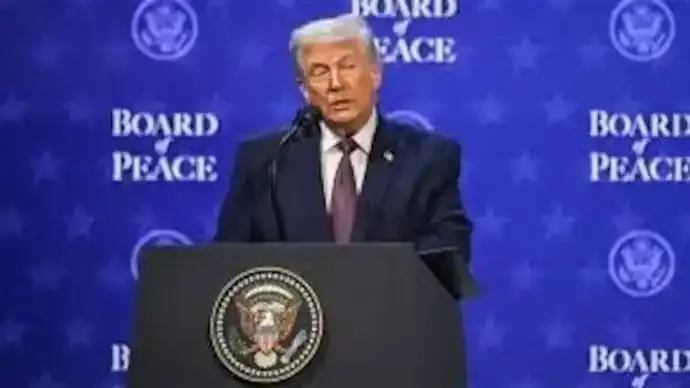

US President Donald Trump announced major financial and security commitments for Gaza at the inaugural Board of Peace meeting in Washington, securing billions in reconstruction pledges and troop support for a proposed international stabilization force. The initiative aims to rebuild the war-affected territory and support long-term peace efforts, though key challenges remain unresolved.
According to Trump, nine participating members agreed to pledge approximately $7 billion toward a Gaza relief and reconstruction package. In addition, five countries committed to deploying troops as part of an international stabilization force intended to help maintain security and support rebuilding efforts.
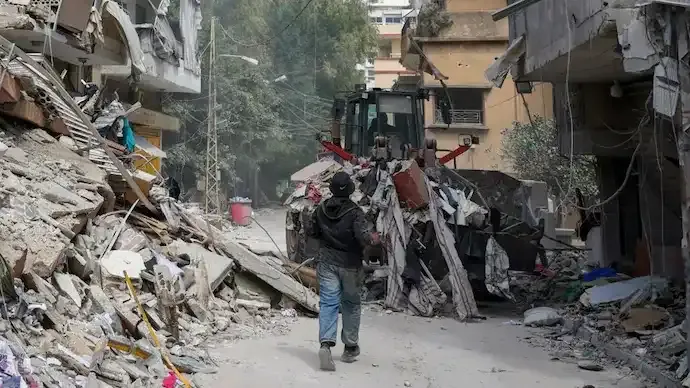
The funding commitments represent an initial step toward reconstruction, although experts estimate that rebuilding Gaza after two years of conflict could cost up to $70 billion. Trump praised participating nations for their contributions but did not provide a timeline for implementation.

He also announced that the United States would pledge $10 billion toward the initiative, though details regarding allocation and congressional approval remain unclear.
Troop deployment and security plans
Countries including Indonesia, Morocco, Kazakhstan, Kosovo and Albania pledged troop contributions to the stabilization force. Egypt and Jordan committed to training police personnel to support civil security functions.
Plans indicate that initial deployments may focus on Rafah, a heavily damaged area where reconstruction efforts are expected to begin. Military officials outlined a framework involving approximately 20,000 soldiers and 12,000 police personnel to support security and law enforcement functions.
Turkish officials indicated readiness to contribute troops while cautioning that the humanitarian situation remains fragile and ceasefire violations continue.
Hamas disarmament remains key hurdle
A central unresolved issue is the disarmament of Hamas, a core demand linked to the ceasefire framework. Israeli officials have reiterated that reconstruction efforts cannot proceed without demilitarization and deradicalization measures.
Trump said Hamas has indicated willingness to disarm but warned of severe consequences if commitments are not honoured. However, detailed mechanisms for implementing disarmament have not been clarified.
US officials acknowledged that significant work remains to ensure lasting peace and stability.
Broader geopolitical implications
The Board of Peace initiative emerged from ceasefire negotiations aimed at ending hostilities between Israel and Hamas. Trump has expanded its scope to address broader global conflicts, prompting debate over whether the platform could evolve into a parallel mechanism alongside existing international institutions.
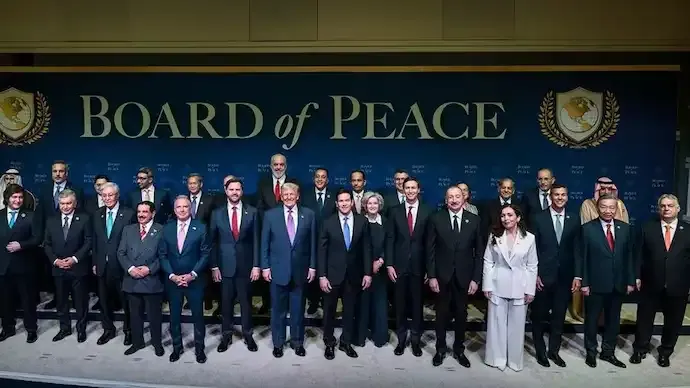
Nearly 50 countries and the European Union participated in the meeting, with several nations attending as observers. Some governments have expressed caution, emphasising the importance of coordination with established international frameworks.
Trump also warned Iran over regional tensions and reiterated calls for nuclear and missile restrictions. The United States has increased its military presence in the region amid ongoing disputes.
The peace talks highlighted both diplomatic progress and the complexity of stabilising Gaza. While funding pledges and troop commitments represent tangible steps forward, long-term stability will depend on political agreements, security guarantees, humanitarian aid delivery, and sustained international cooperation.



Conversation
Be kind and stay on topic. Comments are moderated; abuse, spam and personal attacks are removed. Report a problem