

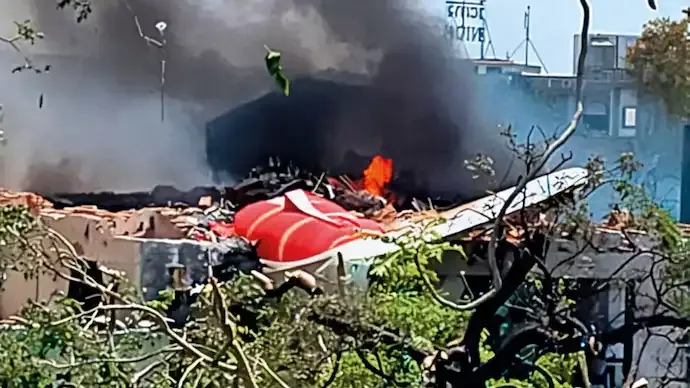

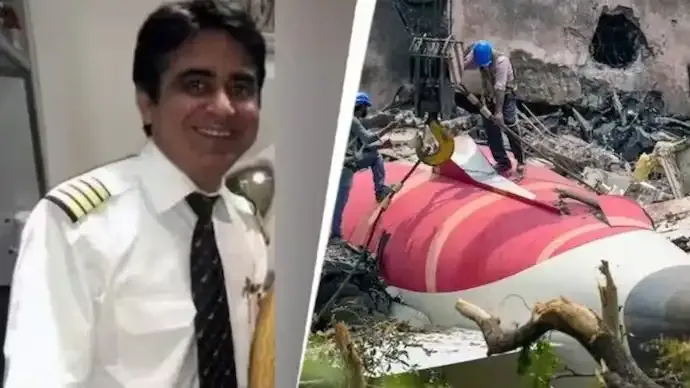
Fresh allegations have emerged over the fatal Ahmedabad Air India Boeing 787 crash, with a US-based aviation safety watchdog claiming that the aircraft involved had a long history of technical problems well before the disaster that killed 260 people. The group has urged investigators to look beyond pilot actions and focus on deeper, systemic engineering and manufacturing flaws in the aircraft.
According to a report cited by the BBC, the Foundation for Aviation Safety submitted a detailed presentation to the US Senate Permanent Subcommittee on Investigations, which last year held multiple hearings on what it described as Boeing’s “broken safety culture.” Boeing has not publicly commented on the NGO’s latest claims.
Aircraft Had Issues From Day One: NGO
The group alleges that the Boeing 787 Dreamliner that crashed in Ahmedabad had experienced technical malfunctions from its very first day of service with Air India. The aircraft, registered as VT-ANB, was among the earliest 787s delivered to the airline, entering service in early 2014 after its first flight in late 2013.

According to documents cited by the Foundation for Aviation Safety, VT-ANB suffered from repeated system malfunctions over the years, including electronics and software failures, wiring damage, tripped circuit breakers, short circuits, loss of electrical current, and overheating of power system components.
The NGO claims these issues were rooted in engineering and manufacturing defects, rather than operational or maintenance lapses alone.
In-Flight Fire Incident in 2022
One of the most serious incidents highlighted by the group occurred in January 2022, when the aircraft’s P100 power distribution panel—a critical component responsible for distributing high-voltage power from the engines—caught fire during a descent into Frankfurt.
Pilots reportedly received multiple fault messages, and post-landing inspections revealed extensive damage that required complete replacement of the panel. The P100 system is one of five such panels on the aircraft and plays a central role in the Dreamliner’s largely electrical architecture.
Broader Pattern of 787 Failures Alleged
The Foundation for Aviation Safety says its concerns go far beyond a single aircraft or airline. It claims to have documented over 2,000 failure reports involving Boeing 787 aircraft operating in the United States, Canada, and Australia.
The group is led by Ed Pierson, a former senior manager at Boeing’s factory in Seattle, who has repeatedly raised alarms about quality control, production pressure, and safety oversight at the aerospace giant.
“These are not isolated events,” the group argues, warning that an excessive focus on pilot actions risks overlooking systemic failures embedded in the aircraft’s design and production process.
Electrical Design Under Scrutiny
The Boeing 787 was designed to rely far more heavily on electrical systems than previous aircraft generations, replacing many mechanical and pneumatic systems with lighter electrical components to improve fuel efficiency. While innovative, this design has also been linked to significant challenges.
In 2013, a Japan Airlines 787 battery fire led to the global grounding of the Dreamliner fleet. The P100 panel itself had already been redesigned in 2010 following a fire on a test aircraft. The NGO also points to water leaks into wiring bays, an issue previously flagged in advisories by the Federal Aviation Administration.
Ahmedabad Crash Investigation Ongoing
The Ahmedabad crash remains under investigation by India’s Aircraft Accident Investigation Bureau (AAIB), with assistance from US authorities, as both the aircraft and its engines were manufactured in the United States.
A 15-page preliminary report released by the AAIB shortly after the crash sparked intense debate. The report noted that moments after take-off, the aircraft’s fuel control switches were moved from “run” to “cut-off,” cutting fuel supply to both engines and causing a rapid loss of thrust. The switches were later reset in an attempt to restart the engines, but the recovery came too late.
The cockpit voice recording included in the report captured one pilot asking why the cut-off switch was triggered, with the other pilot responding that he had not done so.
Pilot Blame Criticised
This revelation led to widespread speculation in India and the US about possible pilot error. However, victims’ families, aviation lawyers, pilot associations, and safety experts have strongly criticised what they call premature conclusions.
They argue that focusing narrowly on pilot actions risks ignoring a long trail of documented technical issues, especially in light of the aircraft’s electrical and systems history. Several groups have warned that such narratives could divert attention from potential design vulnerabilities.
Boeing Maintains Aircraft Is Safe
Boeing has consistently maintained that the 787 Dreamliner remains a safe and reliable aircraft, pointing out that the model had flown commercially for nearly 15 years without a single fatal crash prior to the Ahmedabad disaster.
However, safety advocates insist that the aircraft’s operational record should not preclude scrutiny of recurring faults, particularly when evidence suggests long-standing technical concerns.
As the full investigation continues, pressure is mounting on regulators and investigators to examine all technical evidence in depth, ensuring that systemic issues—if any—are fully identified and addressed before final conclusions are drawn.





Conversation
Be kind and stay on topic. Comments are moderated; abuse, spam and personal attacks are removed. Report a problem