

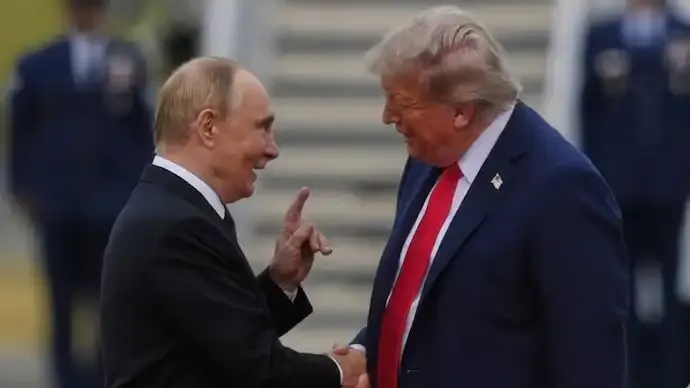

A diplomatic contradiction has emerged over Russia’s participation in United States President Donald Trump’s proposed Board of Peace for Gaza, after the US leader claimed Moscow had already agreed to join, while Russian President Vladimir Putin offered a far more cautious version of events.
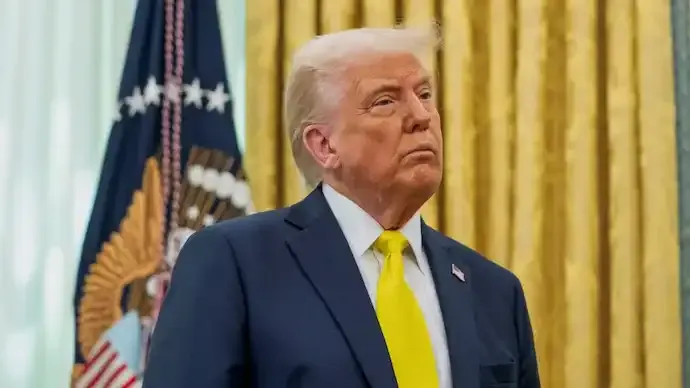
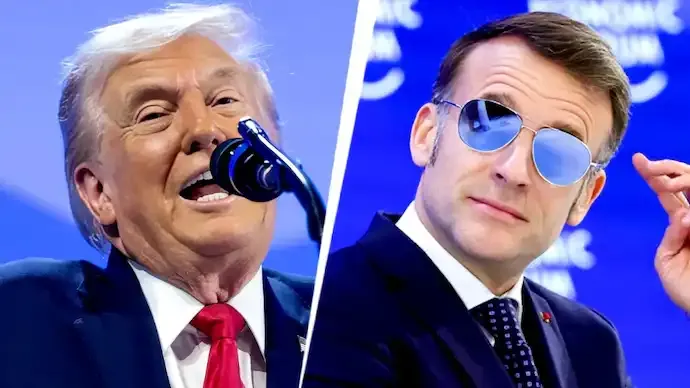
Speaking at the World Economic Forum in Davos, Trump told reporters that Russia had accepted the invitation to be part of the Board, an ambitious US-led initiative aimed at post-war governance, reconstruction, and long-term stabilisation of Gaza.
“He was invited. He’s accepted,” Trump said, referring to Putin, after holding talks with NATO Secretary General Mark Rutte.

However, hours later, Putin publicly contradicted that claim, stating that Russia had not yet taken a final decision and would only do so after consulting its strategic partners.
Putin: No Final Decision Yet
Addressing a meeting of Russia’s National Security Council in a televised statement, Putin said Moscow was still studying the proposal and had instructed the Russian Ministry of Foreign Affairs to examine the documents in detail.
“Regarding our participation in the ‘Peace Board’, the Ministry of Foreign Affairs has been instructed to study the documents received by us and consult with our strategic partners. Only after that will we be able to respond to the invitation extended to us,” Putin said.
He added that Russia continues to support efforts aimed at strengthening international stability and acknowledged what he described as the current US administration’s role in searching for solutions to global conflicts, including Ukraine.
USD 1 Billion Offer, With Conditions
Despite stopping short of confirming Russia’s participation, Putin announced that Moscow could contribute USD 1 billion toward permanent membership of the Board — with a significant caveat. The funds, he said, would come from Russian assets frozen by the United States during the previous administration.
“Even before we decide on the issue of participation in the composition and work of the Peace Board, taking into account Russia’s special relationship with the Palestinian people, we could give USD 1 billion from Russian assets frozen under the previous US administration,” Putin stated.
He stressed that any process involving Russia must contribute positively to a long-term settlement of the Palestinian-Israeli conflict and remain consistent with relevant United Nations resolutions, while fully respecting Palestinian aspirations and rights.
What Is the Gaza Peace Board?
The Board of Peace for Gaza was initially pitched by Trump as a small group of influential global leaders who would oversee governance and reconstruction in the war-ravaged enclave after the conflict ends. Over time, however, the scope of the initiative has expanded significantly.
According to diplomatic sources, the board is now envisioned as a broader conflict-mediation platform with a mandate extending beyond Gaza, prompting comparisons with the UN Security Council — and raising concerns among critics about its potential to sideline existing multilateral institutions.
Growing List of Participants
The White House has said that around 35 world leaders have agreed to participate in the Board out of nearly 50 invitations issued so far.
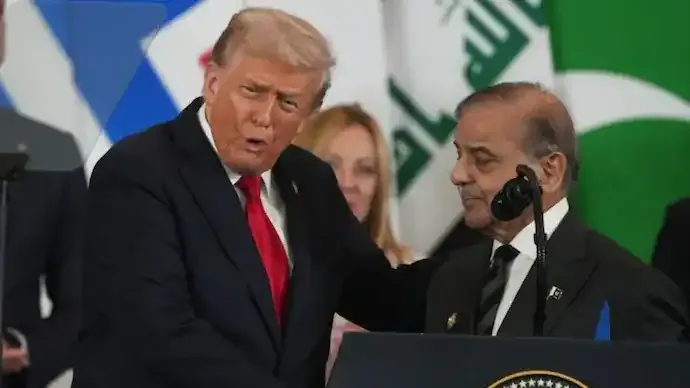
Countries that have reportedly confirmed participation include Israel, Saudi Arabia, the United Arab Emirates, Bahrain, Jordan, Qatar, and Egypt. NATO members Turkey and Hungary have also signed on, along with Morocco, Pakistan, Indonesia, Kosovo, Uzbekistan, Kazakhstan, Paraguay, Vietnam, Armenia, Azerbaijan, and Belarus.
India has received an invitation as well, but New Delhi has not yet taken a final call on whether it will join the initiative.
A Diplomatic Grey Area
The divergence between Trump’s public assertion and Putin’s measured response highlights the uncertainty surrounding the Gaza Peace Board’s formation and legitimacy. While Washington appears eager to project momentum and broad international backing, Moscow’s stance suggests that participation may come with conditions, consultations, and strategic calculations.
As global attention remains fixed on Gaza’s future, the episode underscores a broader reality: despite bold announcements, the proposed Board’s final composition, authority, and role in global diplomacy remain far from settled.





Conversation
Be kind and stay on topic. Comments are moderated; abuse, spam and personal attacks are removed. Report a problem