

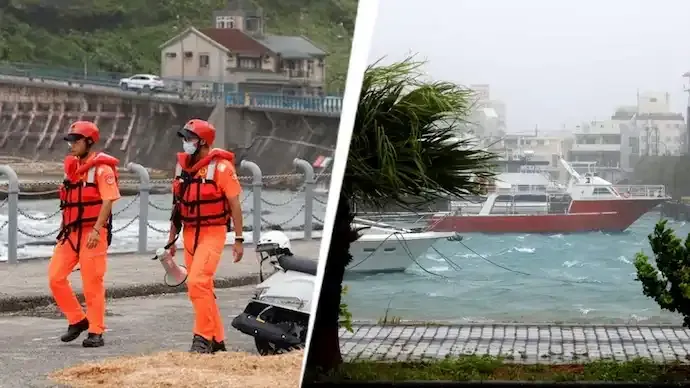

Typhoon Bavi swept across Japan's southern islands on Saturday, leaving behind widespread disruption before advancing towards Taiwan and China's eastern coastline, prompting authorities across East Asia to issue warnings over flooding, landslides and destructive winds.
The powerful storm disrupted transportation, caused large-scale power outages and forced thousands of residents to evacuate as governments prepared for its impact.
Typhoon Bavi Hits Japan's Southern Islands
The storm battered the Sakishima island chain in Japan's Okinawa Prefecture, with Ishigaki Island bearing the brunt of the severe weather.

Powerful winds scattered debris across roads while rough seas battered harbours and coastal communities.
According to weather authorities, Typhoon Bavi was packing maximum sustained winds of 144 kmph, with gusts expected to reach nearly 198 kmph.
Officials warned residents to remain indoors as the risk of flooding, landslides and structural damage remained high.
Flights Cancelled, Thousands Without Power
The severe weather brought transportation across Okinawa to a standstill.
Key disruptions included:
- 345 flights cancelled
- Ferry services suspended
- More than 24,000 households left without electricity
- Travel across Ishigaki Island largely halted
Authorities advised residents to avoid unnecessary travel until weather conditions improved.
Taiwan Evacuates Thousands
As the typhoon moved closer, Taiwan activated emergency measures across vulnerable regions.
Thousands of residents were evacuated from high-risk areas amid forecasts of torrential rainfall and strong winds.
Officials warned that heavy rainfall could trigger flash floods and landslides, particularly in mountainous regions.
Emergency response teams remained on standby while local governments prepared shelters for displaced residents.
China Braces for Landfall
After crossing waters near Taiwan, Typhoon Bavi is forecast to make landfall near the eastern Chinese city of Wenzhou.
Chinese authorities have issued warnings for coastal communities, urging fishing vessels to return to port and residents in vulnerable areas to complete precautionary measures before the storm arrives.
Emergency agencies have also prepared for possible flooding, storm surges and transport disruptions.
East Asia on High Alert
The storm has placed Japan, Taiwan and China on heightened alert as emergency services continue monitoring its movement.
Authorities across the region have urged residents to:
- Follow official weather advisories.
- Avoid coastal and flood-prone areas.
- Prepare emergency supplies.
- Limit travel until conditions improve.
With Typhoon Bavi expected to continue affecting the region over the coming days, officials remain concerned about prolonged rainfall, infrastructure damage and disruptions to transportation.
Featured Snippet
Typhoon Bavi battered Japan's southern islands with winds reaching 144 kmph, causing hundreds of flight cancellations, widespread power outages and severe travel disruption. Taiwan evacuated thousands ahead of the storm, while China prepared for landfall near Wenzhou with flood and landslide warnings.
Key Highlights
- Typhoon Bavi struck Japan's Sakishima Islands with powerful winds.
- Over 345 flights were cancelled across Okinawa.
- More than 24,000 households lost electricity.
- Taiwan evacuated thousands as the storm approached.
- China is preparing for landfall near Wenzhou.
- Authorities warned of flooding, landslides and damaging winds.
Conclusion
Typhoon Bavi has emerged as one of the most disruptive storms to impact East Asia this season, leaving widespread disruption across Japan while prompting large-scale evacuations in Taiwan and emergency preparations in China. As the system continues its path across the region, authorities remain focused on protecting lives and minimising damage from heavy rainfall, flooding and destructive winds.
FAQs
1. Where did Typhoon Bavi first make a major impact?
The storm first battered Japan's southern Sakishima Islands in Okinawa Prefecture, particularly Ishigaki Island.
2. How strong is Typhoon Bavi?
It recorded maximum sustained winds of 144 kmph, with gusts reaching up to 198 kmph.
3. How many flights were cancelled?
Around 345 flights were cancelled because of the storm.
4. Why is Taiwan evacuating residents?
Authorities fear heavy rainfall could trigger flooding and landslides in vulnerable regions.
5. Where is Typhoon Bavi expected to make landfall in China?
The storm is forecast to make landfall near Wenzhou on China's eastern coast.
6. What disruptions has Typhoon Bavi caused?
The storm has caused flight cancellations, ferry suspensions, power outages, evacuations and severe travel disruptions across East Asia.







Conversation
Be kind and stay on topic. Comments are moderated; abuse, spam and personal attacks are removed. Report a problem