

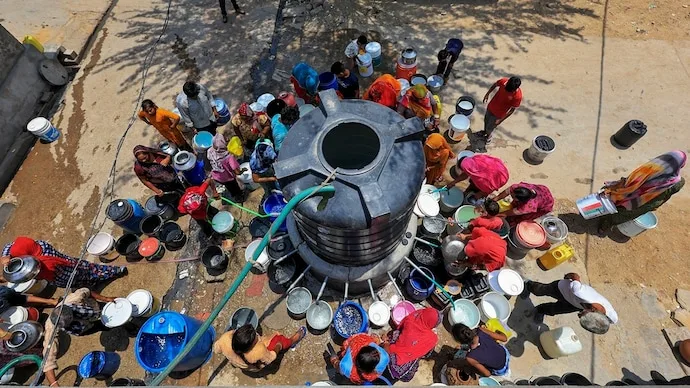

Water stress in Maharashtra and Gujarat is beginning to emerge as a major concern after an uneven monsoon season, with reservoir levels under pressure across several regions. Maharashtra has announced a minimum 10 per cent water cut across urban and rural areas from October 16, citing deficient rainfall and the possibility of drought-like conditions.
Maharashtra Water Resources Minister Girish Mahajan said dam-wise and sector-wise planning had been carried out based on available water stocks up to August 31, 2027, while accounting for the possible impact of El Nino.
Drinking water has been given the highest priority, with authorities instructed to reserve supplies until August 2027 after accounting for evaporation, silt and unauthorised extraction. Irrigation releases will be considered only after drinking water, livestock and fodder requirements are addressed.

Maharashtra Plans Emergency Water Measures
The state will maintain an additional 10 per cent emergency water reserve in every dam. Local authorities have also been asked to conduct special drives to reduce water leakage and operate sewage treatment plants at full capacity.
Treated wastewater will be used for activities such as gardening, construction and washing. Industries have been directed to reuse or recycle at least 30 per cent of the water they consume.
Gujarat's Reservoir Levels Show Regional Divide
Gujarat is facing a more uneven situation. State Emergency Operations Centre data showed that 109 of the state's 206 dams were below 50 per cent capacity by the end of September.
Another 28 dams were between 50 and 70 per cent full, while 37 had storage between 70 and 100 per cent. Only 32 dams were completely full.
The Sardar Sarovar Dam, however, reached its full reservoir level of 138.68 metres for the seventh time since its inauguration in 2017. The contrasting figures underline how reservoir availability can differ significantly between river basins and regions.
Karnataka Also Seeks Drought Relief
The water pressure extends beyond Maharashtra and Gujarat. Karnataka Chief Minister D K Shivakumar has sought Rs 7,142.64 crore in drought relief from the Centre. Of the state's 240 taluks, 217 have been identified as drought-affected, with 177 officially declared drought-hit.
The situation could become more significant during the Rabi season. Maharashtra has prioritised foodgrains and fodder, while water for perennial crops will depend on available supplies.
El Nino adds another layer of uncertainty, although Indian rainfall is influenced by several factors, including ocean temperatures, monsoon circulation and regional weather patterns. With the monsoon over, reservoir levels and water management will determine how the country navigates the months ahead.
Relevant Link: India Meteorological Department Official Website





Conversation
Be kind and stay on topic. Comments are moderated; abuse, spam and personal attacks are removed. Report a problem