Why DMK Wants Impeachment of Madras High Court Judge Over Thiruparankundram Deepam Row

Why DMK Wants Impeachment of Madras High Court Judge Over Thiruparankundram Deepam Row

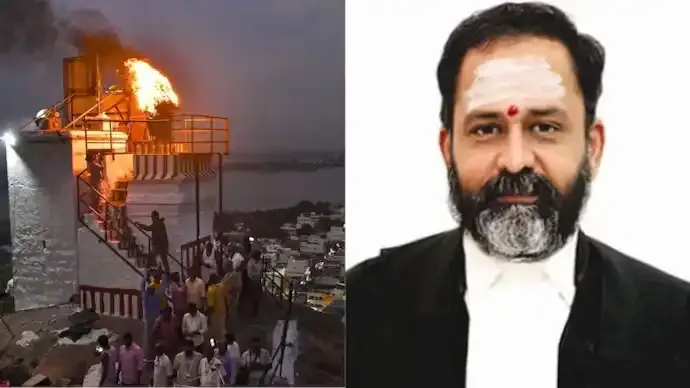
A legal and political standoff has erupted in Tamil Nadu after DMK lawmakers initiated moves to file an impeachment motion against Madras High Court judge Justice GR Swaminathan, whose recent order on lighting the Karthigai Deepam lamp at Thiruparankundram triggered state-wide tension.

The judge had directed officials of the Arulmighu Subramaniya Swamy Temple to light the traditional lamp on the Deepathoon pillar, located close to the Sikandar Badusha Dargah—a location the state considers highly sensitive. The DMK government refused to enforce the order, citing law-and-order risks, setting off clashes between police and pro-Hindu organisations.

What began as a dispute over a ritualistic location has now escalated into a confrontation involving the judiciary, state government, political parties, religious groups, and even Parliament—culminating in the Supreme Court agreeing to hear Tamil Nadu’s challenge against the directive.


WHAT WAS THE COURT ORDER?

Justice Swaminathan’s ruling instructed temple authorities to light the lamp at Deepathoon by 6 pm on December 4, following a petition by four devotees. Despite objections regarding the site’s proximity to the dargah and the existing practice of lighting the lamp elsewhere on the hill, the judge emphasised:

  • Lighting the lamp would not affect the rights of the dargah or Muslim community.

  • Not lighting it might undermine the temple’s ownership over some hilltop areas due to alleged attempts by mosque trustees to encroach upon the land.

  • The temple must “remain vigilant” to prevent encroachment, citing past disputes and a 1923 judgment outlining ownership.

The judge’s interpretation contradicted a 2017 Division Bench ruling, a point central to DMK’s current impeachment push.


WHAT IS DMK’S POSITION?

The DMK argues the order is:

  • Inconsistent with existing case law, especially the 2017 High Court judgment.

  • Potentially inflammatory in a region where communal sensitivities are high.

  • Politically volatile with only months left for Assembly elections.

DMK leader TR Baalu raised the issue in Parliament, alleging the BJP was attempting to “ignite communal tensions” in Tamil Nadu by exploiting the controversy.


CLASHES ON THE GROUND

Hours after the order, members of Hindu Makkal Katchi, Hindu Tamilar Katchi, Hanuman Senai, and Hindu Munnani attempted to climb the hill to light the lamp. The temple did not comply with the 6 pm deadline, leading to:

  • Crowd mobilisation outside the temple

  • Attempts to breach the hillock

  • Clashes between protestors and police

The law-and-order fallout intensified pressure on the state government.


MATTER REACHES SUPREME COURT

Tamil Nadu challenged the order in the Supreme Court, which has agreed to hear the case urgently. The apex court will now examine whether the High Court’s directive should stand, especially amid concerns over public safety and legal conflict with earlier rulings.

The controversy highlights how a symbolic religious ritual has become a flashpoint at the intersection of politics, law, religion, and state authority.

Prev Article
Supreme Court Refuses Urgent Hearing in IndiGo Crisis, Says Govt Must Act First
Next Article
Rahul Gandhi Questions Why CJI Was Removed from Panel Selecting Election Commissioners

Related to this topic: