
The cultural and spiritual connection between India and Iran goes back thousands of years, long before the rise of modern political borders or religions. While today’s Iran is widely recognised as a Shia Islamic nation, its ancient roots reveal a deep historical bond with India through shared languages, traditions, and religious beliefs.
Historians and scholars studying ancient civilizations often point to the remarkable similarities between the early Indo-Iranian cultures. These connections can be traced back more than 4,000 years to communities that lived across the Eurasian steppe and later migrated into regions that are now parts of India and Iran.
These ancient groups carried with them common linguistic traditions, spiritual ideas, and ritual practices. Over time, one branch moved south into the Indian subcontinent while another settled in the region that later became known as Persia, or modern-day Iran.
One of the most fascinating aspects of this shared heritage lies in the similarities between the Vedic traditions of ancient India and the religious practices of Zoroastrianism in Iran. Zoroastrianism, one of the world’s oldest known religions, developed in ancient Persia and contains concepts that closely resemble elements found in the Vedas.
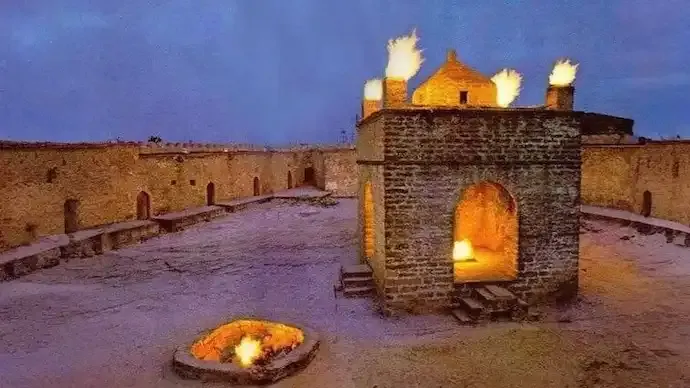
In both traditions, fire holds deep spiritual significance. Fire is considered a sacred symbol representing purity, divine presence, and the connection between humans and the spiritual world. Zoroastrian fire temples and Vedic fire rituals both reflect this shared reverence for sacred fire.
Another interesting linguistic and theological connection can be seen in the terms “Ahura” and “Asura.” In Zoroastrian tradition, Ahura refers to divine beings and is associated with Ahura Mazda, the supreme deity in the faith. In early Vedic literature, the word Asura initially had a similar meaning connected with powerful divine beings before its meaning evolved differently in later Hindu texts.
These parallels suggest that ancient Indo-Iranian societies once shared a common spiritual and linguistic framework before their traditions gradually developed in different directions.
Even the name “Iran” itself is believed to originate from the term “Aryan,” which historically referred to the ancient Indo-Iranian peoples. The region was once known as “Aryanam,” meaning the land of the Aryans, highlighting its deep connection with early Indo-European cultural history.
Historical evidence of Indo-Iranian cultural exchange can also be seen in places such as the Ateshgah Fire Temple in Baku, Azerbaijan. This temple, associated with fire worship traditions, was used by Zoroastrians as well as Hindu and Sikh merchants from the Indian subcontinent who travelled through Central Asia for trade.
The presence of Sanskrit inscriptions at the site further reflects the deep historical interactions between communities across the Indian subcontinent and ancient Persian regions.
These connections highlight a shared civilizational past that extends beyond modern religious identities. For centuries, India and Iran exchanged ideas in fields such as philosophy, language, science, and culture.

Understanding this ancient relationship offers a broader perspective on the deep historical links between the two civilizations. It also reminds us that cultural connections between nations often stretch far beyond contemporary political and religious boundaries.

The story of Ahura and Asura symbolises not just theological differences but also the shared roots of two ancient civilizations that have influenced each other for millennia.


