AIFF Unveils 21-Year ISL Roadmap Inspired by LaLiga, Premier League and Bundesliga

AIFF Unveils 21-Year ISL Roadmap Inspired by LaLiga, Premier League and Bundesliga

The All India Football Federation has rolled out an ambitious 21-year roadmap for Indian domestic football, drawing inspiration from Europe’s most successful leagues such as LaLiga, the Premier League, and the Bundesliga. The blueprint is being positioned as a long-term solution to stabilise the Indian Super League (ISL) and the I-League amid persistent administrative uncertainty.

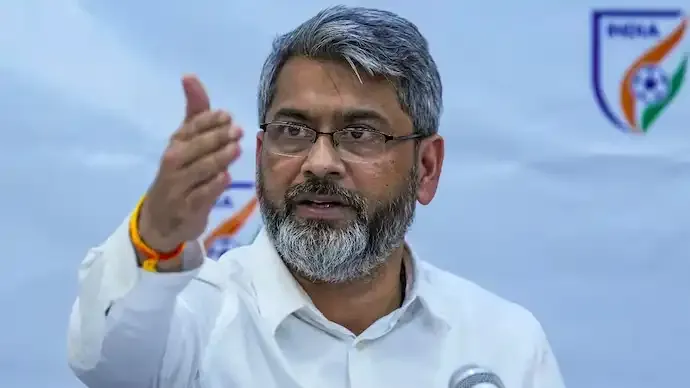
AIFF president Kalyan Chaubey, who has been under sustained scrutiny over governance issues within Indian football, said the federation deliberately studied global best practices while designing the framework. He stressed that the objective was to bring clarity, structure and professionalism to the management of India’s top two football competitions.

According to Chaubey, the roadmap lays out how the ISL and I-League will be managed, administered, promoted and developed over the next two decades. He said the federation examined the governance models of elite European leagues to understand how long-term stability, financial oversight and sporting integrity are maintained.

At the core of the proposed structure is a two-tier governance mechanism aimed at separating strategic oversight from daily operations. The first pillar is a governing council, envisioned as the highest supervisory authority for the leagues. This body will be responsible for long-term planning, financial oversight and major policy decisions.

The governing council is expected to include representatives from football clubs, AIFF office bearers, commercial partners and independent members with no conflicts of interest. It is likely to meet at least once annually, preferably before the start of each season, to review the league’s direction and approve key decisions.

The second pillar is a management committee, which will oversee the day-to-day functioning of the leagues. Headed by the AIFF secretary-general, this committee will handle operational issues, scheduling, coordination with clubs and implementation of regulations. Unlike the governing council, the management committee is expected to meet more frequently during the season.

In addition to these two bodies, the AIFF has proposed multiple specialised committees to ensure professional governance. These panels will focus on competition regulations, disciplinary matters and compliance with statutes. The federation has said that all committees will function in alignment with AIFF rules as well as regulations laid down by the Asian Football Confederation and FIFA.

Indian football has faced repeated criticism for inconsistent league timelines, lack of transparency and strained relations between stakeholders. By introducing a clearly defined governance hierarchy inspired by European models, the AIFF hopes to move the system away from ad-hoc decision-making.

However, observers note that while the roadmap appears comprehensive on paper, its success will depend on execution, stakeholder cooperation and the federation’s ability to rebuild trust. With Indian football searching for stability, the proposed 21-year plan marks a significant attempt to bring long-term structure to a system that has long struggled with uncertainty.

Prev Article
KL Rahul’s Rajkot ODI Hundred Celebration Explained: Why the Gesture Was Special
Next Article
India Open Badminton: Monkey Spotted at Delhi Stadium After Venue Faces Criticism

Related to this topic: