

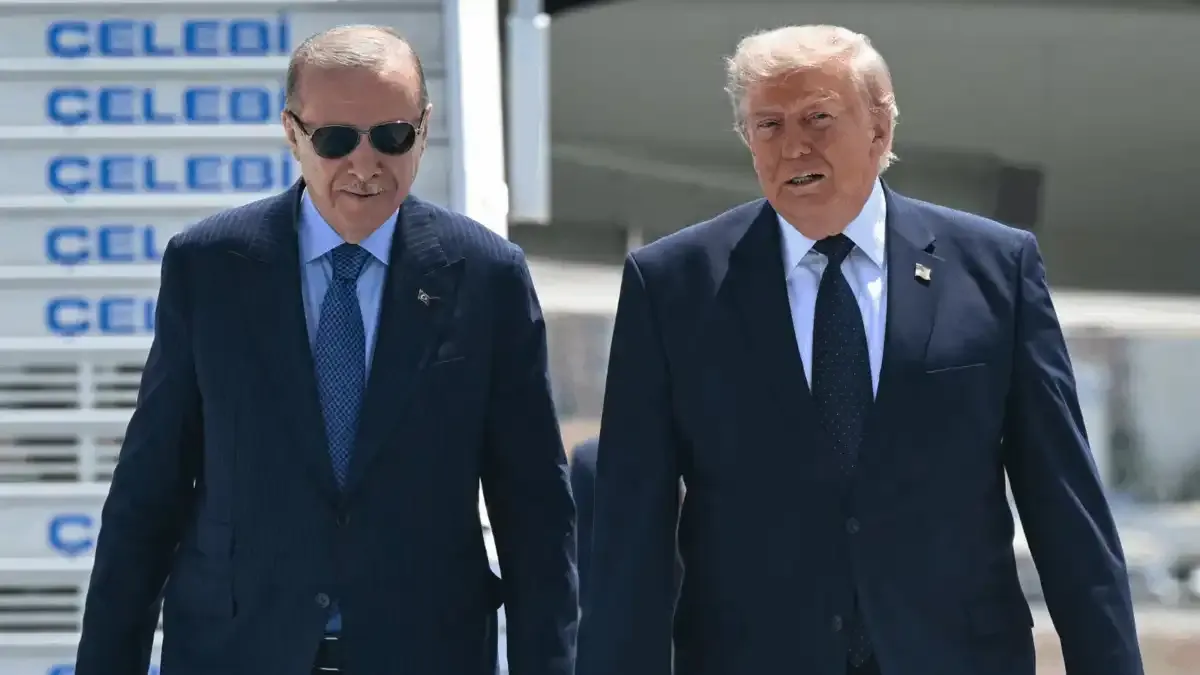

US President Donald Trump's decision to lift sanctions on Turkey and reopen the possibility of selling F-35 stealth fighter jets marks a major shift in American foreign policy. While the proposal is yet to become a formal defence deal, it has already sparked concern in Israel and is being closely monitored in India because of Ankara's growing military partnership with Pakistan.
Key Highlights
- Donald Trump has lifted US sanctions imposed on Turkey over its S-400 purchase.
- Washington is again considering selling F-35 stealth fighter jets to Ankara.
- Israel fears the move could weaken its military edge in the Middle East.
- India is closely watching Turkey's expanding defence ties with Pakistan.
- Turkey must still overcome several hurdles before any F-35 sale becomes reality.
Why the US Is Reconsidering F-35 Sales to Turkey
Turkey was removed from the F-35 programme in 2019 after purchasing Russia's S-400 air defence system.
The United States argued that operating Russian S-400 systems alongside F-35 stealth aircraft could expose sensitive radar signatures and compromise the fighter jet's stealth capabilities.

As a result:
- Turkey was expelled from the F-35 programme.
- CAATSA sanctions were imposed in 2020.
- Congress blocked Ankara's return unless the S-400 issue was resolved.
Now, under President Donald Trump, Washington is attempting to rebuild ties with Turkey, citing its strategic location between Europe, Asia and the Middle East.
Trump has described Turkey as a more reliable ally and indicated that F-35 sales are once again under consideration.
What Makes the F-35 So Important?
The Lockheed Martin F-35 Lightning II is among the world's most advanced fifth-generation fighter aircraft.
Key capabilities include:
- Stealth technology
- Advanced electronic warfare systems
- Network-centric combat capabilities
- Precision strike missions
- Air superiority operations
Because of its sensitive technology, the US carefully controls which countries are allowed to purchase the aircraft.
Why Israel Opposes the Proposal
Israel has been the strongest opponent of supplying F-35 aircraft to Turkey.
Its concerns include:
Preserving Military Superiority
Israel has long maintained qualitative military superiority in the region through advanced US military technology.
The addition of Turkish-operated F-35s could reduce that advantage.
Deteriorating Bilateral Relations
Relations between Israel and Turkey have worsened in recent years over Gaza, Syria and broader regional security issues.
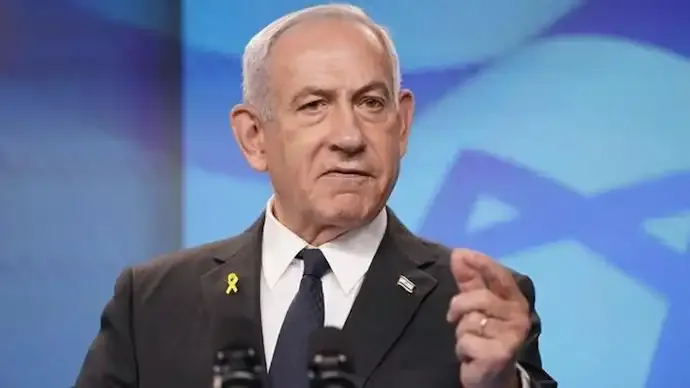
Israeli Prime Minister Benjamin Netanyahu has publicly argued that transferring fifth-generation stealth aircraft to Ankara could destabilise the Middle East.
Regional Security Concerns
Israeli officials believe stronger Turkish air power could alter the regional balance, particularly given Ankara's increasingly assertive foreign policy.
Why India Is Watching Closely
Although Turkey is geographically distant from India, the proposed deal carries strategic implications.
Turkey's Defence Cooperation with Pakistan
Turkey and Pakistan have steadily expanded military cooperation through:
- Joint military exercises
- Defence technology transfers
- Naval cooperation
- Drone exports
- Intelligence collaboration
The partnership attracted greater attention after Turkey openly backed Pakistan during Operation Sindoor.
Potential Future Scenarios
While there is no indication that US-made F-35s would be supplied to Pakistan or used directly against India, defence analysts note that strategic cooperation between Turkey and Pakistan could influence future military planning.
India is therefore expected to monitor any developments closely.
Can Turkey Actually Get the F-35?
Despite Trump's announcement, several obstacles remain.
Turkey still needs to:
- Resolve the S-400 issue.
- Address concerns within the US Congress.
- Meet American technology security requirements.
- Finalise a formal defence agreement.
Until then, the proposal remains a policy intention rather than a completed defence deal.
Why the Decision Matters
If approved, the sale could influence:
- NATO dynamics.
- US-Turkey relations.
- Israel's regional military advantage.
- Defence planning across the Middle East.
- India's long-term security assessments involving Pakistan.
The decision therefore carries geopolitical implications far beyond bilateral US-Turkey relations.
FAQs
Why was Turkey removed from the F-35 programme?
Turkey was removed after purchasing Russia's S-400 air defence system, which the US believed could compromise F-35 stealth technology.
Why is Trump reconsidering the sale?
The Trump administration says it wants to improve relations with Turkey and views Ankara as a strategically important NATO ally.
Why does Israel oppose Turkey receiving F-35 jets?
Israel fears the sale could reduce its military superiority and alter the regional balance of power.
Should India be concerned?
India is monitoring the situation because of Turkey's expanding defence cooperation with Pakistan, although no direct link to Pakistan receiving F-35s currently exists.
Has Turkey officially received the F-35?
No. The US has only indicated it is willing to consider the sale. Several political and technical hurdles remain.
Conclusion
Donald Trump's decision to reopen discussions on supplying F-35 fighter jets to Turkey represents a significant shift in US foreign policy. While Israel sees the move as a potential threat to regional military balance, India is watching developments through the lens of Turkey's deepening defence relationship with Pakistan. Whether the deal ultimately materialises will depend on unresolved issues surrounding Turkey's Russian S-400 system and approval within the United States.







Conversation
Be kind and stay on topic. Comments are moderated; abuse, spam and personal attacks are removed. Report a problem