

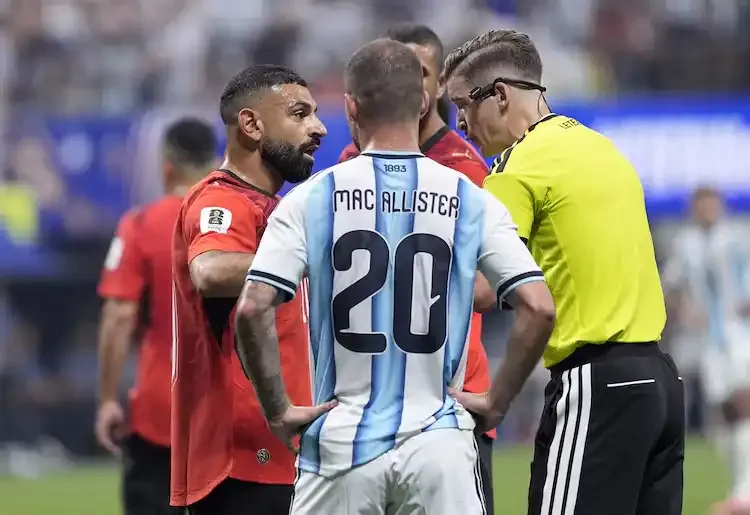

For decades, football fans demanded technology to eliminate costly refereeing mistakes. Today, the Video Assistant Referee (VAR) has made officiating more accurate than ever—but it has also become one of the sport's most controversial innovations.
The FIFA World Cup 2026 has once again placed VAR under intense scrutiny, with several high-profile decisions reigniting debates about consistency, fairness and whether technology has changed football's emotional essence forever.
Key Highlights
- VAR has significantly reduced major refereeing errors.
- Controversial reviews at the 2026 FIFA World Cup have sparked fresh debate.
- Critics argue technology has reduced spontaneous celebrations.
- Supporters believe VAR has made football fairer.
- The biggest challenge remains consistency in applying reviews.
What Is VAR?
VAR, or Video Assistant Referee, is football's video review system designed to help match officials correct clear and obvious errors.

Officials in a dedicated video operation room monitor multiple camera feeds and can recommend reviews for only four situations:
- Goals
- Penalty decisions
- Direct red cards
- Mistaken identity
The final decision, however, still rests with the on-field referee.
Why Was VAR Introduced?
Football has witnessed several infamous refereeing mistakes throughout history.
Incidents such as Diego Maradona's famous "Hand of God" goal in 1986 and Frank Lampard's disallowed goal against Germany at the 2010 FIFA World Cup highlighted the need for technological assistance.
VAR was introduced with one clear objective—to improve fairness by correcting decisive officiating mistakes.
The 2026 World Cup Has Reignited the Debate
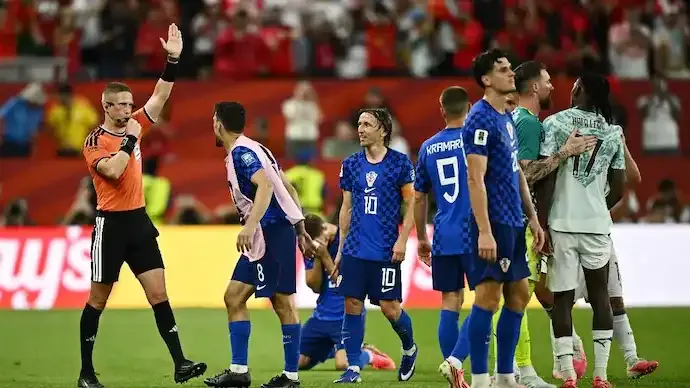
While VAR has improved accuracy, the FIFA World Cup 2026 has shown that technology alone cannot eliminate controversy.
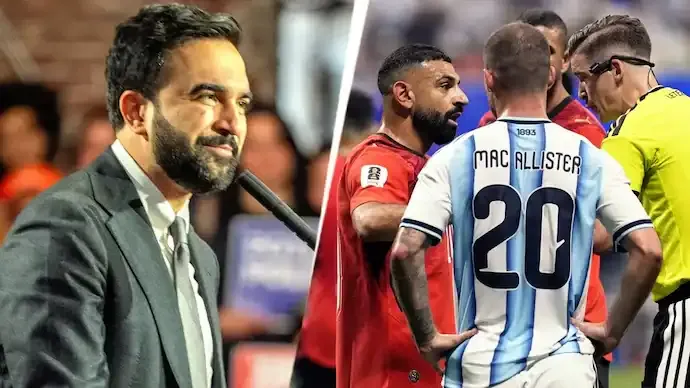
One of the biggest talking points came during Argentina's dramatic 3-2 victory over Egypt in the Round of 16.
Egypt believed they had doubled their lead before VAR intervened to disallow the goal after identifying a foul earlier in the attacking sequence. The decision dramatically changed the momentum of the match and sparked widespread debate over how far back officials should review incidents.
The controversy highlighted a recurring criticism of VAR—while the technology is objective, the decision about when to intervene remains subjective.
Accuracy vs Emotion
Perhaps VAR's greatest achievement has also become its biggest criticism.
Modern technology can detect offsides by just a few centimetres, ensuring decisions are technically correct.
However, fans increasingly find themselves celebrating goals with hesitation, unsure whether celebrations will survive a lengthy review.
Instead of instant joy, football has entered an era of uncertainty where every goal carries an invisible question mark.
The Consistency Problem
Many debates surrounding VAR no longer focus on whether technology works.
Instead, the question is whether it is applied consistently.
Supporters often question:
- Why some incidents receive extensive reviews while others do not.
- How far back officials should look before overturning a goal.
- Why similar challenges sometimes produce different outcomes.
These concerns have become central to discussions surrounding modern football officiating.
Technology Cannot Eliminate Human Judgment
Although VAR can determine objective facts such as offsides or whether the ball crossed the goal line, many football decisions remain matters of interpretation.
Questions like:
- Was there enough contact for a penalty?
- Was a tackle reckless?
- Was a handball deliberate?
cannot always be answered by technology alone.
The final interpretation still depends on referees.
Has VAR Improved Football?
Supporters argue that:
- Major refereeing mistakes are now far less common.
- Critical matches are decided more fairly.
- Technology protects the integrity of competitions.
Critics believe:
- Goal celebrations have lost spontaneity.
- Reviews often interrupt the rhythm of matches.
- Consistency remains a significant issue.
The reality lies somewhere between the two.
VAR has made football more accurate, but it has not made every decision universally acceptable.
FAQs
What does VAR stand for?
VAR stands for Video Assistant Referee, a technology-assisted review system used in football.
When can VAR intervene?
VAR can only review goals, penalty incidents, direct red cards and cases of mistaken identity.
Why is VAR controversial?
Many fans believe reviews interrupt the flow of matches and that inconsistent application creates fresh controversies despite improved accuracy.
Has VAR reduced refereeing mistakes?
Yes. VAR has significantly reduced clear officiating errors, particularly involving offsides, penalties and red cards.
Why is the 2026 FIFA World Cup discussing VAR again?
Several controversial decisions during the tournament, particularly involving Argentina and Egypt, have renewed global debate over consistency and fairness.
Conclusion
VAR has fundamentally changed football. While it has eliminated many historic refereeing mistakes, it has also transformed how fans experience the sport.
The 2026 FIFA World Cup shows that technology can improve accuracy, but it cannot eliminate disagreement. Football's biggest debates are no longer about what happened—they're about what feels fair.
As technology continues to evolve, the conversation around VAR is unlikely to end anytime soon.






Conversation
Be kind and stay on topic. Comments are moderated; abuse, spam and personal attacks are removed. Report a problem