

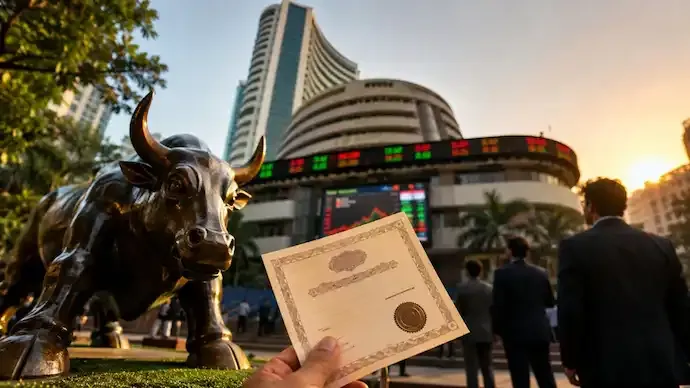

Most investors believe there are only two ways to own shares of a company—either apply during its Initial Public Offering (IPO) or buy the stock after it gets listed on a stock exchange.
But there's another route that has quietly gained popularity over the past few years.
Across India, investors are increasingly buying pre-IPO or unlisted shares, allowing them to invest in companies long before their public debut. From startups preparing for listing to established firms awaiting regulatory approvals, a growing number of businesses have shares changing hands in the unlisted market.

The opportunity sounds attractive. After all, buying a company's shares before it lists could mean entering at a lower valuation and benefiting if the business grows successfully.
However, investing before an IPO is very different from buying listed stocks. Prices are negotiated privately, liquidity is limited, and there is no guarantee that every company will eventually list on the stock exchange.
Here's everything investors need to know before putting money into pre-IPO shares.
What Are Pre-IPO Shares?
Pre-IPO shares are equity shares of a company that are bought and sold before the company gets listed on a recognised stock exchange.
These shares already exist because companies issue equity during different stages of their growth to:
- Founders
- Employees through Employee Stock Ownership Plans (ESOPs)
- Angel investors
- Venture Capital (VC) firms
- Private Equity (PE) funds
- Strategic investors
Since these shares are already issued, they can legally be transferred through off-market transactions.
Contrary to popular belief, investors don't have to wait for an IPO to become shareholders.
Is Buying Unlisted Shares Legal?
Yes.
Buying and selling unlisted shares is completely legal in India.
The transfer of these shares takes place under the provisions of the Companies Act, 2013, while settlement occurs through depositories like NSDL and CDSL.
Unlike listed stocks, however, these transactions do not happen through NSE or BSE.
Instead, they are executed through private agreements between buyers and sellers.
How Does the Pre-IPO Market Work?
Unlike listed shares that trade continuously on stock exchanges, pre-IPO shares are traded Over-the-Counter (OTC).
There is:
- No exchange order book
- No live trading screen
- No daily market price
- No instant liquidity
Instead, prices are negotiated privately.
The process usually works like this:
- An investor expresses interest in buying shares.
- An intermediary identifies an available seller.
- Both parties negotiate the price.
- Legal documentation is completed.
- Shares are transferred through an off-market transaction into the buyer's demat account.
Who Sells These Shares?
The sellers are usually existing shareholders who wish to partially or fully exit before listing.
These may include:
- Startup founders
- Employees holding ESOPs
- Angel investors
- Venture capital firms
- Private equity investors
- Family offices
- Early institutional investors
Many investors prefer booking profits before the IPO instead of waiting for listing.
Who Can Buy Pre-IPO Shares?
Unlike popular belief, pre-IPO investing isn't reserved only for institutional investors.
Retail investors can also purchase unlisted shares, provided they:
- Have a Demat account
- Complete KYC requirements
- Find a genuine intermediary
- Meet the minimum transaction value set by the seller
However, availability depends entirely on whether existing shareholders are willing to sell.
Why Are Investors Interested in Pre-IPO Stocks?
The biggest attraction is simple:
Getting in early.
If a company performs well after listing, early investors may benefit from significant appreciation.
Several companies witnessed strong demand even before listing because investors believed in their long-term growth story.
Other reasons include:
- Opportunity to buy before public valuation
- Better allocation than oversubscribed IPOs
- Exposure to promising private businesses
- Potential long-term wealth creation
Why IPO Allotments Push Investors Towards Pre-IPO Shares
India's IPO market has become extremely competitive.
Many popular IPOs receive subscriptions running into dozens of times the shares available.
As a result:
- Retail investors often receive no allotment.
- Even successful applicants get only one lot.
- Large investors struggle to build meaningful exposure.
The unlisted market offers an alternative for investors willing to take higher risks.
How Are Pre-IPO Shares Priced?
Unlike listed companies, there is no continuously traded market price.
Pricing depends on factors such as:
Latest Funding Round
Recent fundraising valuations often act as reference points.
Company's Financial Performance
Revenue growth, profitability and cash flow matter significantly.
Industry Outlook
Fast-growing sectors usually attract premium valuations.
IPO Expectations
Companies expected to list soon often command higher prices.
Demand and Supply
Limited availability can sharply increase prices.
Advantages of Buying Pre-IPO Shares
Early Entry
Investors participate before public listing.
Potential Valuation Upside
If purchased reasonably, investors may benefit from future price appreciation.
Access to Private Companies
Many high-growth businesses remain unlisted for years.
Long-Term Wealth Creation
Successful companies may generate returns well beyond listing gains.
Risks You Should Never Ignore
While the upside attracts investors, pre-IPO investing carries substantial risks.
1. Liquidity Risk
There is no exchange where shares can be sold instantly.
Finding buyers can take weeks or months.
2. Limited Information
Private companies disclose far less information than listed companies.
Financial statements may not always be easily accessible.
3. Valuation Risk
Buying an excellent company at an excessively high valuation can reduce future returns.
4. IPO May Never Happen
One of the biggest misconceptions is that every company eventually lists.
Reality is different.
Companies can:
- Delay IPOs
- Withdraw IPO plans
- Remain private indefinitely
5. Regulatory Risk
Investors should avoid dealing with unauthorised intermediaries or unofficial platforms.
Always verify the legitimacy of the transaction.
Taxation of Unlisted Shares
Investors should also understand the tax implications.
Generally:
- Capital gains taxation depends on the holding period.
- Tax treatment changes after the company gets listed.
- Investors should consult a qualified tax professional before making significant investments.
Tax laws may change over time, making professional advice essential.
Due Diligence Before Buying
Experts recommend checking the following before investing:
Company Details
- Corporate Identification Number (CIN)
- Registered office
- Promoters
Financial Statements
- Revenue growth
- Profitability
- Debt levels
Shareholding Pattern
Understand who owns the company.
Valuation
Compare with similar listed companies.
IPO Timeline
Ask whether listing plans are realistic.
Documentation
Ensure proper share transfer documentation.
Red Flags Investors Should Watch
Avoid investments where:
- Promoters provide unrealistic return guarantees.
- Financial statements are unavailable.
- Share transfers appear unofficial.
- Prices seem excessively inflated.
- Pressure is created for immediate payment.
If something sounds too good to be true, it usually is.
Should Retail Investors Buy Pre-IPO Shares?
Pre-IPO investing is not suitable for every investor.
It works best for those who:
- Already have diversified portfolios.
- Can remain invested for several years.
- Understand valuation.
- Can tolerate illiquidity.
Financial experts generally recommend limiting exposure to a small portion of the overall investment portfolio, as these investments carry higher uncertainty than listed equities.
Investor Checklist Before Buying Pre-IPO Shares
Before investing, ask yourself:
- Is the intermediary genuine?
- Is the company financially strong?
- Are audited financial statements available?
- Is the valuation reasonable?
- Can I hold the investment for several years?
- What if the IPO gets delayed?
- Am I investing because of research—or fear of missing out?
If you cannot confidently answer these questions, it may be wise to reconsider.
Featured Snippet
Pre-IPO shares are unlisted company shares that investors can legally buy before an IPO through private off-market transactions. While they offer early access to a company's growth, they also involve higher risks such as limited liquidity, valuation uncertainty and no guarantee that the company will eventually go public.
Key Highlights
- Pre-IPO shares are legally traded before a company's stock market listing.
- Transactions occur through the unlisted or OTC market.
- Retail investors can participate through authorised intermediaries.
- Early investing may provide valuation advantages.
- IPOs are never guaranteed, even after DRHP filing.
- Liquidity remains one of the biggest risks.
- Investors should conduct thorough due diligence before investing.
- Pre-IPO investments should form only a limited portion of a diversified portfolio.
Conclusion
Pre-IPO investing offers investors the opportunity to participate in a company's journey before it reaches the stock market. For those who identify fundamentally strong businesses at reasonable valuations, the rewards can be meaningful over the long term.
However, these opportunities come with equally significant risks. Unlike listed equities, unlisted shares lack liquidity, transparency and price discovery. Not every company eventually launches an IPO, and even listed companies may not deliver expected returns.
Rather than chasing the next popular IPO, investors should approach pre-IPO opportunities with patience, careful research and realistic expectations. In investing, getting in early is valuable only when backed by sound fundamentals—not by fear of missing out.
FAQs
1. What are pre-IPO shares?
Pre-IPO shares are equity shares of a company purchased before it gets listed on a stock exchange.
2. Is buying unlisted shares legal in India?
Yes. Buying and selling unlisted shares is legal through off-market transactions.
3. Can retail investors buy pre-IPO shares?
Yes, provided they complete KYC, have a demat account and purchase through legitimate intermediaries.
4. Where are unlisted shares traded?
They are traded over-the-counter (OTC) rather than on stock exchanges.
5. Do all companies eventually launch an IPO?
No. Many companies delay, cancel or indefinitely postpone listing plans.
6. What is the biggest risk in pre-IPO investing?
Liquidity risk. Investors may not find buyers quickly if they wish to sell before listing.
7. How should investors value pre-IPO shares?
Investors should examine financial statements, recent funding rounds, peer valuations and business fundamentals rather than relying solely on market hype.
8. Should beginners invest in pre-IPO shares?
Beginners should participate cautiously and only allocate a small portion of their portfolio after understanding the associated risks.






Conversation
Be kind and stay on topic. Comments are moderated; abuse, spam and personal attacks are removed. Report a problem