
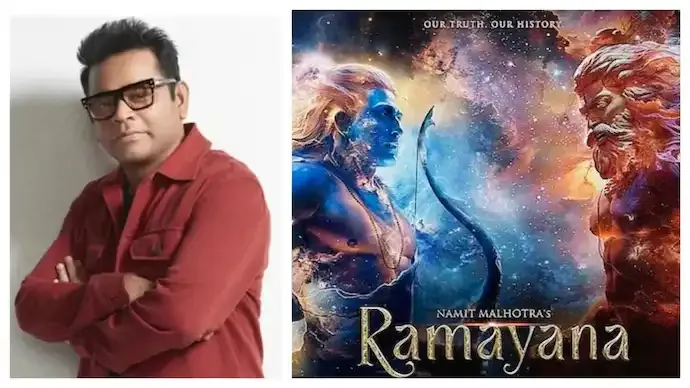
Oscar-winning composer A. R. Rahman has spoken candidly about his deep personal connection with Indian epics while discussing his musical collaboration on Ramayana. In a recent interaction, Rahman highlighted how the timeless values of the Ramayana and Mahabharata shaped his worldview during his formative years and continue to influence his artistic philosophy.
Reflecting on his early education, Rahman shared that exposure to Hindu epics was a natural part of his upbringing. He explained that he studied in a traditional school environment where stories from the Ramayana and Mahabharata were revisited every year. This consistent engagement, he said, helped him understand the deeper ethical and philosophical layers of the epics rather than viewing them solely through a religious lens.
For Rahman, the enduring power of the Ramayana lies in its moral foundation. He emphasised that the narrative centres on virtue, integrity and higher ideals — principles that transcend individual belief systems. According to him, stories that promote ethical conduct and selflessness remain relevant across cultures, generations and faiths.
Speaking about the broader idea of learning and knowledge, Rahman underscored that wisdom should never be confined by its source. He noted that meaningful lessons can emerge from diverse experiences, whether positive or challenging. In his view, rejecting ideas based on their origin limits personal and collective growth.
The composer also addressed the importance of rising above narrow thinking. He stressed that true artistic and spiritual progress requires individuals to move beyond ego, division and self-interest. Rahman said that when people elevate their thinking, creativity becomes radiant and inclusive, allowing art to act as a bridge rather than a barrier.
One of the most discussed aspects of Rahman’s comments was his emphasis on diversity behind the Ramayana project. He pointed out that the collaboration itself reflects global harmony — with Hans Zimmer, a Jewish composer, working alongside him, a Muslim, on a story rooted in Hindu tradition. According to Rahman, this convergence symbolises how Indian stories are capable of resonating with the world when shared with sincerity and respect.
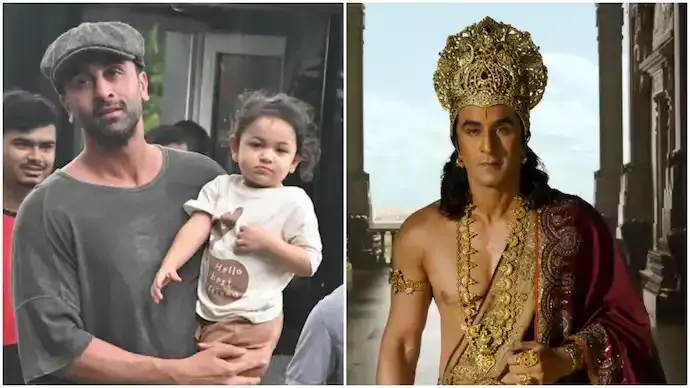
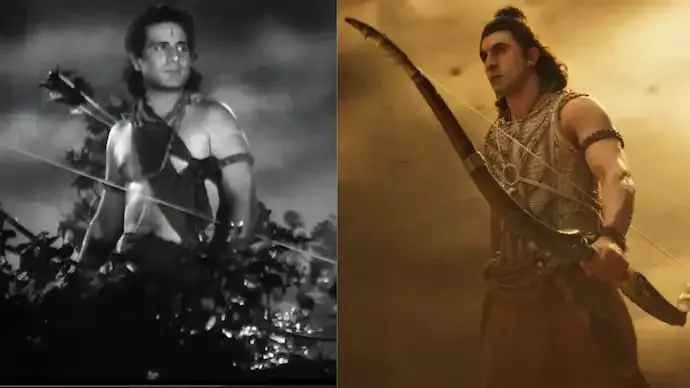
The upcoming cinematic adaptation of Ramayana draws from sage Valmiki’s ancient Sanskrit epic and aims to present the story on a grand international scale. The film features Ranbir Kapoor as Lord Rama and Sai Pallavi as Goddess Sita, while Yash portrays the demon king Raavana. Sunny Deol appears as Lord Hanuman, with an ensemble cast supporting the epic narrative.
Planned as a two-part cinematic spectacle, Ramayana is scheduled for theatrical releases during Diwali 2026 and Diwali 2027. With its scale, diverse creative team and philosophical depth, the film is positioned not only as a retelling of an ancient story but also as a global cultural offering.
Rahman’s perspective reinforces the idea that art, when rooted in universal values, transcends boundaries of religion and identity. His approach to Ramayana reflects a belief that stories anchored in morality and compassion belong to humanity as a whole.




Conversation
Be kind and stay on topic. Comments are moderated; abuse, spam and personal attacks are removed. Report a problem