

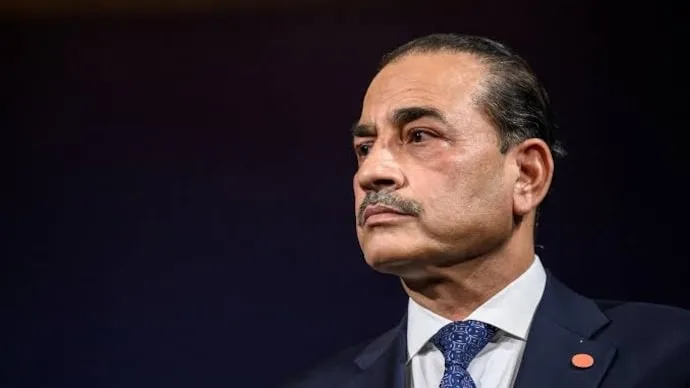

Pakistan's military chief, Field Marshal Asim Munir, faces a difficult strategic decision as Saudi Arabia confronts escalating attacks by Yemen's Houthi rebels. Reports of possible Pakistani troop deployments have revived comparisons with Egyptian President Gamal Abdel Nasser's disastrous military intervention in Yemen during the 1960s.
The dilemma centres on whether Pakistan can fulfil its defence commitments to Saudi Arabia without becoming involved in a prolonged regional conflict. With domestic security challenges, economic pressures and sensitive relations with Iran, any expansion of Pakistan's military role could carry significant consequences.
Saudi Arabia's Security Crisis Puts Pakistan Under Pressure
Saudi Arabia has reportedly faced intensified Houthi missile and drone attacks targeting critical infrastructure, including Riyadh airport and oil facilities.

The Houthis have also reportedly expanded their control along Yemen's Red Sea coastline and declared a blockade of the Bab el-Mandeb Strait, a strategically important maritime passage.
Pakistan's defence relationship with Saudi Arabia includes a bilateral Strategic Mutual Defence Agreement signed in September 2025 and a tripartite Makkah Defence Agreement involving Türkiye in August 2026.
According to the reported terms of the latter agreement, an armed attack against one participating country would be treated as an attack against all.
These commitments have increased scrutiny of Islamabad's possible military response.
Conflicting Reports Over Pakistani Troop Deployments
Reports about Pakistan's involvement remain disputed.
The source article cites an October 7 report alleging Pakistani airstrikes against Houthi targets and claiming that approximately 8,000 Pakistani troops had already been deployed to Saudi Arabia.
Other reports suggested that Pakistan could send between 30,000 and 40,000 troops. However, Pakistan's information ministry rejected the claims about military operations and described reports of large-scale deployments as speculative.
On October 9, Pakistan's foreign ministry acknowledged the presence of Pakistani military personnel and resources in Saudi Arabia but did not disclose any additional deployment figures.
Consequently, the scale and nature of any new Pakistani military involvement remain uncertain.
Domestic Instability Complicates Munir's Decision
Pakistan is simultaneously confronting serious internal challenges, including militant violence in Balochistan and Khyber Pakhtunkhwa, political unrest and economic difficulties.
The source article reports that the federal government imposed emergency measures in Khyber Pakhtunkhwa on October 11 amid worsening political and security tensions.
Pakistan also continues to depend on international financial assistance, making its economic relationship with Saudi Arabia particularly important.
In April 2026, Saudi Arabia and Qatar reportedly provided Pakistan with a combined $5 billion financial lifeline.
These circumstances create competing pressures: maintaining strategic ties with Riyadh while avoiding military commitments that could stretch Pakistan's resources.
Iran and Houthi Warnings Raise Escalation Risks
Another major concern is Pakistan's relationship with Iran, which has longstanding ties with the Houthi movement.
Iranian foreign ministry spokesperson Esmaeil Baghaei reportedly warned on October 4 that additional foreign military intervention could further complicate the conflict.
The Houthis also reportedly warned that Pakistani military participation against them would make Pakistan a potential target.
Such warnings raise concerns about the security of Pakistani forces, commercial shipping and other regional interests.
However, the possibility of Houthi retaliation does not establish that attacks against Pakistan are imminent.
Why Egypt's Yemen War Matters
The historical comparison centres on Egypt's intervention in Yemen during the 1960s under President Gamal Abdel Nasser.
What began as a limited deployment expanded into a major military campaign involving tens of thousands of Egyptian troops.
The prolonged conflict imposed heavy financial and military costs on Egypt and contributed to the strain on its armed forces before the 1967 Arab-Israeli War.
For Pakistan, the historical lesson is the danger of entering a conflict whose duration, objectives and costs may prove difficult to control.
Pakistan previously declined to participate directly in Saudi Arabia's Yemen campaign in 2015, with Parliament supporting neutrality while affirming its commitment to Saudi territorial security.
The current situation is different because of subsequent defence agreements and Pakistan's evolving regional commitments.
Ultimately, Munir's challenge is to balance Pakistan's security obligations with the risks of deeper involvement in Yemen. Whether Islamabad expands its military role remains uncertain, but the possibility has renewed debate over the costs of regional alliances and foreign interventions.






Conversation
Be kind and stay on topic. Comments are moderated; abuse, spam and personal attacks are removed. Report a problem