

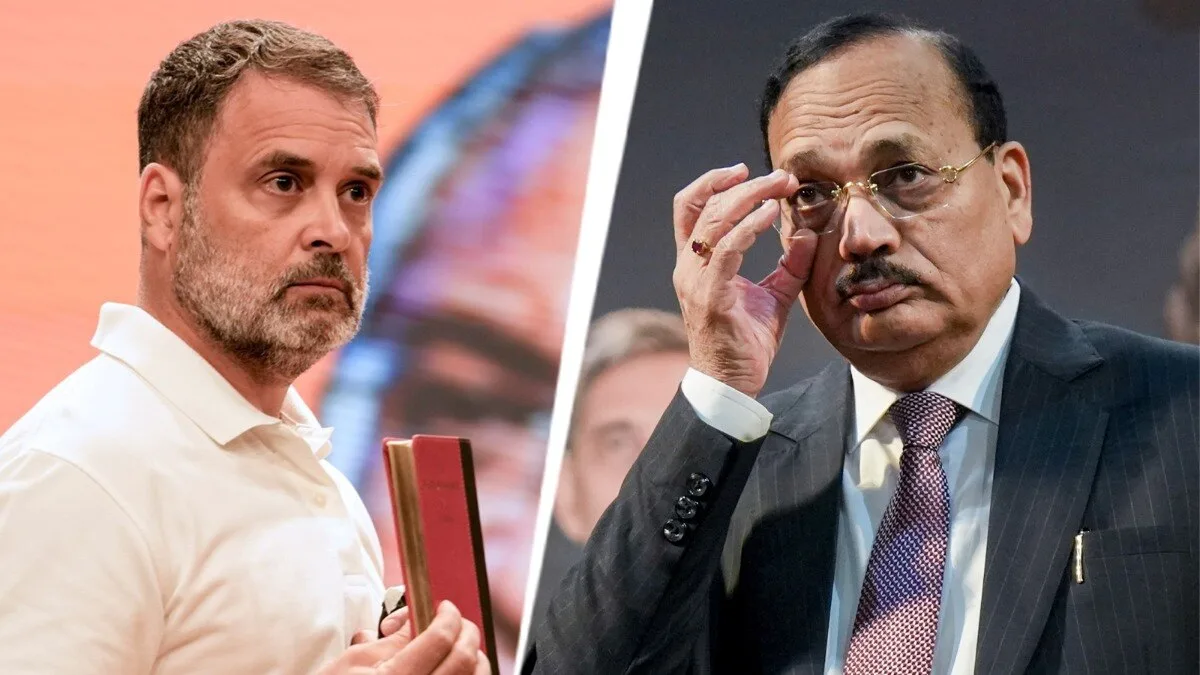

CJI Surya Kant has declined a meeting request from Congress leaders Rahul Gandhi and Mallikarjun Kharge, citing the constitutional principle of separation of powers. In a letter explaining his decision, the CJI said discussing matters already pending before the Supreme Court in a meeting would be inconsistent with judicial propriety.
The request came ahead of the INDIA bloc’s planned march to the Supreme Court over its demands concerning Chief Election Commissioner Gyanesh Kumar. The Congress leaders had sought an appointment on Monday to submit a memorandum outlining their concerns.
Why the CJI Declined the Meeting
In his letter, CJI Surya Kant stated that the issues raised by the Congress leaders were already sub judice. He said convening a meeting to discuss pending cases would conflict with the separation of powers, which forms part of the Constitution’s basic structure.

“Convening a meeting to discuss pending cases would wholly contravene the principle of Separation of Powers, an intrinsic facet of the basic structure doctrine of the Constitution of India,” the CJI wrote.
The letter also clarified that the Supreme Court did not have the administrative authority to address the issues highlighted by Gandhi and Kharge. However, the CJI emphasised that the judiciary remained responsible for considering matters affecting citizens’ rights through the established judicial process.
Supreme Court Points Leaders Towards Legal Proceedings
CJI Surya Kant reiterated the Supreme Court’s commitment to protecting the fundamental rights of every Indian citizen. He noted that citizens could seek enforcement of these rights by following the procedures established by law.
The CJI suggested that Gandhi and Kharge invoke the court’s judicial powers rather than submit a memorandum through its administrative side. This distinction, he indicated, was important because questions involving pending cases must be dealt with through formal legal proceedings.
The letter also noted that matters involving similar issues were scheduled to be heard by the Supreme Court on Tuesday.
Petition Can Be Filed Physically or Online
The CJI informed the Congress leaders that they could submit a petition on Monday, either physically at the Supreme Court between 10:30 am and 4:30 pm or through the court’s electronic filing system, which permits submissions at any time.
He assured them that any petition filed would be considered at the earliest possible opportunity, in accordance with the law.
The decision comes amid heightened political activity surrounding the INDIA bloc’s planned demonstration and its demands concerning the Chief Election Commissioner. The CJI’s response makes clear that the leaders can approach the court through the prescribed judicial process, while maintaining the separation between administrative interactions and adjudication of pending legal matters.








Conversation
Be kind and stay on topic. Comments are moderated; abuse, spam and personal attacks are removed. Report a problem