

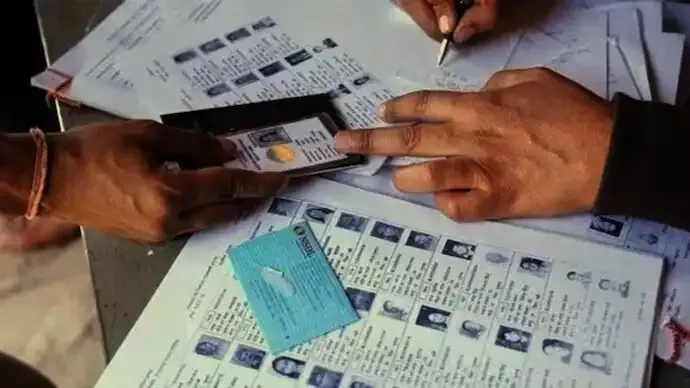

In a rare example of administrative integrity, a Booth Level Officer (BLO) in West Bengal has won widespread praise after strictly following procedure under the Special Intensive Revision (SIR) of electoral rolls — even when it meant serving an official notice to his own wife.
Debshankar Chattopadhyay, a government school teacher posted as a BLO, was carrying out his duties as part of the voter list revision exercise initiated by the Election Commission of India. During the verification process, he received a list of electors who were required to appear for a hearing to resolve discrepancies in their voter records.
While carefully cross-checking the names, Debshankar was surprised to find both his own name and that of his wife, Anindita Chattopadhyay, included in the list.

Why the Hearing Notice Was Issued
According to officials, the system flagged discrepancies in both entries. In Debshankar’s case, his name was incorrectly spelt due to a data entry error. In his wife’s voter record, a major anomaly was detected — a 50-year age gap was shown between her and her father, triggering automatic scrutiny under SIR norms.
Such inconsistencies require mandatory hearings, during which electors must clarify and submit corrected details to ensure accuracy in the electoral roll.
Duty Before Personal Comfort
Instead of seeking any exemption or special handling, Debshankar followed the rulebook strictly. As required under protocol, he visited his residence and formally handed over the hearing notice to his wife.
Though initially taken aback, Anindita later expressed appreciation for her husband’s commitment to his responsibilities.
“I was shocked at first, but I am proud that he followed the rules without hesitation,” she said. “He did what any honest officer should do.”
Neighbours Applaud Integrity
The incident quickly drew attention in the neighbourhood, with residents praising Debshankar for placing duty above personal convenience. Many described the act as a reminder of how grassroots election officials play a crucial role in safeguarding democratic processes.
Local residents said such examples help restore public faith in election-related exercises, especially amid heightened political scrutiny of voter list revisions.
SIR Under Spotlight
The Special Intensive Revision is a nationwide exercise aimed at correcting errors, removing duplicates, and ensuring only eligible voters are included. West Bengal is among the states where the process has drawn attention, with claims, objections, and hearings underway ahead of upcoming elections.
Election officials maintain that the process is purely administrative and rule-driven, and Debshankar’s case demonstrates how procedures are applied uniformly — without exception.
As one neighbour remarked, “If every official worked like this, there would be no doubts about elections.”





Conversation
Be kind and stay on topic. Comments are moderated; abuse, spam and personal attacks are removed. Report a problem