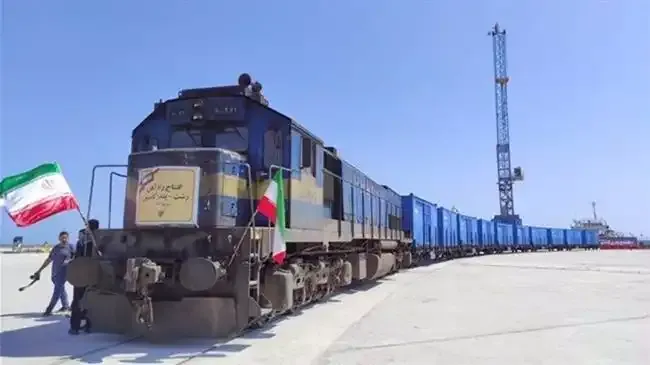
Amid rising geopolitical tensions, sanctions, and disruptions to maritime routes, discussions have resurfaced about whether rail connections between Iran and China could serve as a viable alternative to sea trade. However, logistics experts say that while rail links exist, they are far from capable of replacing maritime shipping.
The idea of a direct China–Iran railway lifeline is often discussed whenever Iran faces restrictions on maritime trade or increased military pressure in the region. Some suggest that such a corridor could help Tehran maintain large-scale trade even if sea routes become blocked.
In reality, analysts point out that no single dedicated railway line directly connects China and Iran. What is often described as the China–Iran railway is actually a multi-country rail corridor that uses existing railway infrastructure across several Central Asian states.
The corridor passes through multiple countries between China and Iran, including transit states that each have their own regulatory systems, border controls, and diplomatic frameworks. This means cargo trains must cross several international borders before reaching their final destination.
Each border crossing introduces logistical challenges such as customs checks, regulatory approvals, and potential political complications. These factors slow down the movement of freight compared with maritime shipping routes.
Another major challenge is rail gauge differences. Countries across Central Asia use different railway track widths, which means cargo often has to be transferred from one train to another at certain points along the route. This process increases transit time and operational complexity.
Capacity limitations also present a major obstacle. Railway freight systems operate within strict limits defined by yard capacity, train frequency, and track availability. Even if the rail corridor operates at full capacity, it cannot match the massive cargo volumes transported by global shipping fleets.
Maritime trade allows for extremely large shipments to move across oceans in bulk. Oil, industrial goods, and raw materials are typically transported using large cargo ships capable of carrying enormous quantities in a single voyage.
In contrast, rail freight involves smaller loads spread across multiple trains. Even with efficient logistics, rail transport cannot handle the same scale of cargo as maritime shipping.
Experts also highlight that the rail corridor between China and Iran passes through regions that require careful diplomatic coordination. Because multiple sovereign countries are involved, transit agreements and political stability are essential for maintaining uninterrupted rail operations.
Despite these limitations, the rail corridor still has value for specific types of cargo. Rail transport can be useful for smaller, high-value shipments that need to move faster than sea transport but do not require the capacity of large cargo ships.
For Iran, the rail route provides an additional trade channel rather than a full replacement for maritime shipping.
As geopolitical tensions continue to affect global trade routes, the China–Iran rail corridor may help maintain some level of connectivity. However, logistical realities make it clear that rail alone cannot replace the scale, efficiency, and capacity offered by sea transport.
Prev Article
India Identifies Safe Airports to Evacuate Stranded Citizens Amid Iran War
Next Article
Kash Patel Fires 10 FBI Agents Linked to Trump Investigations