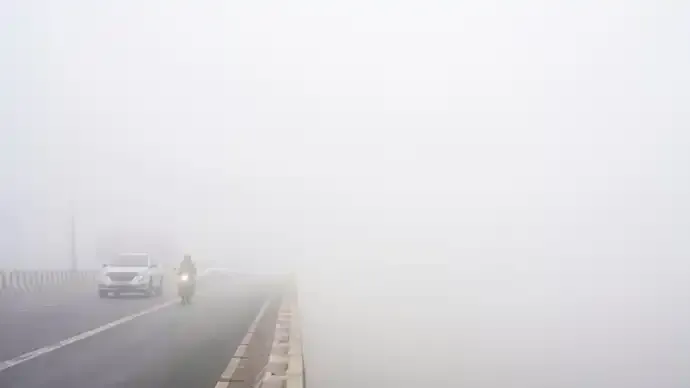
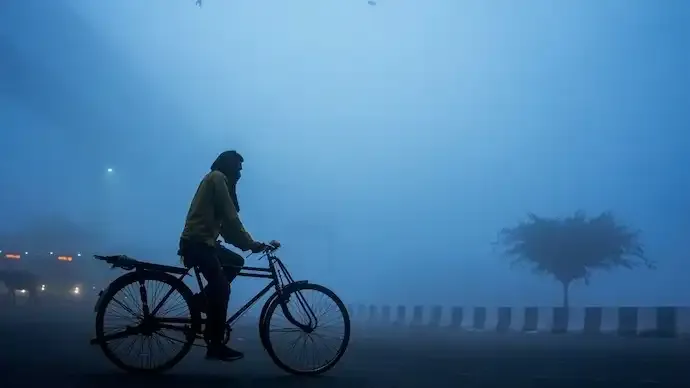
Makar Sankranti celebrations across northern India are set to begin on a chilly note this year, with cold wave conditions and widespread fog continuing to dominate weather patterns on January 14. Despite the festival traditionally symbolising the gradual retreat of winter with the Sun’s northward movement, meteorological conditions suggest that winter’s grip will loosen only slowly in the days ahead.
According to weather experts, there will be no significant change in overall conditions on Makar Sankranti itself. Dense to moderate fog during morning hours, coupled with lingering cold wave conditions, is expected to affect large parts of North India. While temperatures may begin a gradual upward trend after the next couple of nights, providing marginal relief, fog is likely to persist intermittently during early mornings.
In the northern plains, fog will remain the most dominant weather feature. Several areas across Punjab and northern Haryana are expected to witness moderate to dense fog, particularly in stretches between Karnal, Ambala, Panchkula, and Chandigarh. Similar visibility issues are likely in parts of northern Rajasthan and north-western Uttar Pradesh, including districts such as Bareilly, Shahjahanpur, Pilibhit, Moradabad, Rampur, Saharanpur, Najibabad, Gautam Budh Nagar, and Bulandshahr. Visibility is expected to improve by late morning, with fog clearing around 10 to 11 am.
Major urban centres, including Delhi, Jaipur, Bhopal, Lucknow, Patna, and Ranchi, are not expected to see very dense fog, though shallow fog may briefly develop during early morning hours. Localised fog pockets could also form around Gwalior, Bharatpur, and Agra.
In the higher reaches of North India, particularly across the Western Himalayas, partial cloud cover is expected on Sankranti day and through the night. However, no significant snowfall activity is forecast on January 14. A fresh western disturbance is likely to arrive from January 15 onwards, potentially triggering a series of weather systems that could bring notable snowfall in higher altitudes between January 15 and January 30.
Southern India is expected to remain largely unaffected by the northern cold wave. Light rainfall may occur along coastal Tamil Nadu, with very light showers possible over coastal Kerala, coastal Karnataka, south-central Maharashtra, and parts of coastal Maharashtra. Elsewhere, stable weather conditions are likely to prevail.
North-westerly winds will continue to sweep across northern, central, and eastern regions, including Rajasthan, Punjab, Haryana, Uttar Pradesh, Madhya Pradesh, Odisha, Chhattisgarh, Jharkhand, and Bihar. These winds will sustain cold night and early morning conditions, while daytime sunshine may offer temporary comfort.
Overall, while Makar Sankranti arrives with winter still firmly in place, meteorologists suggest that the harshest phase of the cold wave may gradually ease after midweek, even as fog continues to accompany winter mornings across much of North India.