
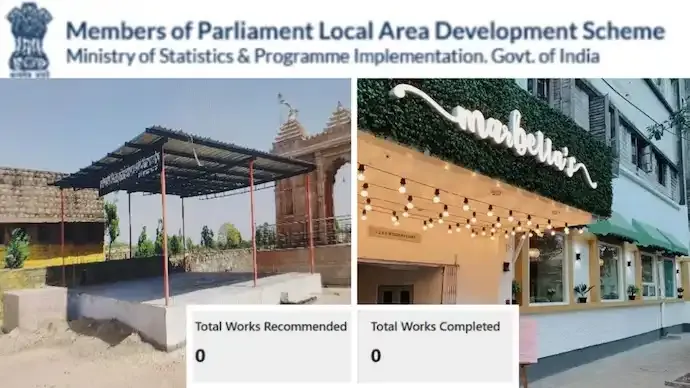
A citizen-driven accountability campaign is sending ripples through India’s political corridors, forcing several Members of Parliament to quietly update, edit or explain how public funds allotted under the MPLADS scheme are being used. The online initiative, Ye Theek Karke Dikhao, has turned publicly available government data into a powerful tool of scrutiny, exposing gaps, inconsistencies and, in some cases, questionable claims of development work across constituencies.
Using official dashboards, geotagged photographs and expenditure records available on the Members of Parliament Local Area Development Scheme (MPLADS) portal, citizen sleuths have begun comparing what MPs claim on paper with what exists on the ground. The result has been an unprecedented wave of public questioning, with MPs from across party lines finding themselves under the digital microscope.
Under MPLADS, every Lok Sabha MP is entitled to recommend development works worth up to ₹5 crore annually in their constituency, while Rajya Sabha MPs can suggest projects within their respective states. The scheme, administered by the Ministry of Statistics and Programme Implementation, mandates transparency through mandatory geotagged images, progress updates and inspections by district authorities.
Despite these safeguards, citizen investigators found that many project listings lacked basic proof of completion. In several cases, projects worth lakhs or crores were marked “completed” without a single photograph uploaded. In others, the same image was reused multiple times across different projects, raising serious questions about verification processes.
The campaign gained traction when users began posting side-by-side comparisons of expenditure claims and uploaded visuals. In one instance, a tin shed was reportedly listed as a high-value project. In another, an unrelated commercial establishment’s photograph appeared as proof of work done. Reverse image searches further intensified scrutiny, prompting public demands for clarification.
What sets this campaign apart is its non-partisan nature. MPs from the BJP, Congress, Trinamool Congress, DMK, Samajwadi Party and regional parties have all been examined using the same criteria. Some responded defensively, others blamed data-entry errors or officials, while a few acknowledged discrepancies and sought corrections from authorities.
Notably, a handful of MPs were praised for maintaining detailed, transparent records with clear geotagged images and consistent updates. Their dashboards demonstrated that compliance with MPLADS guidelines is not only possible but also relatively simple when diligence is exercised.
The campaign has also reignited a broader public conversation around how little most voters know about constituency-level development funds. While national politics is often dominated by debates over big-ticket reforms and headline-grabbing scandals, the everyday utilisation of local development money rarely receives sustained attention.
By focusing on footpaths built, community halls repaired, school infrastructure upgraded and health facilities funded, Ye Theek Karke Dikhao has shifted the accountability lens to the grassroots level. The message is clear: public money, however small the project, deserves public proof.
Several MPs reportedly edited their MPLADS entries after the campaign’s posts gained traction, uploading missing photographs or revising project descriptions. While critics argue that post-facto updates are not a substitute for real-time transparency, supporters of the campaign see this as a sign of its effectiveness.
For citizens, the process is remarkably simple. Anyone can visit the official MPLADS portal, search by MP name or constituency, and examine allocations, expenditures, vendors, work status and photographic evidence. The campaign’s organisers insist they are not alleging corruption, but asking a basic democratic question — are elected representatives following the rules tied to taxpayer money?
In an era where accountability is often reduced to slogans, this citizen-led audit has demonstrated how data, when combined with collective vigilance, can compel power to respond.




Conversation
Be kind and stay on topic. Comments are moderated; abuse, spam and personal attacks are removed. Report a problem