

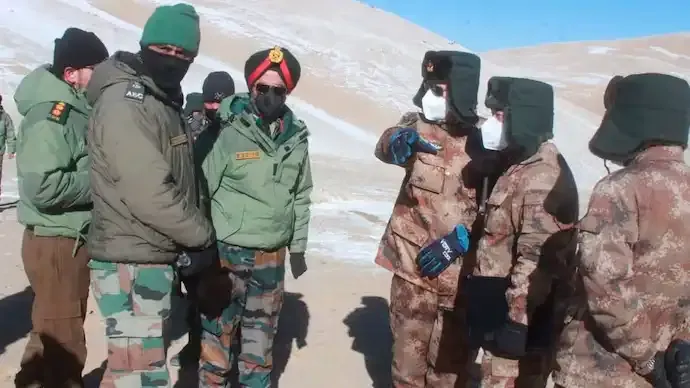

Fresh geopolitical tensions have surfaced after a senior US official alleged that China conducted a covert nuclear test in June 2020, just days after the deadly clash between Indian and Chinese troops in the Galwan Valley. The claim, made during a United Nations disarmament conference in Geneva, has reignited debate over nuclear transparency and regional security dynamics.
According to the US statement, intelligence assessments indicate that China may have carried out a yield-producing nuclear test on June 22, 2020. The date falls only a week after the violent confrontation along the Line of Actual Control in eastern Ladakh, which marked one of the most serious military escalations between India and China in decades. The Galwan incident resulted in casualties on both sides and intensified global scrutiny of tensions between the two nuclear-armed neighbours.
The US allegation suggests that the test could have taken place at the Lop Nur nuclear site in Xinjiang. Officials claimed that China may have used a technique known as “decoupling,” a method involving underground detonations inside large cavities designed to reduce seismic signals and avoid detection by monitoring systems. Such practices, if confirmed, would raise questions about compliance with international norms surrounding nuclear testing.

While the US did not directly link the alleged test to the border conflict, analysts say the timing has drawn attention. Some geopolitical observers believe that the heightened focus on the India–China standoff at the time could have diverted global attention, potentially providing cover for activities that might otherwise have drawn greater scrutiny. However, others argue that any nuclear test would require months of planning, making it unlikely to be directly tied to a sudden military clash.
The issue has gained further significance amid changing global arms-control dynamics. With the expiry of major nuclear agreements between global powers, Washington has been pushing for a broader framework that includes Beijing. Concerns about China’s expanding nuclear arsenal have become a central theme in international strategic discussions, particularly as competition between major powers intensifies.
China’s representatives at the disarmament forum responded by rejecting what they described as exaggerated claims and reaffirmed that Beijing acts responsibly on nuclear matters. Meanwhile, the international monitoring body responsible for tracking nuclear tests reported that its systems did not detect any confirmed nuclear activity in China during the period in question, adding another layer of complexity to the debate.
The development comes at a time when India–China relations remain sensitive, even after disengagement agreements reduced tensions along parts of the border. The resurfacing of allegations linked to the 2020 crisis underscores how unresolved geopolitical rivalries continue to influence global security narratives.
As discussions around nuclear transparency and strategic stability evolve, the claim is likely to fuel further diplomatic exchanges and calls for verification. Whether the allegations lead to concrete evidence or remain part of broader geopolitical rivalry will shape the next phase of global arms-control conversations.






Conversation
Be kind and stay on topic. Comments are moderated; abuse, spam and personal attacks are removed. Report a problem