

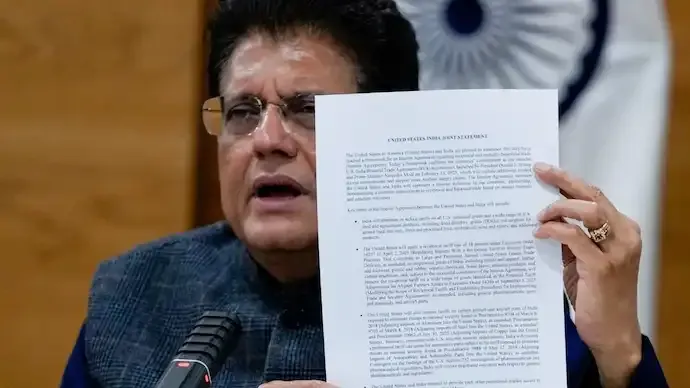

India has strengthened its position in global agricultural trade after successfully protecting sensitive farm sectors while securing expanded market access in the United States under the newly announced interim trade framework. Union Commerce and Industry Minister Piyush Goyal said the agreement safeguards domestic agriculture and dairy interests even as it opens new opportunities for Indian exporters.
According to the minister, India maintained clear red lines during negotiations by excluding products where the country is largely self-reliant. Key agricultural and dairy categories were kept outside the agreement, ensuring that domestic farmers and rural livelihoods remain protected from potential import pressures. Instead of allowing broad access to American agricultural goods, New Delhi opted for a selective approach, permitting limited entry for specific items such as red sorghum, tree nuts, wines and spirits.
The framework delivers significant advantages for Indian farm exports, many of which will now enter the US market with zero reciprocal tariffs. Products such as tea, coffee, spices and coconut oil are expected to benefit immediately from improved competitiveness. A wide range of fruits and vegetables — including mango, banana, papaya, pineapple and guava — will also gain duty-free access, creating fresh opportunities for exporters looking to expand in one of the world’s largest consumer markets.

Beyond agriculture, the agreement extends zero-duty benefits to several high-value sectors. Pharmaceutical exports, which already account for billions of dollars in annual trade, are set to become more competitive, along with gems and diamonds, aircraft components and selected auto parts. Smartphones and certain manufactured goods are also expected to benefit from reduced tariffs over time, strengthening India’s manufacturing ambitions and export growth strategy.
The trade arrangement places India in a favourable position compared to several competing economies. While tariffs on Indian exports have been reduced to 18 per cent, many other manufacturing hubs continue to face higher duties, improving India’s relative competitiveness. The removal of an additional duty previously linked to energy trade further eases pressure on exporters and signals a broader reset in bilateral economic ties.
Officials emphasised that the agreement was negotiated over an extended period with a focus on balancing market access and domestic priorities. By achieving zero tariffs on several agricultural products while keeping sensitive sectors protected, India has sought to create a model that supports farmers, micro and small enterprises and manufacturing clusters simultaneously.
Industry observers believe the deal could boost demand for Indian farm produce and value-added goods in international markets, while encouraging greater integration into global supply chains. The interim framework is also expected to serve as a stepping stone toward a comprehensive bilateral trade agreement, which may include deeper cooperation on technology, standards and regulatory processes.
As negotiations continue toward a final pact, the current arrangement highlights India’s strategy of expanding export opportunities without compromising core agricultural interests, positioning the country more strongly in an evolving global trade environment.






Conversation
Be kind and stay on topic. Comments are moderated; abuse, spam and personal attacks are removed. Report a problem