

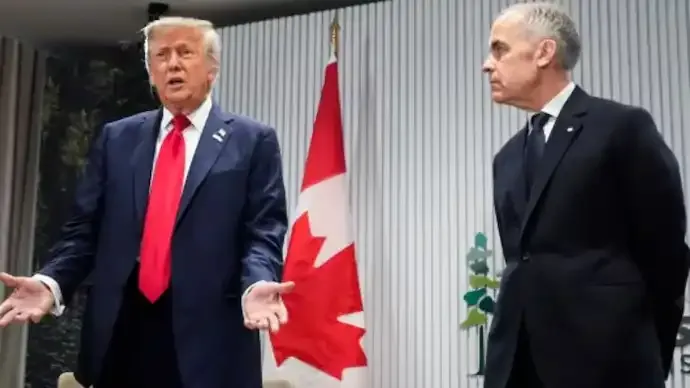

Fresh uncertainty has emerged around the future of North American trade relations after reports suggested that US President Donald Trump is privately considering the possibility of withdrawing the United States from the regional trade pact with Canada and Mexico. The discussions come as a mandatory review of the agreement approaches, prompting concerns among policymakers, businesses, and international markets.
According to officials familiar with the matter, Trump has asked advisers to evaluate whether remaining part of the trade framework aligns with US economic interests. However, no formal decision has been announced, and the White House has described any speculation about imminent action as premature. The development arrives ahead of the scheduled review of the Canada-United States-Mexico Agreement, commonly known as CUSMA, which replaced the North American Free Trade Agreement in 2020.
Trade officials within the administration have indicated that the United States is not interested in extending the existing agreement without significant changes. Representatives from the Office of the US Trade Representative suggested that negotiations with Canada and Mexico could take place separately, reflecting differing economic priorities and political dynamics. Analysts believe the tougher stance may be aimed at extracting concessions rather than signalling an immediate withdrawal.

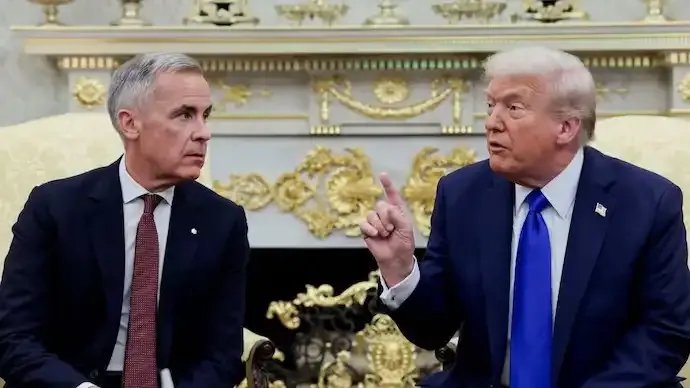
Leaders in neighbouring countries have downplayed the likelihood of the US exiting the pact. Mexican President Claudia Sheinbaum reportedly stated that the issue has not been raised during official discussions, while Canadian Prime Minister Mark Carney described recent conversations with Trump as constructive. Despite these reassurances, markets remain cautious, as the agreement governs trade worth nearly two trillion dollars annually across North America.
Economists warn that a US withdrawal could disrupt established supply chains, potentially exposing Canadian and Mexican exports to higher tariffs while increasing costs for American consumers. Business groups and lawmakers in the United States are also expected to resist any move that could create instability in cross-border commerce or trigger inflationary pressures.
Trump has previously used threats of withdrawal from trade agreements as a negotiating tactic. During his earlier term, similar strategies were employed to push for stricter rules of origin, increased domestic manufacturing requirements, and periodic review clauses. Observers suggest that raising the possibility of exiting CUSMA may be part of a broader strategy to strengthen the US bargaining position ahead of renegotiations.
If renewed, the current agreement could remain in effect for another 16 years, providing long-term stability for regional trade. However, failure to reach consensus may lead to annual reviews until the pact’s potential expiry in 2036. Under existing provisions, any member country can withdraw with six months’ notice, a clause that adds further complexity to ongoing discussions.
As negotiations continue, the situation highlights the evolving landscape of global trade policy, where economic strategy, political considerations, and international partnerships intersect. The coming months are likely to determine whether North America’s trade framework undergoes significant transformation or remains largely intact.





Conversation
Be kind and stay on topic. Comments are moderated; abuse, spam and personal attacks are removed. Report a problem