

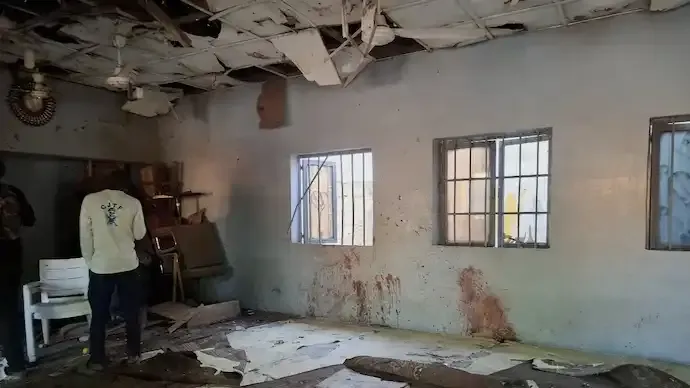

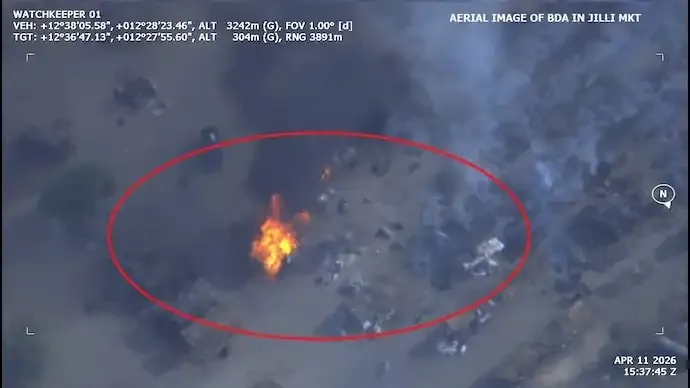
The United States carried out coordinated airstrikes against ISIS-linked militants in northwest Nigeria on December 25, 2025, marking Washington’s first direct military action in the region under Donald Trump since his return to the White House.
Announcing the strikes on his social media platform, Trump said the operation was conducted “at my direction as Commander in Chief” and targeted ISIS fighters accused of killing civilians, particularly Christians. He warned that further violence would invite additional US military action.
ISIS presence in Nigeria
While ISIS lost its territorial “caliphate” in Iraq and Syria, it continues to operate through regional affiliates across Africa and the Middle East. In West Africa, its most powerful offshoot is Islamic State West Africa Province (ISWAP), which operates mainly in northeastern Nigeria and the Lake Chad Basin.

ISWAP emerged from a split within Boko Haram, Nigeria’s long-running Islamist insurgent group. In 2015, a Boko Haram faction pledged allegiance to ISIS, forming ISWAP after disputes over tactics, including the targeting of Muslim civilians. Following internal conflict, ISWAP became the dominant force after the death of Boko Haram leader Abubakar Shekau in 2021.
ISWAP’s operations and reach
ISWAP seeks to establish an Islamic state governed by its interpretation of sharia law across Nigeria and neighbouring countries. It operates primarily in Borno and Yobe states, with cross-border activity into Niger, Chad and Cameroon. Analysts estimate the group has several thousand fighters and consider it one of ISIS’s most active global affiliates.
In 2025, ISWAP carried out dozens of attacks targeting villages, churches, security forces and civilians, contributing significantly to ISIS-linked violence worldwide.
Why the US struck
Trump framed the airstrikes as a response to rising attacks on Christian communities, claiming the violence had reached alarming levels. He had earlier warned that the US could intervene militarily if Nigerian authorities failed to contain the killings.
According to US Africa Command, the strikes were carried out at the request of Nigerian authorities, indicating consent from Abuja. Regional reports suggest Nigeria quietly welcomed the operation as support against escalating ISWAP attacks.
What happens next
US officials have indicated that further strikes remain possible if ISIS-linked violence continues. However, security analysts caution that airstrikes alone may not defeat ISWAP unless accompanied by stronger local governance, improved security forces and better protection for civilians in affected regions.





Conversation
Be kind and stay on topic. Comments are moderated; abuse, spam and personal attacks are removed. Report a problem