

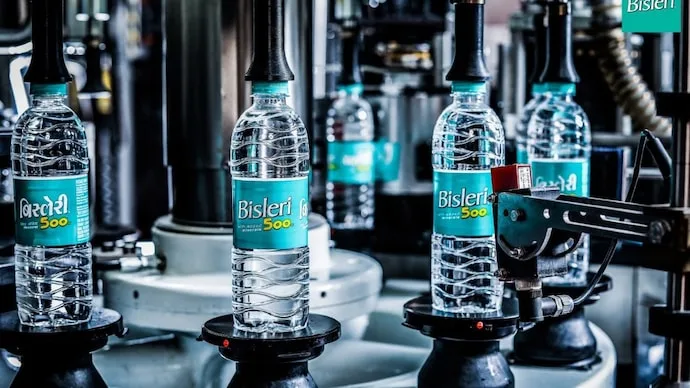

The Food Safety and Standards Authority of India (FSSAI) has expanded its investigation into packaged drinking water, bringing brands across the country under increased scrutiny. The food safety regulator has collected random samples from multiple packaged water companies as part of a wider inspection drive, with laboratory findings expected in the coming days.
The move comes amid a controversy involving Bisleri International after the regulator initiated prosecution proceedings over a packaged drinking water sample that was declared unsafe during laboratory testing.
The expanded investigation indicates that FSSAI's scrutiny is not limited to one manufacturer. Authorities are also examining misleading labels and brand names that closely resemble those of established packaged drinking water companies.

Why Has FSSAI Expanded Its Investigation?
FSSAI's latest inspection drive follows findings involving a water sample collected from Bisleri International's premises.
According to the regulator, the sample failed to meet prescribed bromate limits and was declared unsafe under the Food Safety and Standards Act, 2006. Following an appeal by the company, the sample was examined by a referral food laboratory, which also flagged the presence of polynuclear aromatic hydrocarbons (PAHs).
The development prompted wider attention towards quality control and compliance standards in the packaged drinking water industry.
What Has Bisleri Said About the Safety Findings?
Bisleri has disputed the regulator's findings and maintained that its packaged drinking water is safe for consumption.
In a statement issued on November 23, the company said the case concerned a batch manufactured at its Goa facility in September 2025. According to Bisleri, FSSAI collected six samples from the facility on September 30, 2025.
The company stated that five samples complied with applicable standards, while one recorded bromate levels of 12 micrograms per litre, against the prescribed limit of 10 micrograms per litre.
Bisleri said it challenged the initial findings and requested further testing. It claimed that the referral laboratory subsequently found bromate levels within permissible limits but separately flagged the presence of PAHs.
The company also said that an FSSAI-approved independent laboratory tested the same sample and found bromate levels within the prescribed limit.
Bisleri claimed that it submitted the independent laboratory results to FSSAI's Western Regional Office on February 2, 2026, but received no further communication.
The company further stated that it had not received the reported prosecution notice through email or in physical form and would continue cooperating with the regulator.
FSSAI Also Targets Misleading Water Brands
Apart from laboratory testing, FSSAI is examining companies that allegedly use misleading labels, packaging and names resembling established packaged drinking water brands.
The regulator is expected to take action against businesses found violating applicable labelling and food safety requirements.
The expanded inspection drive could have wider implications for the packaged drinking water industry, as manufacturers face increased scrutiny over product quality, manufacturing practices and labelling compliance.
With laboratory reports from the latest sample collection still awaited, the investigation is expected to provide a clearer picture of compliance across the sector.






Conversation
Be kind and stay on topic. Comments are moderated; abuse, spam and personal attacks are removed. Report a problem