
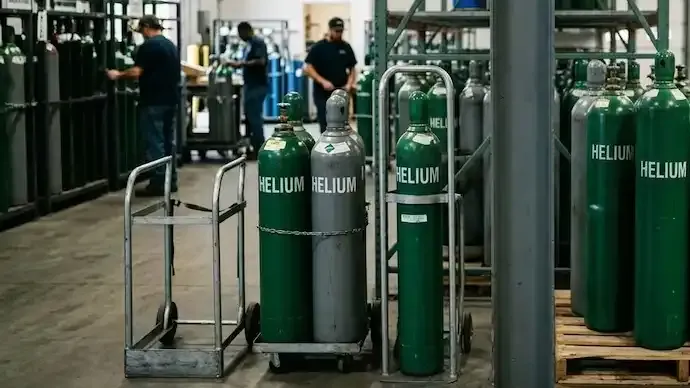
The ongoing conflict in West Asia is not only disrupting oil and gas markets but is now triggering a global helium shortage, raising concerns across multiple industries. While crude oil and LNG have dominated headlines, helium—a critical industrial gas—is emerging as a silent casualty of the crisis.
Why Helium Supply Is Under Threat
Helium production is highly concentrated globally, making it vulnerable to geopolitical disruptions.
-
Qatar contributes around 30–38% of global helium supply
-
Along with the United States, it accounts for nearly 70–75% of total production
With rising tensions and security risks in the Gulf region, supply chains linked to Qatar have come under pressure. Any disruption in exports or production can quickly create shortages worldwide.
What Makes Helium So Important?
Helium is not just used in balloons—it is a critical resource for advanced industries. Its unique properties make it essential for:
-
Healthcare – used in MRI machines for cooling superconducting magnets
-
Semiconductors – required in chip manufacturing processes
-
Space and defence – used in rocket systems and aerospace applications
-
Scientific research – vital for cryogenics and advanced experiments
Unlike many other gases, helium cannot be easily manufactured, making supply disruptions more serious.
Impact on Key Industries
The shortage is expected to affect several sectors globally:
1. Healthcare Sector
Hospitals rely on helium for MRI machines. Shortages could lead to delays in medical diagnostics and increased costs.
2. Semiconductor Industry
Helium is crucial in chip production. Any disruption could worsen existing supply chain issues in electronics and technology manufacturing.
3. Technology and Research
Advanced research facilities and space programmes may face operational challenges due to limited helium availability.
Why the Market Is Highly Sensitive
The helium market is highly concentrated and fragile, meaning even small disruptions can have a large impact.
With fewer producers and limited reserves, the global supply chain lacks flexibility. Unlike oil, helium cannot be easily substituted or stored in large quantities for long-term use.
Rising Costs and Supply Chain Pressure
As supply tightens, prices are expected to rise, increasing costs for industries dependent on helium.
Companies may face:
-
Higher production costs
-
Delays in manufacturing
-
Reduced operational efficiency
This could have a cascading effect on global markets, especially in sectors already dealing with supply constraints.
A Growing Global Concern
The helium shortage highlights how geopolitical tensions can impact not just energy markets but also lesser-known yet essential resources.
As the West Asia conflict continues, experts warn that disruptions in helium supply could deepen, affecting industries far beyond the immediate conflict zone.
The situation underscores the need for diversification of supply sources and stronger global coordination to manage critical resources.




Conversation
Be kind and stay on topic. Comments are moderated; abuse, spam and personal attacks are removed. Report a problem