



Senior advocate and former Solicitor General of India Harish Salve has warned that the global system built on international law is gradually weakening. According to Salve, the rule-based world order established after the Second World War is increasingly being replaced by what he described as a “force-based order.”
Speaking about recent geopolitical conflicts and rising global tensions, Salve argued that powerful nations are beginning to ignore international legal frameworks, shifting international relations toward power politics rather than legal accountability.
International Law Losing Influence
Salve suggested that public international law, which governs relations between countries, is becoming less effective in influencing the behaviour of major global powers.

According to him, while international legal norms still exist on paper, their real-world enforcement is weakening.
He said that international law is increasingly discussed in academic or diplomatic contexts but is often ignored when powerful nations pursue strategic or military objectives.
Rule-Based Order Under Pressure
The modern rule-based international system largely emerged after World War II with the creation of institutions like the United Nations and the adoption of the United Nations Charter.
This framework was designed to prevent wars by allowing the use of force only under specific conditions, such as self-defence or when authorised by the United Nations Security Council.
Salve argued that in practice these rules are increasingly bypassed.
He noted that while the system was intended to maintain global stability, enforcement mechanisms are limited when powerful nations decide to act independently.
Limits of Global Enforcement
One of the main challenges, according to Salve, lies in the structure of the United Nations Security Council, where permanent members hold veto power.
Even if international law appears to have been violated, any resolution or sanction can be blocked through the veto system.
Because of this, enforcement of international rules often becomes difficult when large powers are involved.
Salve pointed out that sanctions and legal action are often more effective against smaller nations, while major powers tend to avoid serious consequences.
Comments on Recent Maritime Incident
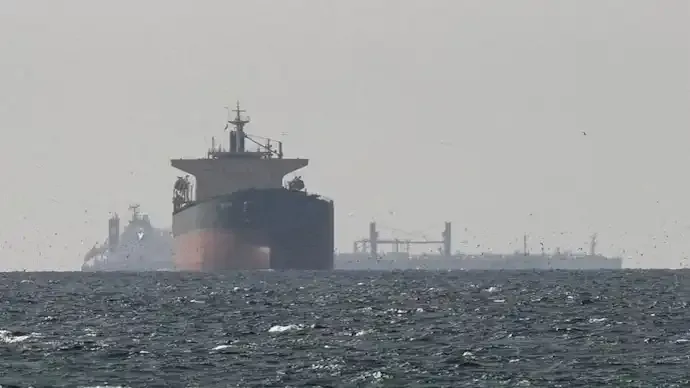
During the discussion, Salve also addressed questions related to an incident involving the Iranian vessel IRIS Dena, which was reportedly attacked near Sri Lankan waters during escalating regional tensions.
He explained that the attack appeared to have taken place in international waters, meaning that neither India nor Sri Lanka would carry legal responsibility under international maritime law.
Salve said that if the vessel issued a distress call, regional authorities responding to rescue efforts would have fulfilled their legal obligations.
Sovereign Immunity and Legal Challenges
Salve also highlighted the concept of sovereign immunity, which protects states from being sued in foreign domestic courts.
He explained that governments generally cannot be held legally accountable in municipal courts for actions taken as part of sovereign decisions such as war or military operations.
Because of this legal principle, international disputes between countries are rarely resolved through domestic legal systems.
Fragility of Global Governance
According to Salve, systems based on international law and democratic norms remain fragile and depend heavily on responsible leadership.
If global politics moves entirely toward power-based decision-making, he warned that international institutions could struggle to maintain peace or enforce rules.
He argued that without respect for legal frameworks, international governance could become increasingly unstable.
Role of Public Opinion
Salve concluded by saying that the ultimate restraint on governments may come from public opinion and democratic accountability rather than legal institutions alone.
He suggested that citizens play a crucial role in shaping government decisions and maintaining a rule-based global system.
If the world shifts permanently toward a system where military power overrides legal norms, Salve warned that meaningful remedies for international disputes could become increasingly limited.



Conversation
Be kind and stay on topic. Comments are moderated; abuse, spam and personal attacks are removed. Report a problem