

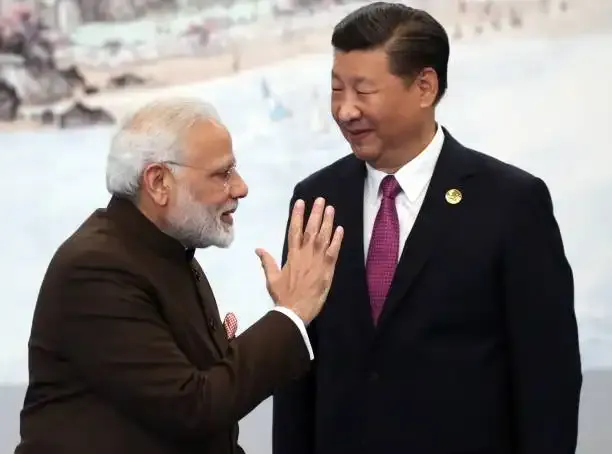

Prime Minister Narendra Modi’s meeting with Chinese President Xi Jinping at the Shanghai Cooperation Organisation (SCO) summit in Tianjin comes at a time when India-China trade is both a success story and a growing concern.
From Barely There to Big Numbers
Two decades ago, trade between India and China was negligible. In the early 2000s, India primarily exported raw materials like iron ore, while Chinese goods rarely entered Indian markets. Then came the boom.
As China became the world’s manufacturing hub and India liberalized its economy, bilateral trade surged. By 2010, Chinese electronics, smartphones, and solar panels had become staples in Indian markets, while India continued to export iron ore and pharmaceuticals. The balance of trade shifted heavily in China’s favor.

The Current Reality
By 2024–25, trade between the two nations hit a record $127.7 billion, making China India’s second-largest trading partner after the U.S. But the glaring issue? A $99.2 billion trade deficit, the largest ever.
Why It Matters Now
India is under dual pressure: U.S. tariffs on Indian exports and rising imports from China. The most critical flashpoint is rare earth metals, essential for EVs, electronics, and defense tech.
China controls over 90% of the global rare earth market and in April 2025 imposed stricter export licenses on elements like neodymium and dysprosium, disrupting supply chains worldwide—including India’s.
Automakers like Maruti Suzuki, Tata Motors, and Bajaj Auto warn of production delays. The Society of Indian Automobile Manufacturers (SIAM) has urged the government to intervene and secure shipments stuck at Chinese ports.
The Tianjin Talks
Against this backdrop, Modi and Xi’s discussion focused on predictable trade rules and easing bottlenecks. Xi pledged to improve connectivity and streamline processes, but structural challenges remain.
For India, the priority is reducing dependence on Chinese components and boosting high-value exports such as IT services, green tech, and pharmaceuticals. For China, retaining access to India’s vast consumer market is vital as Western economies grow more protectionist.
The next phase of this relationship will determine whether India and China can transform an imbalanced partnership into a more sustainable one—or remain locked in an unequal equation.






Conversation
Be kind and stay on topic. Comments are moderated; abuse, spam and personal attacks are removed. Report a problem