

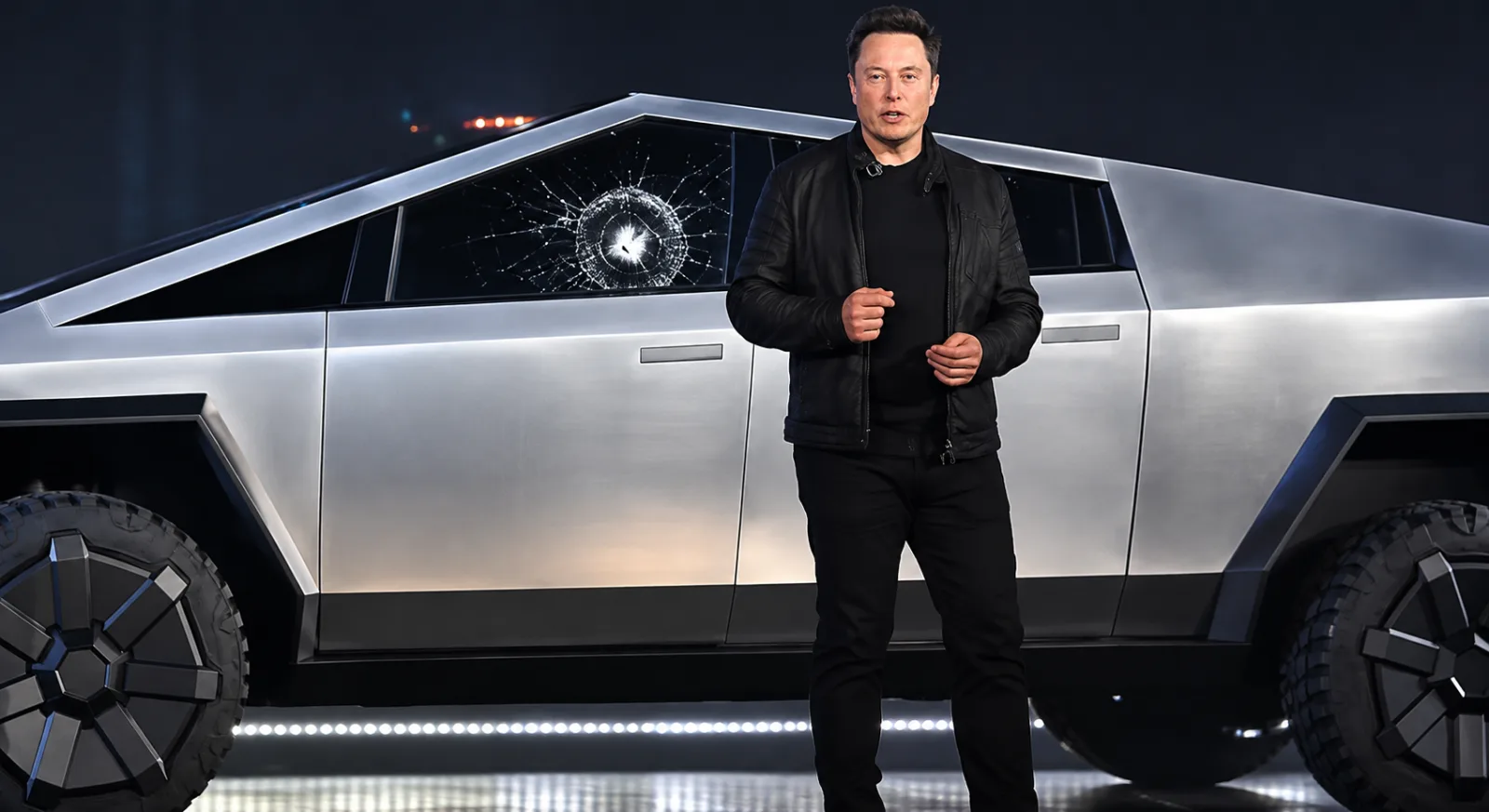

Tesla Cybertruck production wind-down plans mark a major shift for Elon Musk's electric vehicle company. Musk has announced that production of the unconventional electric pickup at Tesla's Texas factory will be wound down around the middle of 2027.
In a post on X, Musk said the move would free up manufacturing capacity for the Cybercab, Tesla's two-seat autonomous vehicle. He did not clarify whether Cybertruck production would continue at another facility.
Responding to a user who described the decision as the end of an era, Musk indicated that existing Cybertrucks would remain on the roads for years.

From 250,000-Unit Ambitions to Falling Sales
Unveiled in 2019, the Cybertruck attracted attention for its distinctive angular design and unconventional stainless-steel exterior. Tesla initially projected that annual demand could eventually reach 250,000 units.
However, the vehicle struggled to achieve mass-market appeal. According to estimates from Cox Automotive cited in the supplied report, US Cybertruck sales fell to 20,237 units in 2025, down 48% from 38,965 units in 2024.
Tesla does not separately disclose sales figures for individual vehicle models, making independent estimates important for understanding the pickup's performance.
The gap between projected demand and actual sales highlighted the difficulties of turning the highly publicised vehicle into a mass-market success.
Recalls and Production Challenges Added Pressure
The Cybertruck also faced quality and reliability concerns. According to the National Highway Traffic Safety Administration's records cited in the report, the 2024 model was subject to 11 voluntary recalls.
Reported issues included a potentially trapped accelerator pedal that could cause unintended acceleration, software defects and an inverter fault that could result in a sudden loss of drive power.
These problems added to the challenges facing a vehicle that was already struggling to meet its original sales expectations.
Another factor was the role of purchases by Musk's other businesses. SpaceX reportedly spent $131 million buying Cybertrucks at Tesla's suggested retail price in 2025, highlighting how purchases from affiliated companies contributed to demand.
Tesla's Focus Shifts Towards Autonomous Vehicles
The production wind-down reflects Tesla's growing focus on artificial intelligence, robotics and autonomous driving.
The Cybercab is central to this strategy. The two-seat vehicle has no steering wheel or foot pedals, and Tesla has begun manufacturing it at its Austin factory while introducing it through its robotaxi service.
However, US safety regulators are examining the company's certification process and technical information concerning the vehicle.
Tesla has also discontinued its higher-priced Model S and Model X vehicles, while the Model 3 and Model Y continue to account for most of its sales.
The Cybertruck's planned production wind-down therefore represents more than a change in factory priorities. It highlights the gap between the vehicle's ambitious launch expectations and its commercial performance, as Tesla redirects resources towards its autonomous-driving ambitions.
Read more: All India Story






Conversation
Be kind and stay on topic. Comments are moderated; abuse, spam and personal attacks are removed. Report a problem