

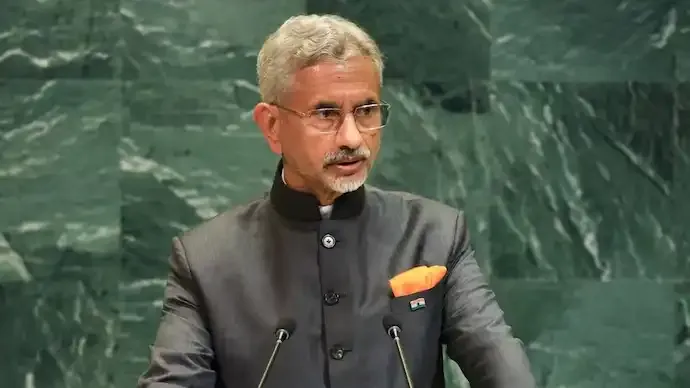

A rare combination of a US government shutdown and a severe winter storm forced American security agencies to execute an extraordinary overland operation to ensure that S Jaishankar, India’s External Affairs Minister, reached New York in time for a high-level diplomatic engagement at the United Nations.
On November 13, commercial air traffic across large parts of the United States was abruptly grounded due to the shutdown, leaving thousands of passengers stranded. Among those affected was Jaishankar, who had a fixed and non-negotiable meeting scheduled with António Guterres, the Secretary-General of the United Nations, at UN Headquarters in Manhattan.
With air travel ruled out and the meeting time unchanged, the US Diplomatic Security Service activated a contingency plan rarely used even for senior foreign dignitaries. The solution involved receiving Jaishankar at the Lewiston–Queenston Bridge on the US–Canada border and transporting him by armoured motorcade across New York State to Manhattan — a journey of nearly 670 kilometres.

The operation mobilised 27 specially trained agents drawn from multiple DSS units, including the Dignitary Protection Division and field offices in Buffalo and New York City. Additional agents drove overnight to reinforce the protection detail, allowing teams to rotate and maintain alertness during the seven-hour winter drive.
Coordination at the border involved real-time collaboration with Indian diplomatic officials, Canadian security personnel and US border authorities. The transition was executed swiftly to minimise exposure while ensuring uninterrupted protection for the visiting minister.
Once inside the United States, the motorcade navigated remote highways and snow-affected stretches of upstate New York. Route planning included contingency alternatives, driver rotation to combat fatigue, and constant situational assessments as temperatures hovered near freezing and visibility fluctuated due to snowfall.
Midway through the journey, the mission encountered a critical security test. During a scheduled transition between protection teams, an explosive ordnance detection K9 unit alerted to the armoured vehicle carrying Jaishankar. The motorcade was immediately secured, and a full inspection was conducted in coordination with local bomb disposal units. After authorities cleared the vehicle, the convoy resumed movement, adhering strictly to established protocols.
Even after reaching New York City, the operation faced an unexpected civilian emergency. A protection agent encountered a critically injured pedestrian in a hit-and-run incident. Without compromising the diplomatic mission, the agent coordinated with local law enforcement and emergency responders to secure the scene and ensure the victim received urgent medical care.
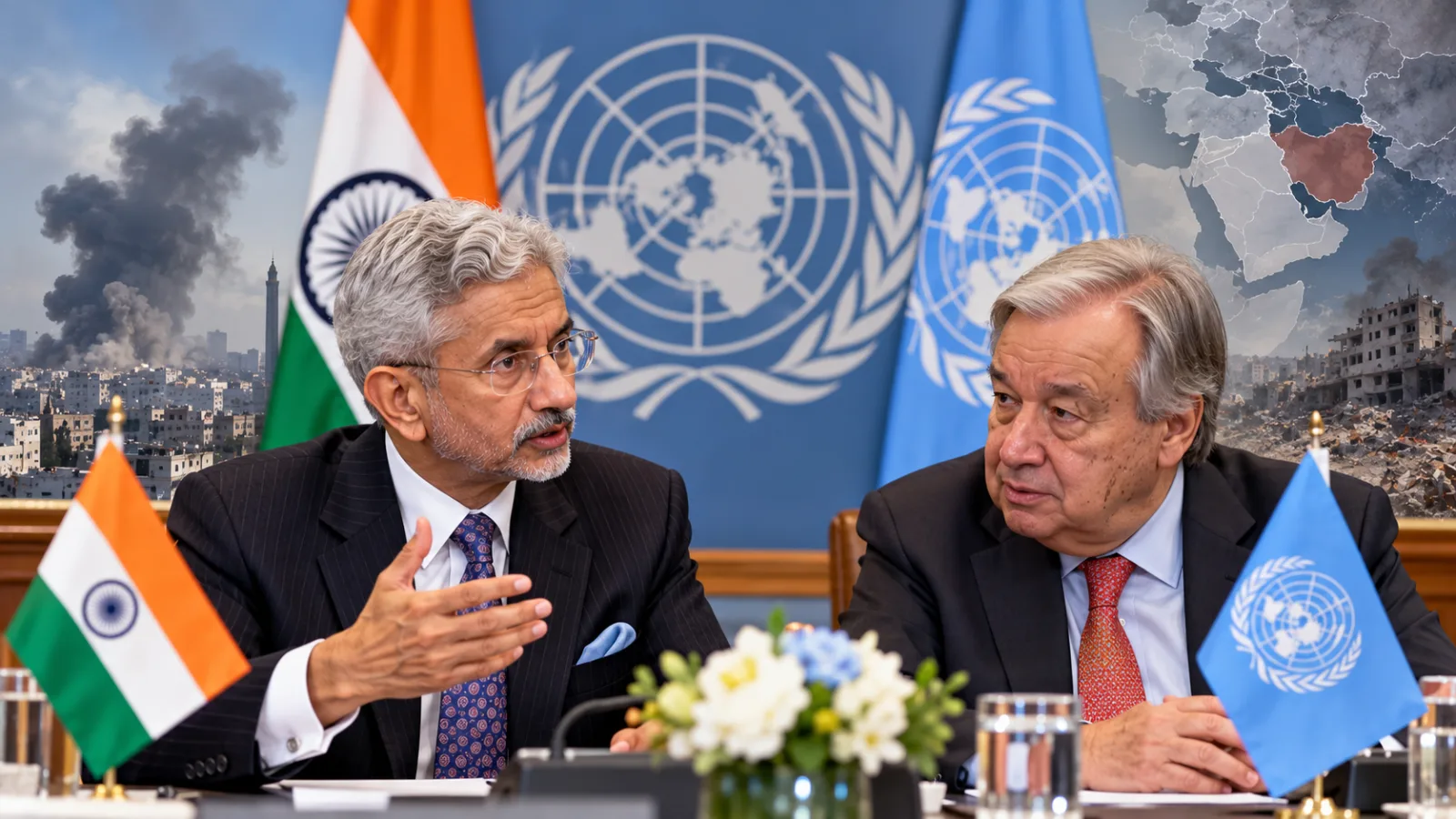
Jaishankar ultimately arrived safely and on schedule at UN Headquarters, where he held discussions with Guterres on the sidelines of the G7 Foreign Ministers’ Meeting, in which India participated as an invited partner. The talks covered global geopolitical challenges, multilateral cooperation and the evolving international order. Jaishankar also conveyed India’s expectation of hosting the UN chief in the future.
Within US security circles, the operation is now being viewed as a textbook example of crisis adaptability — demonstrating how diplomatic commitments can be upheld even when conventional logistics collapse. More than a long winter drive, the mission highlighted the behind-the-scenes precision and coordination that underpin high-stakes international diplomacy.





Conversation
Be kind and stay on topic. Comments are moderated; abuse, spam and personal attacks are removed. Report a problem