

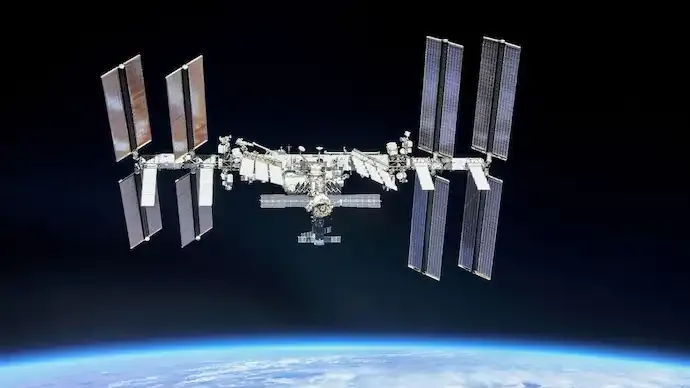

In an unprecedented move, NASA has decided to bring back all four astronauts of its Crew-11 mission from the International Space Station earlier than planned following a medical emergency involving one crew member. The decision underscores the complex human challenges of long-duration space habitation, where health and safety take precedence over mission timelines.
The situation emerged on Wednesday afternoon when a medical issue was identified in one of the astronauts aboard the ISS, which orbits Earth at an altitude of roughly 400 kilometres. While officials confirmed that the astronaut’s condition is stable and not immediately life-threatening, NASA chose to initiate an early return to ensure access to advanced medical diagnostics and treatment available only on Earth.
As a direct consequence of the incident, a scheduled spacewalk planned for January 8 was postponed indefinitely. The extravehicular activity, designated US EVA-94, was expected to involve astronauts Mike Fincke and Zena Cardman, who were preparing to upgrade critical solar arrays and power infrastructure on the station. Fincke is a seasoned spacewalker, while the task would have marked Cardman’s first EVA.

NASA confirmed late Wednesday that preparations for the spacewalk had been halted abruptly as medical monitoring and mission re-planning took priority. The agency has begun coordinating logistics for the Crew-11 team’s return aboard a SpaceX Crew Dragon, with landing timelines expected to be announced shortly.
Crew-11 includes astronauts from the United States, Japan and Russia, reflecting the ISS’s continued role as a symbol of international cooperation. During their stay, the crew has been conducting research spanning microgravity biology, advanced materials, and long-term human adaptation to space.
The identity of the affected astronaut has not been disclosed, in line with established privacy protocols governing medical situations during space missions.
Speaking on the development, NASA Administrator Jared Isaacman said the decision reflects the agency’s uncompromising approach to crew safety. He acknowledged that the mission may be shortened significantly but stressed that such flexibility is built into ISS operations.
Medical challenges in space are not uncommon. Microgravity can cause fluid redistribution in the body, bone density loss, muscle atrophy and vascular complications. While astronauts are trained extensively to manage emergencies using onboard medical equipment and telemedicine support from Earth, certain conditions require direct medical intervention that cannot be replicated in orbit.
Previous missions have encountered similar scenarios. In 2024, astronauts from Crew-8 required medical evaluation immediately after landing, though the incident did not disrupt overall station operations.
The early return of Crew-11 highlights the delicate balance between advancing scientific discovery and safeguarding human life in space. Despite the disruption, NASA has confirmed that the ISS will continue operating normally, with remaining crews maintaining experiments and station maintenance.
The agency is expected to provide an update within the next 24 hours regarding landing schedules and the fate of upcoming spacewalks. As space exploration expands under renewed global interest, this episode serves as a reminder that even in Earth’s orbit, human health remains the mission’s most critical system.








Conversation
Be kind and stay on topic. Comments are moderated; abuse, spam and personal attacks are removed. Report a problem