

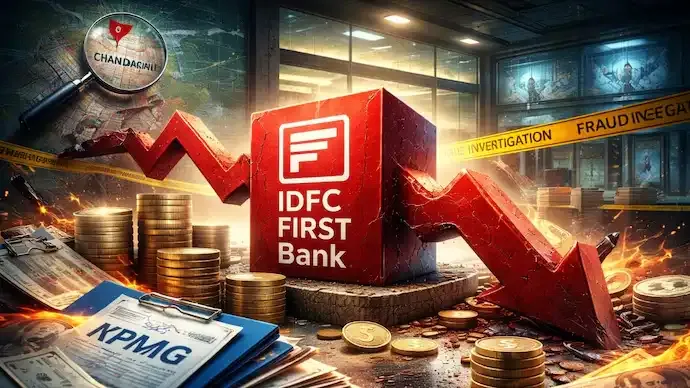

IDFC First Bank is confronting a major operational crisis after a discrepancy in a government account uncovered a fraud amounting to Rs 590 crore. The issue surfaced when a Haryana government department requested closure of its account at the bank’s Chandigarh branch and transfer of funds. During reconciliation, officials found a mismatch between the expected balance and actual funds, triggering an investigation.
The discovery prompted the Haryana government to remove the bank from its empanelled list of bankers. Subsequent internal reviews and external assessments indicate the fraud is linked to a cluster of government accounts at the Chandigarh branch.
How the fraud came to light
The discrepancy was first detected around February 18. Initial scrutiny revealed an exposure of Rs 490 crore, which later rose to Rs 590 crore after the bank examined related accounts. Investigators believe the amount has now stabilised.

Early findings suggest the issue stems from cheque-related operational lapses rather than a cyberattack or system breach. This indicates a failure in process controls at the branch level rather than external hacking.
Why routine safeguards failed
The bank states that multiple safeguards were in place, including maker-checker approvals, periodic balance confirmations, monthly account statements, and SMS alerts to the Haryana government. Despite these controls, the unauthorised outflows went unnoticed.
The incident has raised concerns because such fraud should typically be prevented through routine verification and internal checks.
Immediate actions taken by the bank
Following the discovery, IDFC First Bank suspended employees linked to the incident and filed a police complaint. It has appointed KPMG to conduct a forensic audit expected to take four to five weeks.
The bank has also contacted beneficiary banks to freeze balances in suspicious accounts to limit further losses.
To prevent similar incidents, the bank plans to tighten cheque processing controls and strengthen oversight of high-value branch transactions. Proposed measures include AI-based scrutiny of cheques and branch-initiated transactions, along with mandatory customer confirmation for certain high-value debits before funds are released.
Financial impact and deposit exposure
While the fraud amount is significant, analysts believe it is not destabilising for the bank. Haryana government deposits represent roughly 0.5% of total deposits. Since the incident became public, around Rs 200 crore has been withdrawn from affected accounts.
Government-related deposits, including those from states, central agencies and public sector units, account for approximately 8–10% of the bank’s deposit base. No other state has raised concerns so far.
The bank also carries employee dishonesty insurance coverage of Rs 35 crore, which may offset part of the loss.
Impact on profitability and capital
If the entire Rs 590 crore loss is recognised in the March quarter, it could reduce FY26 earnings by nearly 28% and trim Tier I capital by around 16 basis points. Profit estimates for FY26 have been lowered, though longer-term earnings projections remain stable due to improvements in the bank’s core operating performance.
Market outlook and investor confidence
Brokerages continue to maintain a positive outlook but have lowered price targets, assuming the issue remains contained and the forensic audit does not reveal deeper systemic weaknesses.
Financially, the bank is capable of absorbing the shock. However, rebuilding trust may prove more challenging. The incident was not the result of a sophisticated cyber breach but a branch-level operational failure involving cheque processing — an area expected to be safeguarded by routine controls.
The fact that the discrepancy was identified by the client rather than the bank has heightened scrutiny. Restoring confidence will depend on how quickly corrective measures are implemented and whether the audit confirms the fraud was an isolated incident.





Conversation
Be kind and stay on topic. Comments are moderated; abuse, spam and personal attacks are removed. Report a problem