

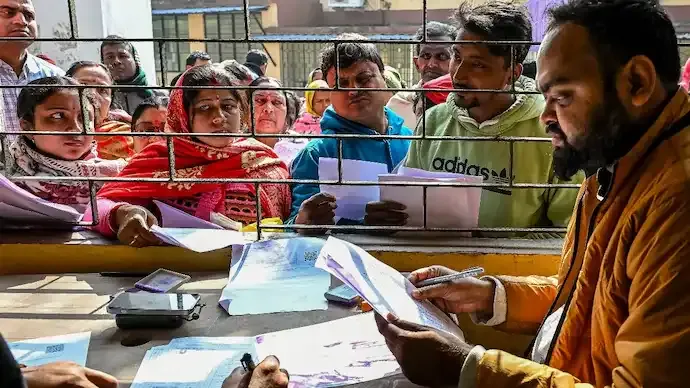

The Supreme Court has permitted the deployment of additional judicial officers, including personnel from Jharkhand and Odisha, to accelerate West Bengal’s ongoing Special Intensive Revision (SIR) of electoral rolls. The decision aims to fast-track verification while ensuring the electoral timeline remains on schedule.
The court also allowed the Election Commission to publish West Bengal’s final electoral roll on February 28, even though the large-scale voter verification exercise is still underway.
Massive verification exercise behind delays
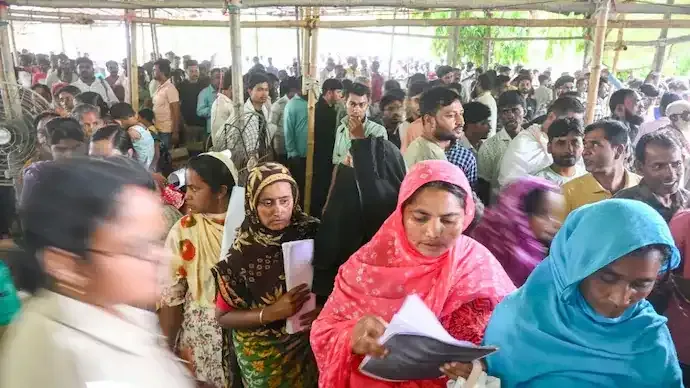
The bench noted the scale of the revision process, which involves nearly 80 lakh claims and objections linked to logical discrepancies and unmatched voter entries. Taking note of the enormity of the exercise, the court ruled that statutory deadlines should not delay the publication of the final roll.

Using its special powers, the court clarified that voters added later through supplementary rolls will legally be treated as part of the February 28 final list.
Additional officers to clear backlog
A report submitted by the Chief Justice of the Calcutta High Court indicated that around 220 serving and retired district-level judicial officers are currently engaged in the verification process. Even with this strength, clearing the caseload could take over 80 days if each officer processes 200–250 cases daily.
To accelerate disposal, the court permitted the High Court to deploy civil judges with more than three years of experience. If required, serving or retired judicial officers of equivalent rank from neighbouring Jharkhand and Odisha may also be requisitioned.
The Election Commission will cover travel, accommodation, and related expenses for officers deployed from other states.
Supplementary rolls to continue until elections
Accepting submissions from the Election Commission, the court allowed the SIR process to continue until the last date of elections. Supplementary electoral rolls will be issued on an ongoing basis as verification is completed.
The court clarified that any names added after February 28 will still be legally treated as part of the final electoral roll published on that date.
Document verification guidelines issued
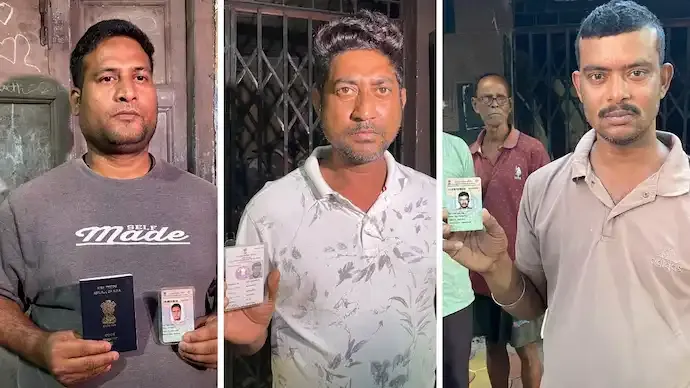
Addressing concerns regarding document handling in the massive exercise, the court stated that Aadhaar cards, Madhyamik (Class 10) admit cards, and passing certificates will be accepted as valid proof if submitted physically or uploaded within the prescribed window.
It also placed responsibility on Electoral Registration Officers and District Election Officers to confirm receipt of documents, even if digitisation delays occur due to portal crashes or heavy data volume.
Ensuring electoral readiness
The order aims to ensure the voter roll revision proceeds at a rapid pace without disrupting the electoral calendar. By expanding judicial capacity and allowing interstate deployment of officers, the court seeks to clear the unprecedented backlog efficiently while safeguarding voter inclusion.
The decision underscores the importance of accurate electoral rolls in maintaining democratic integrity and ensuring eligible voters are not excluded from the process.






Conversation
Be kind and stay on topic. Comments are moderated; abuse, spam and personal attacks are removed. Report a problem