

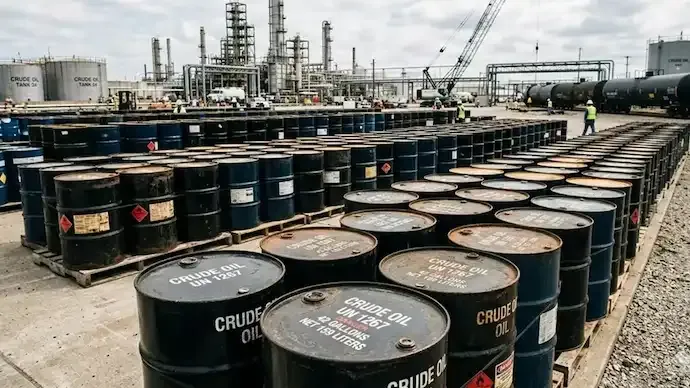

Global energy markets have become increasingly volatile as tensions in West Asia disrupt oil supply routes and create uncertainty in international trade. Analysts are warning that if crude oil prices rise to $100 per barrel, the impact could be significant for major energy-importing countries like India.
Currently, Brent crude, the global oil benchmark, has been trading near $85 per barrel, but ongoing geopolitical tensions could push prices higher if disruptions continue.
For India, which imports a large share of its oil needs, a sharp rise in crude prices could influence several parts of the economy.

Higher Import Bill for India
One of the most immediate effects of rising crude oil prices would be an increase in India’s import bill.
India imports roughly 85 percent of the crude oil it consumes. When global prices rise, the country must spend more foreign currency to purchase the same amount of oil.
A sustained increase in crude prices could therefore significantly raise the country’s overall spending on energy imports.
Higher import costs can also put pressure on the country’s current account balance, which measures the difference between what a country exports and imports.
Pressure on the Rupee
Higher oil prices often lead to greater demand for US dollars, as crude oil is traded internationally in dollars.
When India needs to buy more dollars to pay for expensive oil imports, it can put downward pressure on the Indian rupee.
A weaker rupee can further increase the cost of imports, creating a cycle where rising oil prices and currency depreciation reinforce each other.
Rising Inflation Risks
Another major concern linked to higher crude oil prices is inflation.
Fuel is a key input for transportation, manufacturing and logistics. When oil prices rise, the cost of moving goods and producing products often increases.
These higher costs can eventually be passed on to consumers through higher prices for everyday goods and services.
In India, higher crude oil prices can also influence petrol, diesel and cooking gas prices, which directly affect household budgets.
Impact on Government Finances
Higher crude prices can also affect government finances.
If the government chooses to reduce taxes on fuel to protect consumers from rising prices, it could lead to lower tax revenues.
On the other hand, if taxes remain unchanged, consumers could face higher fuel costs.
Balancing revenue needs and consumer protection becomes more challenging when global energy prices rise sharply.
Effects on Economic Growth
Energy costs play an important role in economic growth.
When oil prices rise significantly, businesses often face higher operating costs, which can affect production and investment decisions.
Consumers may also reduce spending on other goods and services if fuel and transportation costs increase.
These factors can slow economic momentum if oil prices remain elevated for a prolonged period.
Global Geopolitics Driving Energy Markets
Recent volatility in crude oil markets is largely linked to geopolitical tensions affecting energy supply routes.
Concerns about disruptions in the Strait of Hormuz, one of the world’s most important oil shipping lanes, have added uncertainty to global markets.
Around 20 percent of the world’s oil shipments pass through this narrow maritime corridor, making it a critical point for global energy trade.
India Monitoring the Situation
Indian authorities and energy companies are closely monitoring developments in global oil markets.
Experts say that while prices have not yet crossed the $100 mark, continued geopolitical instability could push oil closer to that level.
If that happens, India’s economic outlook could face additional pressure from higher import costs, currency fluctuations and inflation.









Conversation
Be kind and stay on topic. Comments are moderated; abuse, spam and personal attacks are removed. Report a problem