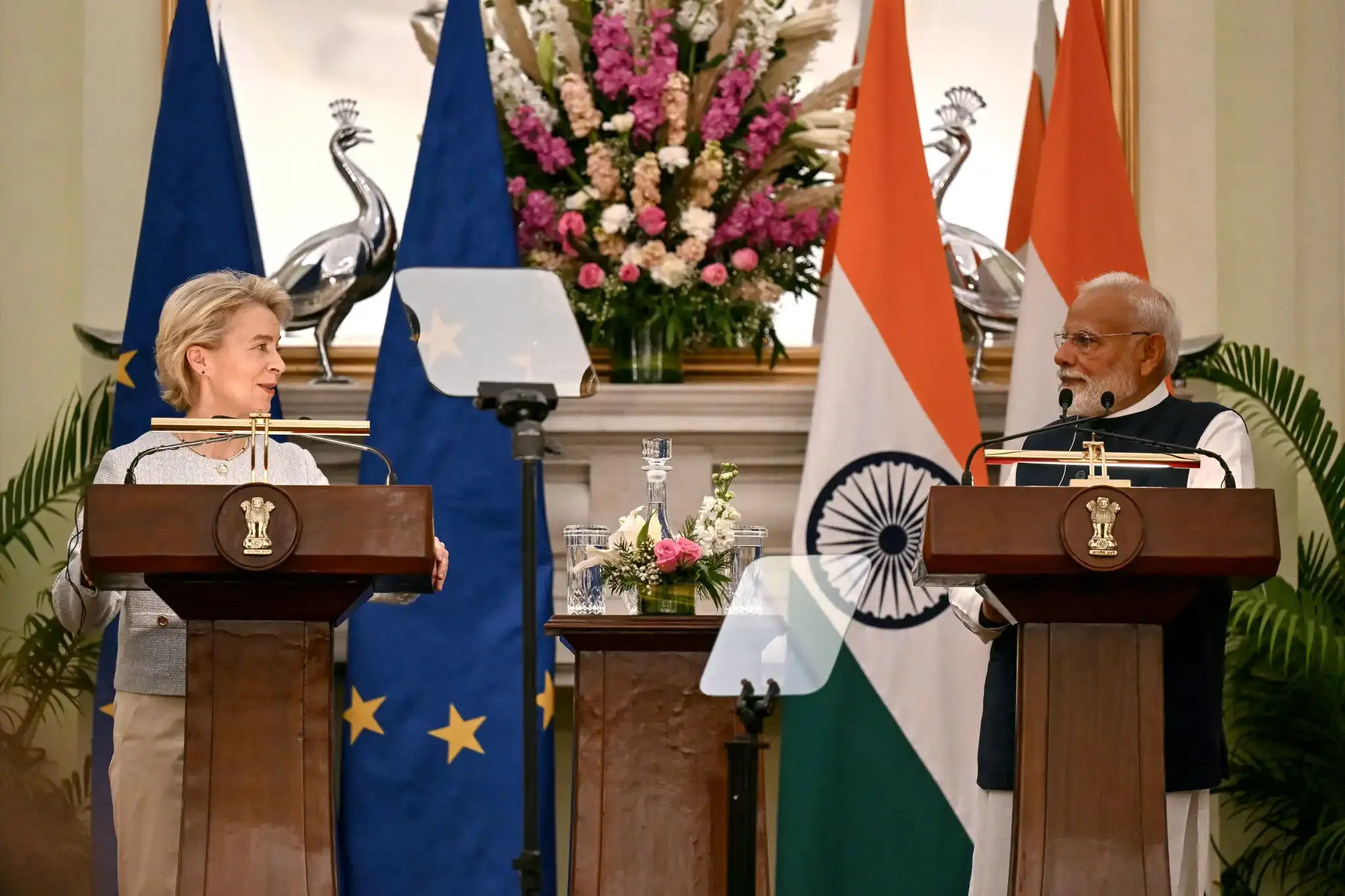
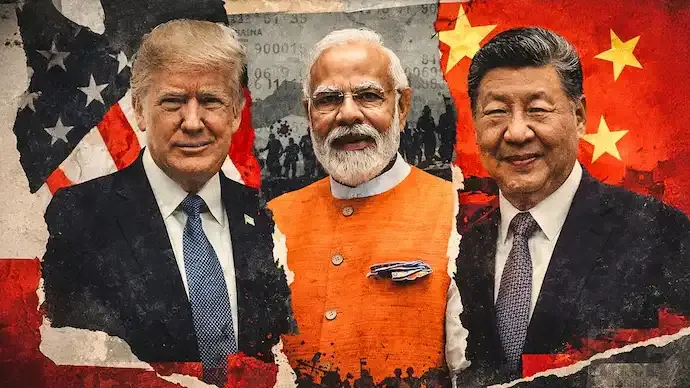
The conclusion of the India–European Union Free Trade Agreement, widely described as the “mother of all deals”, marks a defining moment in India’s economic and strategic engagement with the world. Finalised at the 16th India–EU Summit, the agreement brings together two of the world’s largest economic blocs at a time when global trade is increasingly shaped by protectionism, supply-chain disruptions and geopolitical uncertainty.
Collectively, India and the European Union account for nearly a quarter of global GDP and close to one-third of world trade. The successful conclusion of this agreement after years of negotiations reflects strong political intent on both sides to pursue cooperation over confrontation and to shape a modern, rules-based trading framework suited to a rapidly changing global economy.
For India, the FTA represents more than a conventional tariff-cutting exercise. It is a strategic validation of the country’s growing economic stature and reform-led trajectory. Over the past decade, India’s trade strategy has shifted from cautious engagement to confident integration, combining market access with protection of core domestic interests. The India–EU agreement exemplifies this calibrated approach.
Under the deal, over 99% of Indian exports by value will receive preferential access to the EU market, one of the world’s largest and most regulated consumer bases. Labour-intensive sectors such as textiles, apparel, leather, footwear, marine products, gems and jewellery, handicrafts, engineering goods and automobiles are expected to benefit from the removal of tariffs ranging between 4% and 26%. Exports worth an estimated USD 30 billion-plus stand to gain, with direct implications for employment generation, MSME growth and deeper integration into global value chains.
At the same time, India has ring-fenced sensitive sectors, particularly dairy and select agricultural products, ensuring that trade liberalisation does not undermine domestic producers. This balance underscores a mature trade posture—global in ambition, yet anchored in national priorities.
For the European Union, the agreement offers sustained access to one of the fastest-growing major economies at a time when traditional markets face slower growth. India’s expanding middle class, demographic dividend and large-scale digital and manufacturing transformation present long-term opportunities for European businesses. India has offered tariff liberalisation across over 92% of tariff lines, with phased implementation allowing domestic industry to adjust while encouraging investment and technology transfer.
One of the most forward-looking aspects of the agreement lies in services and mobility—sectors that are expected to drive global trade in the coming decades. The EU has committed market access across 144 services sub-sectors, including IT and IT-enabled services, professional services, education, finance, tourism and business services, where Indian firms enjoy strong global competitiveness.
Equally significant are mobility provisions that enable smoother movement of professionals, business visitors, contractual service suppliers and intra-corporate transferees, along with pathways for dependents. Commitments related to student mobility, post-study opportunities and future social security coordination further deepen people-to-people and knowledge-based economic ties.
Beyond its economic scope, the India–EU FTA sends a broader signal to the global order. In recent years, India has concluded major trade agreements with partners across regions. The EU deal sits at the centre of this strategy, effectively opening the wider European market to Indian exporters and reinforcing India’s role as a trusted, rule-shaping partner in global commerce.
At a time when economic nationalism is resurging worldwide, the India–EU FTA stands out as evidence that large economies can still pursue openness, predictability and long-term cooperation. In that sense, it marks not just a trade milestone, but a clear statement of India’s growing influence in the global economic architecture.