

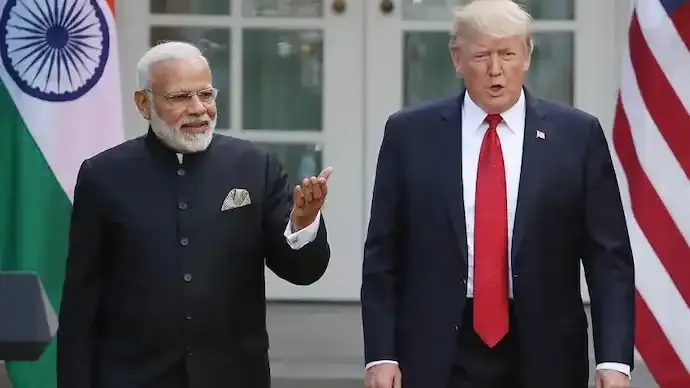
India has firmly rejected claims made by a senior US official suggesting that a long-pending India–US trade deal collapsed because Prime Minister Narendra Modi did not personally call US President Donald Trump to conclude negotiations. New Delhi described the characterisation as inaccurate and reiterated its commitment to reaching a balanced and mutually beneficial agreement.
Responding to remarks made by US Commerce Secretary Howard Lutnick, the Ministry of External Affairs clarified that trade discussions between the two countries have been ongoing for nearly a year and have involved multiple rounds of negotiations. Lutnick had claimed that the bilateral trade agreement failed to materialise because Modi did not directly engage Trump over the phone to finalise the deal.
MEA spokesperson Randhir Jaiswal said India and the United States had committed to negotiating a bilateral trade agreement as early as February last year. Since then, both sides have worked through several complex issues and, on multiple occasions, came close to finalising an agreement. However, he stressed that portraying the talks as derailed due to a lack of personal outreach by the Indian Prime Minister does not reflect reality.
Jaiswal further emphasised that India remains keen to bring the negotiations to a conclusion and continues to view the United States as a key economic partner. He highlighted that the two economies are complementary and that sustained dialogue remains the preferred route to resolving outstanding trade concerns.
The Indian government also pointed out that Modi and Trump spoke by phone at least eight times in 2025, covering a wide range of issues related to their broader strategic partnership. This, officials said, contradicts the narrative that the absence of communication between the two leaders stalled the trade talks.
Lutnick’s remarks come at a time when trade tensions between New Delhi and Washington have intensified. After negotiations stalled last year, the US imposed tariffs of up to 50 percent on certain Indian imports, including levies linked to India’s continued purchases of Russian oil. Trump has since warned that duties could be raised further unless India alters its energy trade policies, a move that unsettled financial markets and pushed the rupee to record lows.
According to Lutnick, earlier terms discussed during negotiations are no longer valid, as delays changed the negotiating landscape. He contrasted India’s approach with that of other countries, claiming that direct engagement with Trump helped seal trade deals elsewhere. However, Indian officials have consistently maintained that such agreements require institutional processes, domestic consultations, and parliamentary considerations, rather than last-minute leader-level interventions.
The issue has also added strain to broader India–US ties, already tested by differences over global conflicts, energy trade, and Trump’s repeated claims about mediating regional disputes involving India. Despite periodic contact between the two leaders in recent months, the future of the trade agreement remains uncertain.
India’s response signals an effort to de-escalate tensions while preserving its negotiating position, making clear that trade diplomacy is driven by substance and process, not personal optics.




Conversation
Be kind and stay on topic. Comments are moderated; abuse, spam and personal attacks are removed. Report a problem