

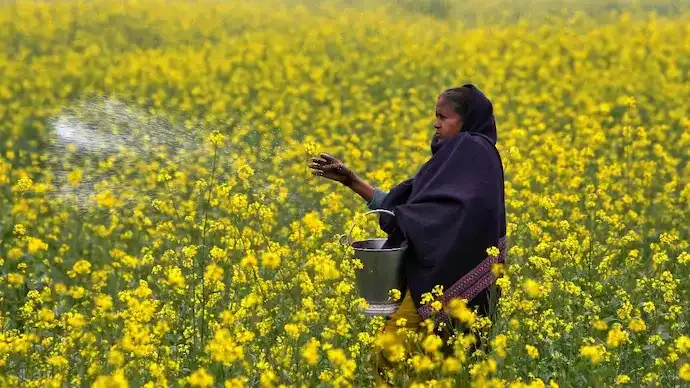

The Centre is quietly strengthening India's fertiliser security by diversifying import sources, exploring alternative global supply routes and reinforcing domestic supply chains, according to a Right to Information (RTI) response accessed by India Today.
The move comes amid rising geopolitical tensions and global supply chain uncertainties, with the government aiming to ensure uninterrupted fertiliser availability for India's agriculture sector.
RTI Reveals Centre's Multi-Pronged Fertiliser Strategy
In response to an RTI query, the government said it has initiated a series of measures to reduce India's dependence on vulnerable international supply routes and improve long-term fertiliser security.

According to the RTI reply, the Centre has undertaken:
- Diversification of fertiliser import sources.
- Exploration of alternative international import routes.
- Strengthening of domestic fertiliser supply chains.
- Measures to secure raw materials, intermediates and finished fertilisers.
The government said these steps are intended to minimise disruptions arising from geopolitical conflicts, logistics challenges and volatility in global commodity markets.
Reducing Dependence on Limited Suppliers
India remains heavily dependent on fertiliser imports for meeting domestic agricultural demand.
The RTI response indicates that the government is broadening its supplier base to avoid excessive reliance on a limited number of countries or shipping corridors that could be disrupted during international crises.
Although the reply does not identify specific countries or routes, it confirms that diversification efforts are underway to improve supply resilience.
Focus on Raw Materials and Domestic Production
Apart from importing finished fertilisers, India also relies on overseas supplies of key raw materials required for domestic manufacturing.
The government said it is working to ensure uninterrupted availability of:
- Raw materials.
- Intermediate chemicals.
- Finished fertilisers.
Strengthening access to these inputs is expected to support both imports and domestic fertiliser production.
Strengthening India's Domestic Supply Chain
The RTI reply also highlights efforts to improve the domestic movement and distribution of fertilisers.
The Centre is focusing on making the fertiliser supply chain more resilient to ensure timely availability for farmers during critical sowing seasons.
A stronger domestic logistics network can help reduce the impact of international disruptions on agricultural operations.
Why Fertiliser Security Matters
India is one of the world's largest consumers of fertilisers.
According to government data:
- India is the second-largest fertiliser consumer globally.
- It is the largest importer of urea and di-ammonium phosphate (DAP).
- Nearly 60% of the country's DAP requirement is met through imports.
- India also imports key raw materials such as rock phosphate, phosphoric acid and potash for domestic production.
This high import dependence makes the country vulnerable to global supply disruptions and price volatility.
Global Uncertainty Has Raised Concerns
The RTI disclosure comes at a time when governments worldwide are reassessing supply chain resilience.
Earlier this year, concerns emerged that India's fertiliser subsidy bill could rise significantly due to higher global nutrient prices amid disruptions linked to tensions around the Strait of Hormuz.
Such geopolitical developments have highlighted the importance of diversifying supply sources and strengthening domestic preparedness.
Current Fertiliser Stock Position
Government data shows that India had approximately 19.02 million tonnes of fertiliser stocks as of April 2026.
The estimated requirement for the Kharif season stands at around 39.05 million tonnes, underlining the importance of maintaining stable imports and efficient domestic distribution.
Key Highlights
- An RTI reply confirms the Centre is diversifying fertiliser import sources.
- The government is exploring alternative international supply routes.
- Measures are being taken to strengthen India's domestic fertiliser supply chain.
- India remains heavily dependent on imported DAP, urea and key raw materials.
- The strategy aims to protect agriculture from global supply disruptions and geopolitical risks.
FAQs
What does the RTI reply reveal?
The RTI response states that the government is diversifying fertiliser import sources, identifying alternative supply routes and strengthening domestic supply chains to ensure uninterrupted availability.
Why is India diversifying fertiliser imports?
The move is intended to reduce dependence on limited suppliers and minimise risks arising from geopolitical tensions, logistics disruptions and global market volatility.
Which fertilisers does India import?
India imports large quantities of di-ammonium phosphate (DAP), urea and essential raw materials such as rock phosphate, phosphoric acid and potash.
Why is fertiliser security important?
Reliable fertiliser supplies are critical for agricultural production, especially during sowing seasons, and help safeguard food security.
How much fertiliser stock does India currently have?
According to government data, India had around 19.02 million tonnes of fertiliser stocks as of April 2026 against an estimated Kharif requirement of 39.05 million tonnes.









Conversation
Be kind and stay on topic. Comments are moderated; abuse, spam and personal attacks are removed. Report a problem