

Iran witnessed its most significant wave of protests in nearly three years after the national currency plunged to an unprecedented low, triggering public outrage over spiralling inflation, economic mismanagement and declining living standards. The sudden collapse of the rial forced the resignation of the country’s central bank chief and exposed deepening economic distress across the nation.
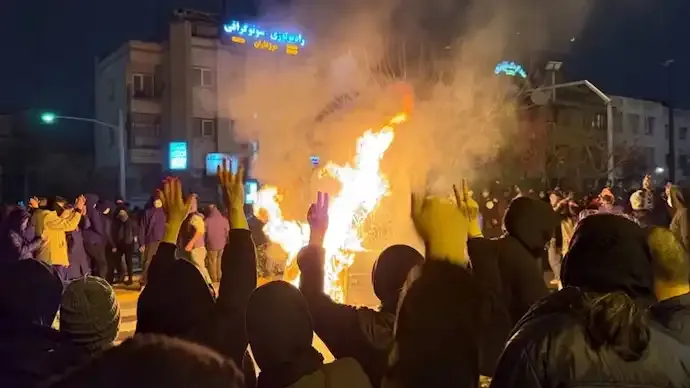
Demonstrations broke out across Tehran and several major cities on Monday as the rial fell to nearly 1.42 million against the US dollar, before stabilising marginally the next day. Protesters, including traders and shopkeepers, gathered in key commercial areas such as Saadi Street and neighbourhoods surrounding the capital’s Grand Bazaar — a historically symbolic centre of political dissent in Iran. Reports indicated that business activity slowed sharply as many traders closed shops in solidarity with the protests.
The unrest prompted Mohammad Reza Farzin, head of Iran’s central bank, to step down amid mounting pressure. His resignation came as public anger intensified over rising food prices, shrinking purchasing power and a perception that authorities have failed to rein in economic instability. Security forces were deployed in parts of Tehran, and witnesses reported the use of tear gas to disperse crowds in some locations.
Protests were not confined to the capital alone. Similar demonstrations were reported in cities including Isfahan, Shiraz and Mashhad, underlining the nationwide scale of frustration. While some gatherings were dispersed quickly, the widespread nature of the unrest marked the largest mobilisation since 2022, when protests erupted following the death of Mahsa Jina Amini in police custody.
The immediate trigger for the protests was the rapid devaluation of the rial, which has lost nearly two-thirds of its value since late 2022. When Farzin assumed office, the currency traded at around 430,000 to the dollar. The latest collapse has sharply accelerated inflation, pushing essential goods further out of reach for millions of Iranians.
Official data show inflation standing above 42 per cent in December, with food prices rising by more than 70 per cent year-on-year. Healthcare and medical costs have surged by around 50 per cent, placing additional strain on households already struggling with stagnant incomes. Economists warn that continued currency depreciation could push the country toward hyperinflation if corrective measures are not implemented.
Iran’s economic troubles remain closely linked to international sanctions and geopolitical tensions. The rial had strengthened significantly following the 2015 nuclear agreement, which eased restrictions and allowed limited access to global markets. However, renewed sanctions following the collapse of that deal have isolated Iran financially, restricted oil revenues and limited foreign investment.
Recent regional tensions have added to market anxiety. Concerns over escalating conflict in West Asia, combined with the reimposition of international sanctions earlier this year, have deepened uncertainty and accelerated capital flight. Traders and analysts say these factors have compounded long-standing structural weaknesses in Iran’s economy.
For many Iranians, the protests reflect broader frustration with declining living standards, limited job opportunities and a sense of economic insecurity that has persisted for years. While authorities have pledged reforms and currency stabilisation measures in the past, repeated cycles of inflation and depreciation have eroded public confidence.
As demonstrations continue to simmer, the resignation of the central bank chief highlights the political fallout of Iran’s worsening economic crisis. Whether the government can restore stability, rein in inflation and prevent further unrest remains an open question, as pressure mounts from both the streets and the markets.


Conversation
Be kind and stay on topic. Comments are moderated; abuse, spam and personal attacks are removed. Report a problem