Shopping cart
Your cart empty!


Your cart empty!
Terms of use dolor sit amet consectetur, adipisicing elit. Recusandae provident ullam aperiam quo ad non corrupti sit vel quam repellat ipsa quod sed, repellendus adipisci, ducimus ea modi odio assumenda.
Lorem ipsum dolor sit amet consectetur adipisicing elit. Sequi, cum esse possimus officiis amet ea voluptatibus libero! Dolorum assumenda esse, deserunt ipsum ad iusto! Praesentium error nobis tenetur at, quis nostrum facere excepturi architecto totam.
Lorem ipsum dolor sit amet consectetur adipisicing elit. Inventore, soluta alias eaque modi ipsum sint iusto fugiat vero velit rerum.
Sequi, cum esse possimus officiis amet ea voluptatibus libero! Dolorum assumenda esse, deserunt ipsum ad iusto! Praesentium error nobis tenetur at, quis nostrum facere excepturi architecto totam.
Lorem ipsum dolor sit amet consectetur adipisicing elit. Inventore, soluta alias eaque modi ipsum sint iusto fugiat vero velit rerum.
Dolor sit amet consectetur adipisicing elit. Sequi, cum esse possimus officiis amet ea voluptatibus libero! Dolorum assumenda esse, deserunt ipsum ad iusto! Praesentium error nobis tenetur at, quis nostrum facere excepturi architecto totam.
Lorem ipsum dolor sit amet consectetur adipisicing elit. Inventore, soluta alias eaque modi ipsum sint iusto fugiat vero velit rerum.
Sit amet consectetur adipisicing elit. Sequi, cum esse possimus officiis amet ea voluptatibus libero! Dolorum assumenda esse, deserunt ipsum ad iusto! Praesentium error nobis tenetur at, quis nostrum facere excepturi architecto totam.
Lorem ipsum dolor sit amet consectetur adipisicing elit. Inventore, soluta alias eaque modi ipsum sint iusto fugiat vero velit rerum.
Do you agree to our terms? Sign up
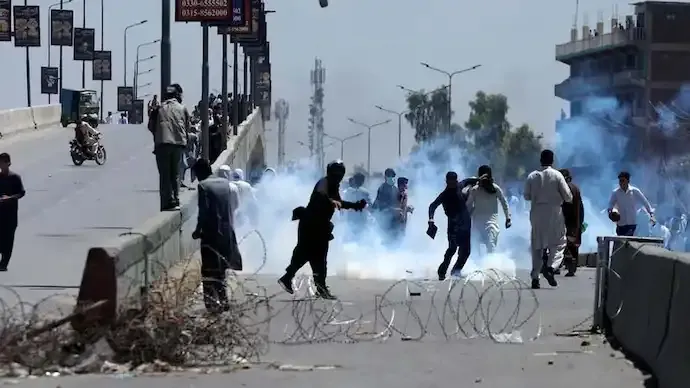
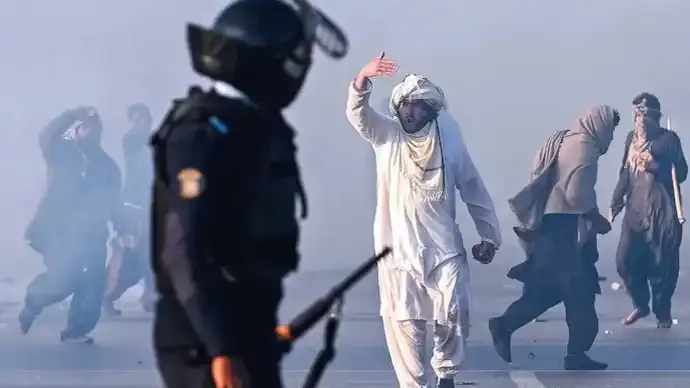
Karachi witnessed a sharp surge in unrest after rallies demanding a separate Sindhudesh turned violent on Sindhi Culture Day. What began as a cultural celebration quickly spiralled into clashes, stone pelting, and police action, highlighting the growing influence of Sindhi nationalist sentiments in Pakistan.
Led by the Jiye Sindh Muttahida Mahaz (JSSM), thousands of protesters marched through Karachi raising slogans of “Azadi” and “Pakistan Murdabad,” calling for Sindh’s liberation. Sindhudesh, the ancient name for the modern Sindh region, has long been at the heart of separatist demands rooted in ethnic and historical identity.
Tensions escalated when authorities diverted the rally’s planned route, triggering anger among participants. As sections of the crowd began pelting stones and damaging property, police responded with tear gas to break up the protest.
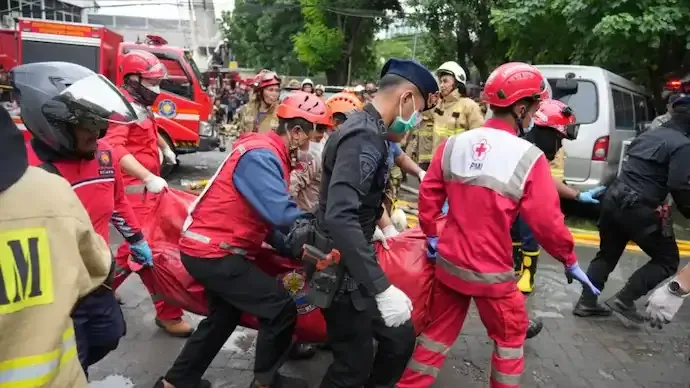
Local reports confirm 45 arrests and at least five injured police personnel. The provincial government has directed a crackdown on those involved in vandalism.
The Sindhi nationalist outfit JSSM has previously accused Pakistan’s security forces of enforced disappearances, extrajudicial killings and abuse of anti-terror laws.
Earlier this year, the group appealed to the United Nations to recognise Sindhudesh as an independent nation. It also sought support from Prime Minister Narendra Modi, citing historic cultural ties between Sindh and India.
The separatist demand resurfaced after a Pakistani TV discussion where commentators claimed MQM founder Altaf Hussain had once warned Sindh’s leadership that the “Sindhudesh card” could be used after the 18th Constitutional Amendment.
In India, Defence Minister Rajnath Singh recently remarked that Sindh is "civilisationally part of India" and expressed confidence that the region could return to India “someday,” adding fuel to the broader debate.
The Sindhudesh movement dates back to 1967, led by GM Syed, gaining traction after the independence of Bangladesh in 1971. Sindhi groups argue that their cultural and historical identity, linked with the ancient Indus Valley civilisation, has not been respected under Pakistani federal structure.
However, most groups do not demand a merger with India; instead, they seek autonomy within Pakistan or a separate independent Sindhudesh.
As Karachi continues to simmer, the unrest signals deeper discontent within Sindh — a province long at odds with Pakistan’s central governance and security apparatus.
196
Published: Dec 09, 2025

All India Story is your trusted source for comprehensive and up-to-the-minute news coverage across India. Bringing you the latest on politics, business, technology, entertainment, sports, and more, we are dedicated to keeping you informed with accurate, engaging, and insightful stories from every corner of the nation.