


Pakistan’s long-standing debate on dividing its provinces has resurfaced, with fresh political momentum behind a proposal to create several smaller administrative units. Federal Minister for Communications Abdul Aleem Khan declared that the formation of new provinces is now “inevitable”, arguing that smaller units would improve governance and service delivery.
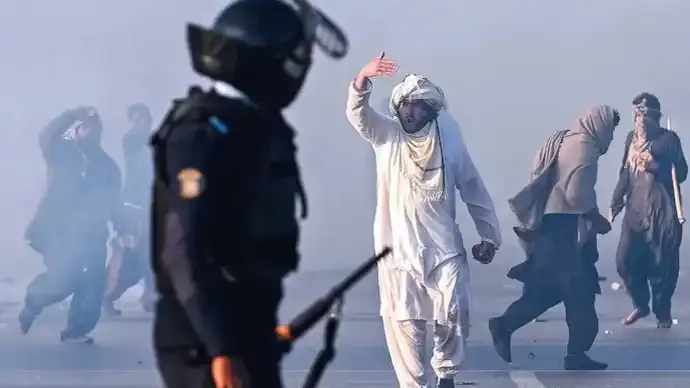
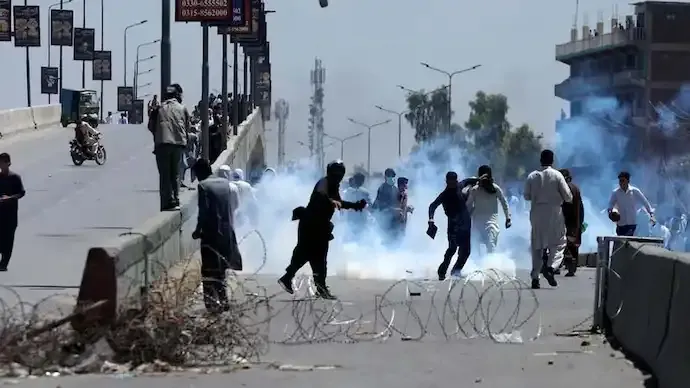
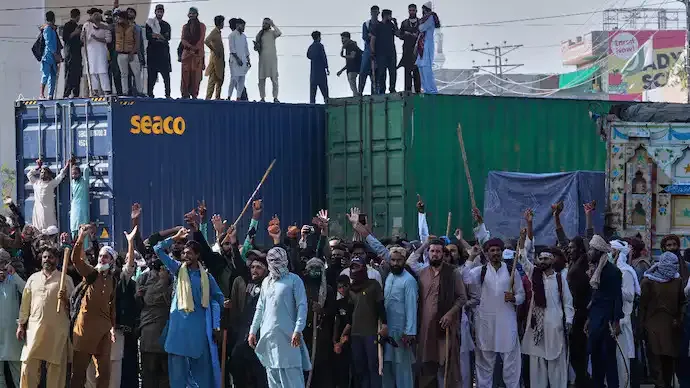
However, constitutional experts and former civil servants caution that such a move—amid rising tensions in Balochistan and Khyber Pakhtunkhwa—could deepen instability rather than resolve it.
A Push for Smaller Provinces Amid Growing Turmoil
Pakistan originally consisted of five provinces in 1947, but political restructuring, military rule and the secession of East Bengal in 1971 reshaped the federation. Today, debates on creating new provinces are gaining traction again as the current hybrid regime under Field Marshal Asim Munir and Prime Minister Shehbaz Sharif faces intensifying nationalist sentiments and governance challenges.

According to reports in Dawn and Geo TV, the government is considering a plan to divide Sindh, Punjab, Balochistan and Khyber Pakhtunkhwa into three provinces each. The move has support from coalition partners like the Istehkam-e-Pakistan Party (IPP) and MQM-P, which says it will pursue the proposal through the 28th Constitutional Amendment.
But opposition is strong. The PPP, which has a major hold in Sindh, has warned that it will not accept any fragmentation of the province.
Why Experts Warn of ‘More Harm Than Good’
Several analysts argue that Pakistan’s problem is not the size of its provinces but the weakness of its administrative and judicial institutions.
Former senior bureaucrat Syed Akhtar Ali Shah wrote that past experiments—from Ayub Khan’s two-unit system to repeated governance overhauls—failed to improve state functioning. Creating new provinces without fixing core governance failures could escalate tensions, institutional duplication and administrative costs.
Similarly, PILDAT president Ahmed Bilal Mehboob noted that Pakistan’s issue is insufficient devolution, not oversized provinces. True reform, he argued, lies in strengthening local governments as mandated by the Constitution.
A Political Gamble With Uncertain Outcomes
While the government pushes ahead with the idea of restructuring, critics insist that new provinces will not cure Pakistan’s deeper crises—weak rule of law, uneven enforcement, provincial alienation, and fragile state capacity.
With tensions already high in Balochistan and Khyber Pakhtunkhwa, experts warn that redrawing boundaries now could aggravate separatist sentiment instead of easing administrative challenges.






Conversation
Be kind and stay on topic. Comments are moderated; abuse, spam and personal attacks are removed. Report a problem