

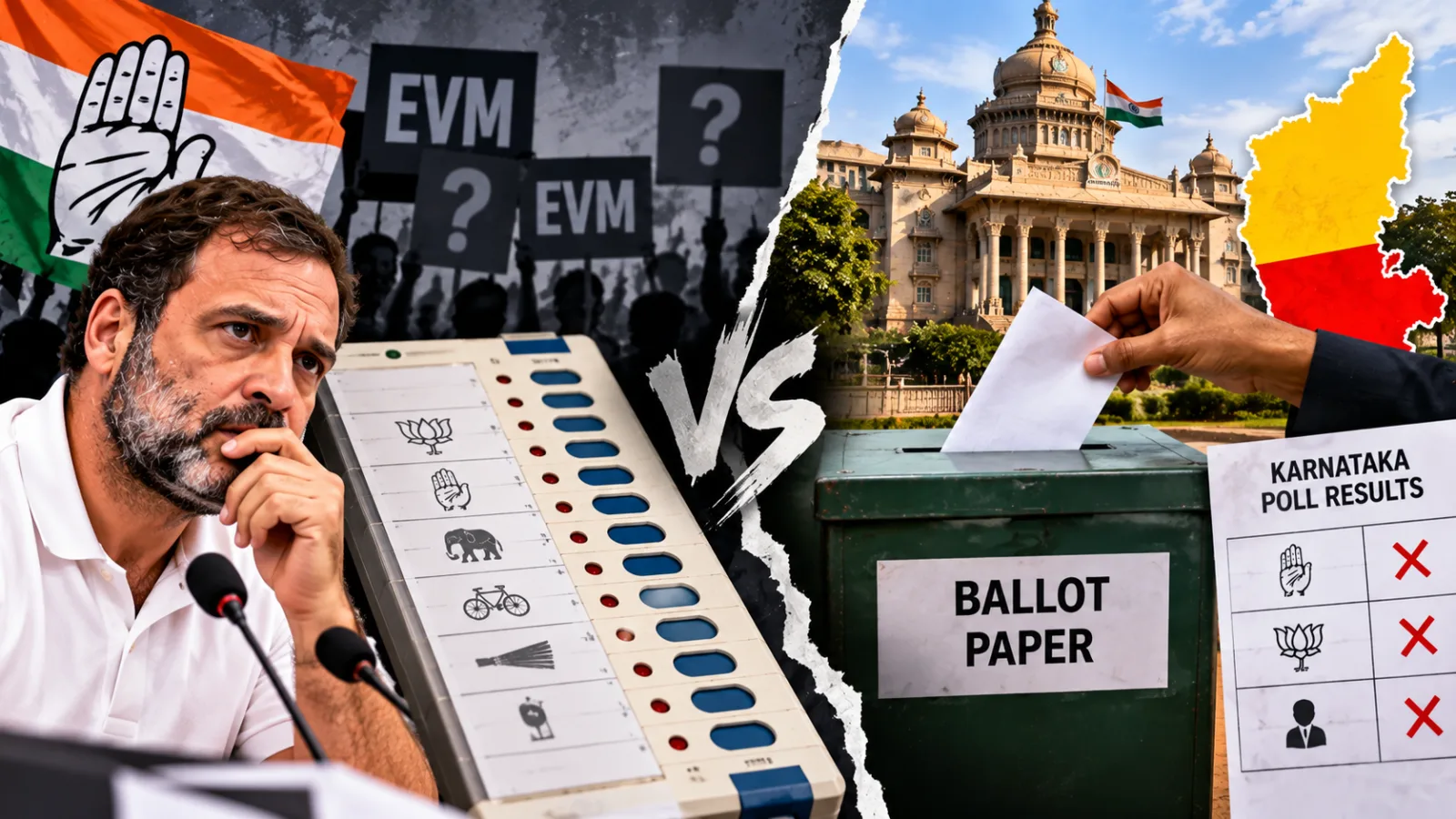

The Karnataka Legislative Council elections have triggered a fresh political controversy over Electronic Voting Machines (EVMs), after the Bharatiya Janata Party (BJP) secured major victories in polls conducted using paper ballots.
The results have drawn attention because opposition parties, particularly the Congress, have repeatedly raised concerns about the reliability of EVMs in elections. The Karnataka contests are now being cited in a political debate over whether criticism of electronic voting systems is consistent with the outcomes of elections conducted through traditional ballot papers.
Congress Expands Voter Rolls Across Constituencies
According to the report, the Congress government registered state government employees in voter rolls across teacher and graduate constituencies covering 133 Assembly segments.

The exercise significantly increased the voter rolls, taking the number of registered voters to approximately 2,60,000.
These constituencies are important because they represent specific professional groups, including teachers and graduates, rather than the general electorate. The expanded voter registration was part of the political context surrounding the Legislative Council elections.
BJP Secures Major Wins Despite Paper Ballots
Despite the use of paper ballots, the Congress faced defeats across the Council seats, while the BJP recorded significant victories.
The outcome has become a point of political debate, with critics questioning opposition arguments that associate electoral defeats with the use of EVMs.
The results have also prompted questions about the political narratives surrounding electoral processes, particularly when parties perform differently in elections conducted through different voting systems.
EVM Debate Returns to Political Spotlight
The Karnataka results have brought the EVM controversy back into focus, with the debate increasingly centred on the consistency of political positions regarding election methods.
However, the use of paper ballots and the outcome of an election alone do not establish whether allegations about EVMs in other elections are valid or invalid. Such claims require independent evidence and examination.
The Karnataka Legislative Council results have nevertheless added another dimension to the ongoing political argument over electoral transparency, voting systems and the credibility of election outcomes.
Relevant Link: Election Commission of India





Conversation
Be kind and stay on topic. Comments are moderated; abuse, spam and personal attacks are removed. Report a problem