

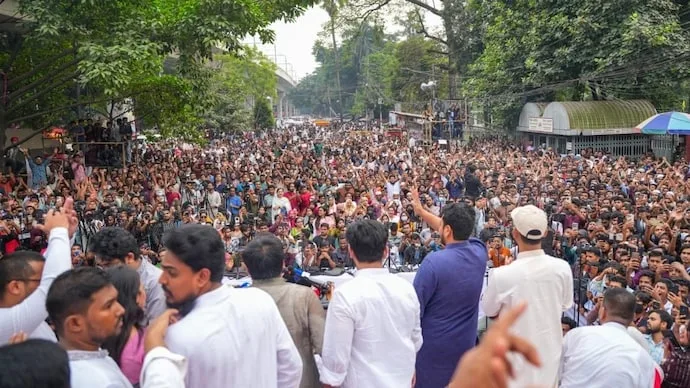

Anti-India slogans in Bangladesh have returned to the streets of Dhaka, as a massive protest organised by the National Citizen Party (NCP) brought together thousands of supporters on Friday. Although the demonstration primarily targeted the government of Prime Minister Tarique Rahman over rising prices, electricity shortages and fuel supply problems, anti-India rhetoric also featured prominently.
The rally was held outside the National Museum in Dhaka under the leadership of NCP convenor Nahid Islam, one of the prominent figures of the 2024 student-led uprising that resulted in former Prime Minister Sheikh Hasina’s removal from office.
Videos circulating on social media showed NCP leaders raising the slogan “Dilli na Dhaka”, followed by crowds responding, “Dhaka, Dhaka”. Islam also demanded the resignation of Home Minister Salahuddin Ahmed and Energy Minister Iqbal Hassan Mahmood Tuku, accusing them of failing to address the country's growing difficulties.

Nahid Islam Raises Allegations Against India
During his address, Islam alleged that India was conspiring against Bangladesh and raised concerns over reported killings along the border. He also claimed that Muslims were being persecuted in Assam and West Bengal and alleged that there were plans to demolish mosques in Delhi. However, he did not provide evidence to substantiate these claims.
Islam also warned that Bangladeshis could launch fresh protests if the Ganga Water Sharing Treaty was not renegotiated on what he described as fair terms.
The 30-year agreement between India and Bangladesh is due to expire in December 2026. It regulates the sharing of Ganga waters at the Farakka Barrage during the lean season, from January to May. The river, known as the Padma in Bangladesh, supports the livelihoods of a significant section of the country's population.
Anti-India Rhetoric After Sheikh Hasina’s Ouster
Anti-India statements have featured repeatedly in Bangladesh's political discourse since Hasina was ousted in August 2024. Several student and political leaders made provocative remarks targeting New Delhi during the interim administration led by Muhammad Yunus.
NCP leaders, including Nahid Islam and MP Hasnat Abdullah, have previously criticised India's alleged interference in Bangladesh. Abdullah also made controversial remarks about India's northeastern states and the strategically important Siliguri Corridor.
Such rhetoric appeared to subside after the Bangladesh Nationalist Party government led by Tarique Rahman came to power in February. However, Friday's demonstration suggests that anti-India sentiment remains a visible part of political mobilisation.
Energy Crisis and Inflation Fuel Public Anger
Bangladesh's domestic economic difficulties have intensified pressure on the eight-month-old government. The country imports more than 90% of its oil and around 30% of its gas, leaving it exposed to international energy market disruptions.
Power shortages have affected several regions and disrupted production in garment factories. Meanwhile, inflation has remained around 8.5% in 2026, according to the World Bank. Rising food and non-food prices, alongside stagnant wages, have increased the financial pressure on households.
The World Bank has also reported that approximately 2.1 million additional people have fallen into poverty compared with the previous year.
At Friday's rally, Islam threatened nationwide demonstrations and warned that protesters could surround Tarique Rahman's residence if the two ministers refused to resign.
The demonstration reflects growing dissatisfaction with the government's handling of economic and energy challenges. At the same time, the return of anti-India slogans highlights how bilateral tensions continue to intersect with Bangladesh's domestic political landscape.
Relevant Link: World Bank





Conversation
Be kind and stay on topic. Comments are moderated; abuse, spam and personal attacks are removed. Report a problem