
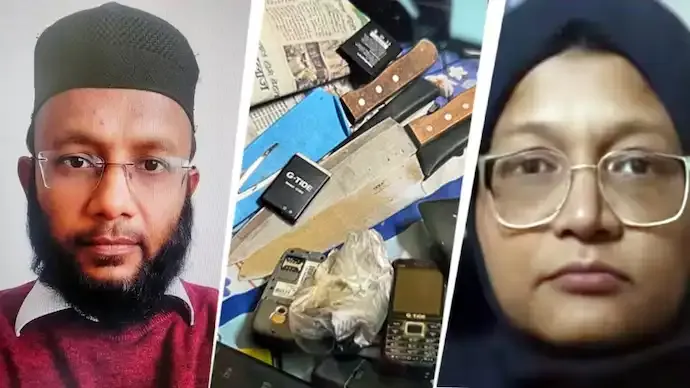
In a major counter-terror breakthrough, the Uttar Pradesh Anti-Terrorism Squad (ATS) has uncovered what officials describe as a ‘white-collar’ terror module, following raids at the Lucknow residence of Dr. Parvez Ansari. The operation, part of a larger multi-state probe connected to the Delhi Red Fort blast, revealed a cache of secret communication devices, mobile phones, and weapons that investigators say point to a sophisticated and clandestine network.
The ATS Raid in Lucknow
Acting on intelligence inputs shared by the National Investigation Agency (NIA) and Intelligence Bureau (IB), the Uttar Pradesh ATS conducted an overnight search at Dr. Ansari’s home in the city’s Indira Nagar area.
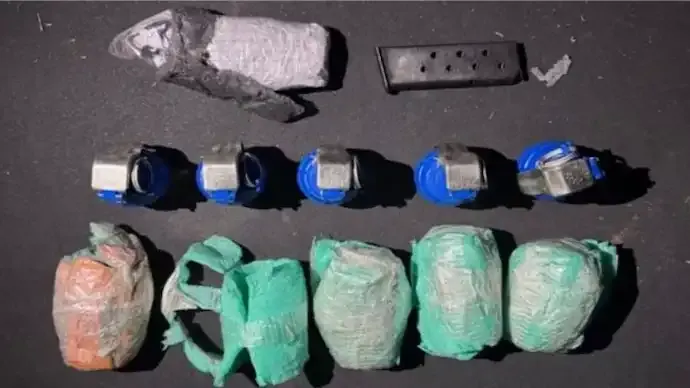
During the raid, officers recovered:
-
Six keypad mobile phones, believed to have been used for encrypted communication.
-
A computer hard drive with a concealed disk partition, containing encrypted files.
-
Two pen drives with what sources described as “suspicious cross-border communication data.”
-
A country-made pistol and two cartridges.
Officials suspect that Dr. Ansari used these devices to communicate with contacts in Jammu, Kashmir, and overseas handlers, allegedly tied to Jaish-e-Mohammad (JeM).
“The recovered phones were not smartphones — they were chosen deliberately to avoid traceability. These devices were frequently swapped and destroyed,” a senior ATS official told All India Story.
The raid also led to the arrest of Dr. Ansari’s sister, Dr. Shaheen Shahid, who was allegedly involved in handling funds and logistics.
A ‘White-Collar’ Terror Link
What sets this operation apart is the profile of the accused. Both Dr. Ansari and Dr. Shaheen are medical professionals, respected in their community and with no prior criminal records.
Investigators now believe they are part of a broader ‘doctor module’ — a network of educated professionals accused of aiding extremist activities under the guise of legitimate occupations.
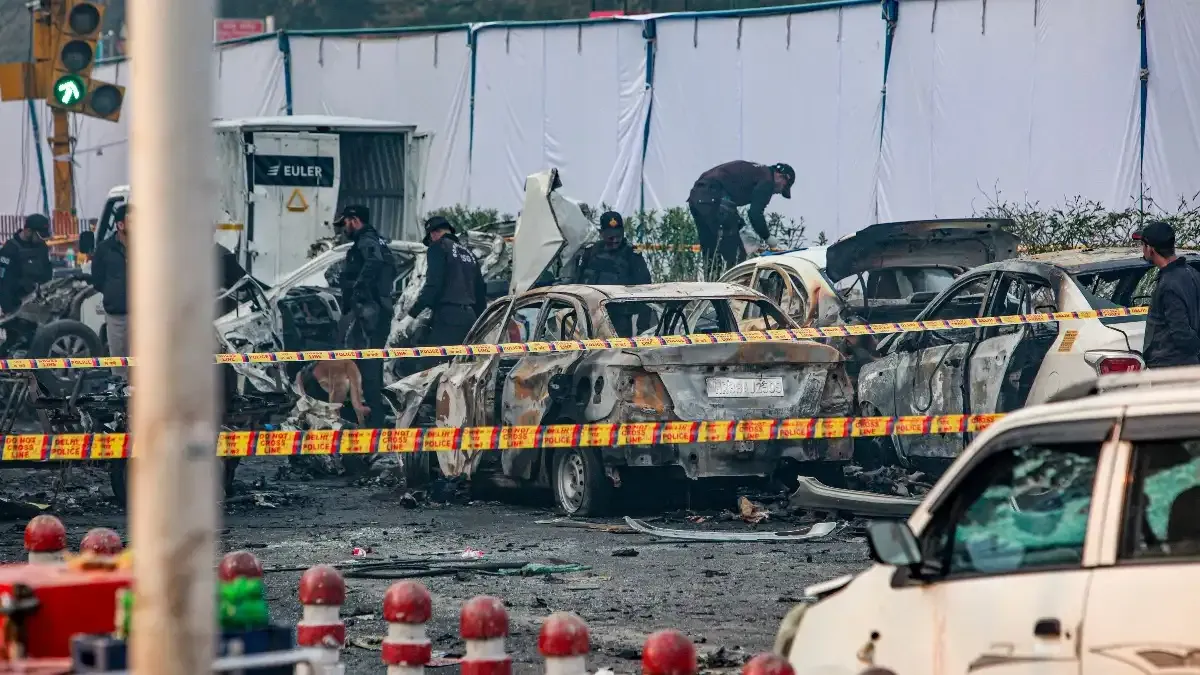
The same module is being probed for its role in the Red Fort car explosion in Delhi, which killed ten people and injured twenty others on November 10.
“This is terrorism hidden behind professionalism,” said an NIA officer assisting the case. “Highly educated individuals were using their positions to move money, share information, and coordinate logistics without raising suspicion.”
Recovered Evidence Suggests Widespread Coordination
According to forensic sources, preliminary analysis of the seized computer has revealed:
-
Encrypted email trails linked to foreign domains hosted in Turkey and the Middle East.
-
Medical data files that appear to have been used as cover for transmitting classified documents.
-
Deleted archives suggesting coordination with individuals in Saharanpur, Faridabad, and Pulwama — cities already under NIA scrutiny.
The six keypad phones, meanwhile, were used in what investigators call a “rotational SIM strategy” — where prepaid SIM cards were circulated among members of the module to mask identity and pattern recognition.
“This points to a highly organised structure with external training,” a cybersecurity analyst working with the ATS confirmed.
Connection to Red Fort Blast and Doctor Module
The Lucknow arrests follow a string of high-profile detentions across India since the Red Fort blast. Key suspects, including Dr. Umar Un Nabi, Dr. Muzamil Ahmad Ganaie, and Dr. Shaheen Sayeed, were arrested earlier in Haryana and Jammu & Kashmir.
Dr. Ansari’s name reportedly surfaced during interrogation of the Faridabad accused. Investigators say he was in contact with handlers based in Pakistan through coded Telegram channels like Farzandan-e-Darul Uloom and Umar bin Khattab Forum.
Sources revealed that financial transactions linked to Ansari’s clinic account are being analysed for suspicious deposits and overseas transfers. Preliminary findings suggest that small payments were split and rerouted through digital wallets and crypto exchanges to avoid detection.
“He was not just a sympathiser — he played an operational role by facilitating communications and providing safe access to digital resources,” said an intelligence officer familiar with the case.
Weapons and Digital Forensics Under Analysis
Forensic experts are now examining the recovered firearm to determine if it matches the ammunition seized in earlier raids in Faridabad and Saharanpur.
The NIA’s Cyber Forensics Division has taken custody of the seized devices and is attempting to decrypt hidden data believed to contain blueprints for chemical mixtures used in explosives.
A senior ATS official noted that Dr. Ansari’s knowledge of medical chemicals and compounds could have aided in the creation of controlled explosive mixtures, similar to those used in the Red Fort blast.
Sister’s Role in Logistics and Funding
Investigators believe Dr. Shaheen Shahid, Ansari’s sister, played a crucial role in logistics and resource management.
She allegedly handled fund transfers, safehouse coordination, and served as a local courier for encrypted USB drives and communication devices.
Shaheen is said to have been in direct contact with Dr. Shaheen Sayeed, one of the earlier arrested doctors from Pulwama, creating a female sub-network within the larger module.
NIA-ATS Coordination and National Implications
Following the Lucknow raid, the NIA has expanded its investigation into the multi-state doctor module, which now spans six states — Delhi, Haryana, Uttar Pradesh, Jammu & Kashmir, Tamil Nadu, and Telangana.
Officials are examining how professionals in the medical and educational sectors are being targeted for ideological indoctrination through encrypted Telegram and darknet channels.
“The pattern emerging is of radicalisation through academia,” said an MHA source. “This is not a low-tech operation — it’s intellectual subversion with strategic execution.”
The Lucknow ATS has submitted a preliminary report to the Union Home Ministry, confirming that the devices seized from Dr. Ansari’s home contain evidence of both domestic coordination and foreign contact.
The Bigger Picture
The Lucknow terror bust underscores a troubling evolution in India’s internal security landscape — where radicalisation is merging with professionalism.
Educated individuals, capable of navigating digital security systems and scientific processes, are becoming silent enablers of terrorism.
As the NIA widens its probe, one thing is clear: this is no longer traditional terrorism. It’s terror in a lab coat, terror behind a laptop, and terror embedded within modern professional networks.

Conversation
Be kind and stay on topic. Comments are moderated; abuse, spam and personal attacks are removed. Report a problem