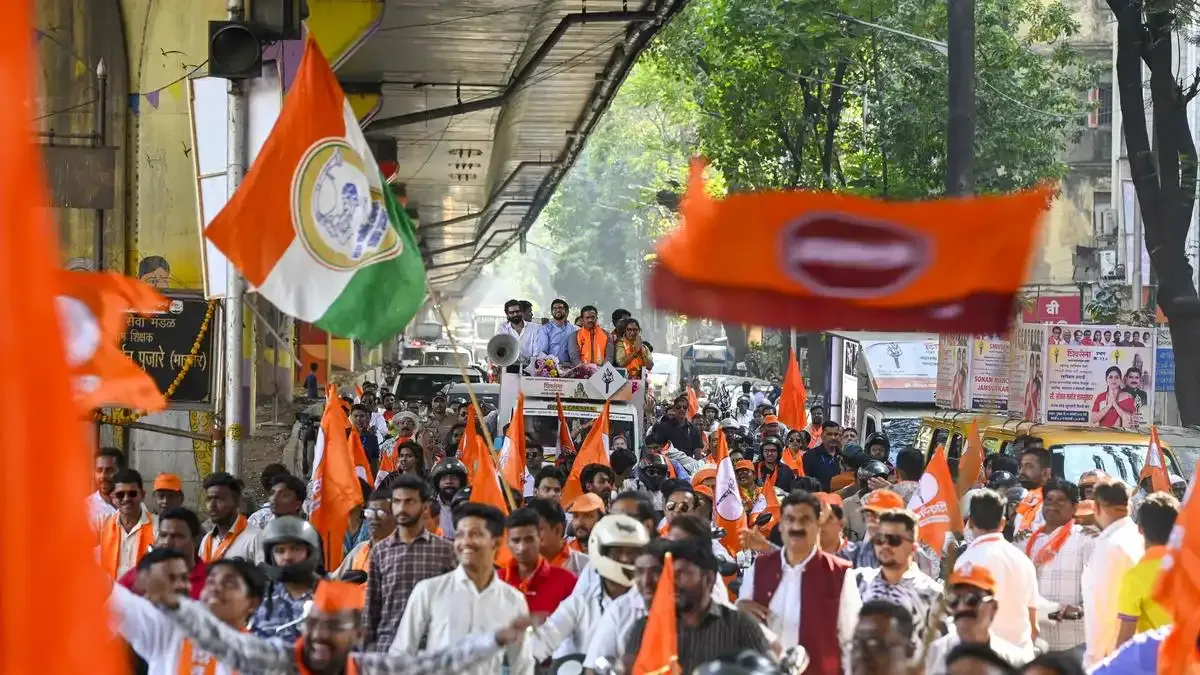
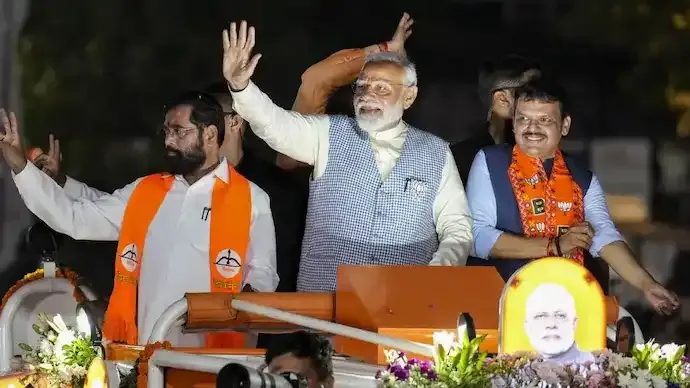
The ruling Mahayuti alliance in Maharashtra has finalised its long-awaited seat-sharing arrangement for the upcoming Brihanmumbai Municipal Corporation (BMC) elections, setting the stage for a high-stakes civic battle in India’s financial capital. Under the agreement, the Bharatiya Janata Party (BJP) will contest 137 seats, while the Shiv Sena, led by Maharashtra Chief Minister Eknath Shinde, will fight on 90 seats.
The announcement was made by Mumbai BJP president Amit Satam on Monday, just a day before the deadline for filing nominations, underscoring the urgency and political significance of the pact. The BMC elections are widely seen as a prestige contest, given the civic body’s massive budget and influence over Mumbai’s infrastructure, governance, and urban planning.
However, the Mahayuti alliance will not be contesting the polls as a fully united front. The Nationalist Congress Party (NCP), led by Deputy Chief Minister Ajit Pawar, has decided to go solo in the civic elections. The party has already announced 64 candidates, signalling its intent to carve out an independent political space in Mumbai rather than align formally with its state-level allies.
The split is politically significant and highlights underlying tensions within the Mahayuti coalition. According to sources, the BJP raised strong objections to the leadership role of Nawab Malik in the NCP’s Mumbai unit. Malik’s presence reportedly became a sticking point, prompting the BJP to resist a three-party arrangement for the BMC polls. As a result, the NCP chose to contest independently, even as it continues to support the Mahayuti government at the state level.
The BJP-Shiv Sena (Shinde faction) pact reflects a careful balancing of strengths in Mumbai’s complex political landscape. The BJP, which has steadily expanded its organisational footprint in the city over the last decade, is aiming to consolidate its dominance by contesting the largest share of seats. Shiv Sena, traditionally strong in Mumbai’s local politics, is banking on its cadre base and the chief minister’s visibility to retain relevance in the civic arena.
Political observers note that the absence of a united Mahayuti front could make the BMC contest more fragmented and unpredictable. With the NCP in the fray independently, and opposition parties expected to aggressively target the ruling alliance, multi-cornered contests are likely across several wards. This could lead to tight margins and make post-poll arithmetic crucial.
The timing of the announcement—on the eve of the nomination deadline—also suggests intense last-minute negotiations and strategic recalculations. For voters, the BMC elections will serve not only as a referendum on civic governance in Mumbai but also as an early indicator of political equations ahead of future state and national contests.
As nominations close today, all eyes will be on how effectively the BJP and Shiv Sena translate their seat-sharing pact into on-ground coordination, and whether the NCP’s decision to go solo reshapes the balance of power in India’s richest municipal corporation.