
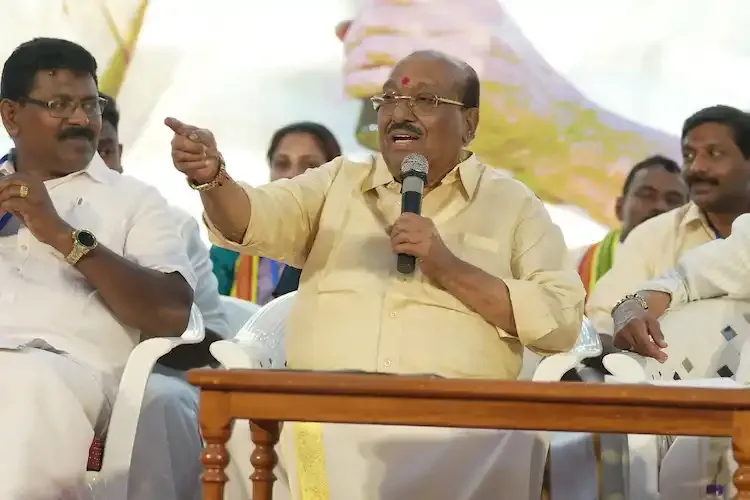
Kerala’s political landscape is witnessing a significant shift ahead of the upcoming Assembly elections following the decision by the Sree Narayana Dharma Paripalana Yogam to pursue organisational unity with the Nair Service Society. The move brings together two of the state’s most influential Hindu community organisations, marking the end of more than a decade of strained relations and setting off intense political speculation.
The leadership of the SNDP Yogam described the convergence as a “need of the hour” aimed at protecting social justice and community interests while promoting broader Hindu unity. Leaders of the NSS welcomed the initiative, calling it timely, though they reiterated that the organisation would continue to maintain political equidistance. The rapprochement comes at a sensitive moment, with Kerala heading into high-stakes Assembly elections and all major political fronts recalibrating their strategies.
Ezhavas, who form an estimated 22–23 per cent of Kerala’s population, constitute the SNDP’s core base, while Nairs, accounting for around 12–14 per cent, are represented by the NSS. Though both organisations maintain that they are social bodies rather than political actors, their influence in shaping public discourse has historically been significant. The convergence of these two blocs, therefore, has raised questions over potential shifts in voter behaviour.
For years, differences over reservation policies kept the two organisations apart. The NSS, representing a forward-caste constituency, has traditionally opposed the expansion of caste-based reservations, while the SNDP has advocated for the protection of affirmative action for backward communities. Leaders from both sides have now indicated that these disagreements are no longer central, arguing that changing political circumstances require new forms of engagement.
The unity move has also carried clear political undertones. Both organisations used the announcement to criticise the Congress leadership in Kerala, intensifying pressure on the Congress-led United Democratic Front. SNDP leaders accused the Congress of being insensitive to Ezhava concerns and alleged excessive dependence on minority-based parties. The NSS echoed similar criticism, questioning the Opposition’s consistency on secularism and political engagement with community organisations.
For the ruling Communist Party of India (Marxist), the development offers cautious relief. Ezhavas have traditionally been a strong support base for the Left, but recent elections have shown a noticeable shift of Ezhava votes towards the BJP. The Left leadership has maintained steady engagement with both SNDP and NSS in recent years, hoping to stem erosion and regain lost ground without alienating minority voters.
The Bharatiya Janata Party has openly welcomed the thaw, portraying it as a response to what it describes as appeasement politics in the state. BJP leaders believe that even limited coordination between the two organisations could influence outcomes in several constituencies, particularly in central Kerala, where Ezhava and Nair populations overlap.
However, political analysts caution against overestimating the electoral impact. Past attempts by community organisations to directly influence voting have yielded mixed results. Scholars note that a significant portion of both communities does not vote strictly along organisational lines, limiting the ability of leadership-driven alignments to translate into uniform electoral outcomes.
There is also the possibility of counter-consolidation. Observers warn that visible Hindu consolidation could push Dalits, Muslims, and other minority groups towards the Congress, potentially offsetting any gains made by the Left or the BJP. Critics argue that the alignment represents an elite-driven convergence rather than a grassroots movement.
Even if the SNDP–NSS unity does not decisively alter vote shares, it is already shaping political narratives. By intensifying criticism of the Congress and reframing debates around representation and identity, the convergence could influence the tone of the campaign in the months ahead. Whether it leads to tangible electoral gains or remains a symbolic experiment, the move stands out as one of the most consequential socio-political developments in Kerala ahead of the Assembly elections.


Conversation
Be kind and stay on topic. Comments are moderated; abuse, spam and personal attacks are removed. Report a problem