

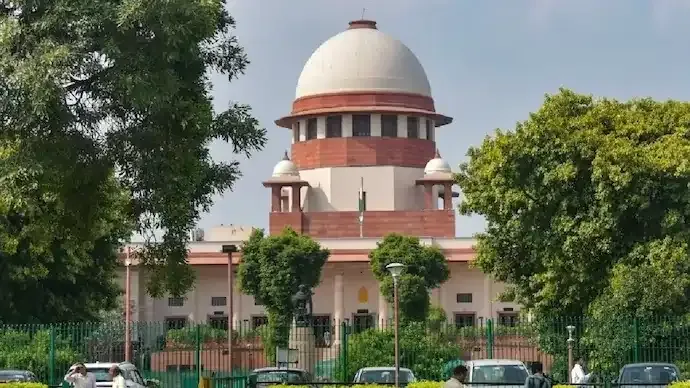

The Supreme Court has agreed to hear petitions filed by CBSE Class 12 students from Gulf countries challenging the assessment policy introduced after board examinations were cancelled in the region due to the conflict in West Asia.
A bench comprising Justices KV Viswanathan and Alok Aradhe issued notices to the Central government and the Central Board of Secondary Education (CBSE), seeking their responses to the petitions. The matter has been listed for further hearing on July 14, 2026.
Why are Gulf CBSE students challenging the assessment policy?
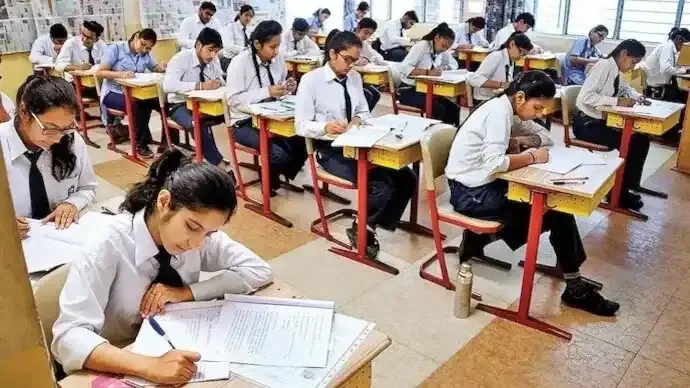
The petitions challenge CBSE's March 27 notification, which introduced a special assessment scheme for regular Class 12 students whose examinations could not be conducted in several Gulf countries because of the regional conflict.

Another petition contests the Board's June 21 notification, which prescribed a separate assessment formula for private candidates affected by the cancellation.
According to the petitioners, the evaluation formula is arbitrary and does not accurately reflect students' academic performance. They argue that the policy may place them at a disadvantage compared to students who appeared for the examinations in India.
Students seek special examinations
The petitioners have requested the Supreme Court to direct CBSE to conduct special examinations or introduce an alternative assessment mechanism that ensures parity with candidates who completed their board examinations.
They have also pointed out that CBSE has already scheduled supplementary examinations in India from July 28, but no similar examination schedule has been announced for affected students in Gulf countries.
According to the students, the absence of such an opportunity could negatively affect admissions to undergraduate programmes in India and overseas.
Relief sought before the Supreme Court
The petitions seek multiple forms of relief to ensure students do not suffer academic losses due to circumstances beyond their control.
The demands include:
- One-time compensatory grace marks.
- Special or improvement examinations.
- A "better-of-two" option allowing students to retain the higher score.
- Relaxation under the Direct Admission of Students Abroad (DASA) and Children of Indian Workers in Gulf Countries (CIWG) admission categories.
- Measures to prevent students from losing an academic year.
Background of the dispute
CBSE cancelled Class 12 board examinations in several Gulf countries earlier this year following the escalation of conflict in West Asia.
To evaluate affected candidates, the Board introduced separate assessment schemes for regular and private students. However, many students have argued that the formula lacks fairness and transparency, prompting them to seek judicial intervention.
The Supreme Court's decision could have significant implications for thousands of Indian students studying in Gulf countries who are awaiting clarity on their final scores and higher education admissions.
Key Highlights
- Supreme Court issued notices to the Centre and CBSE.
- Hearing on the petitions is scheduled for July 14.
- Students have challenged CBSE's assessment formula after exam cancellations.
- Petitioners seek special examinations and a fairer evaluation process.
- Students argue the current policy may affect college admissions in India and abroad.
Featured Snippet
The Supreme Court will hear petitions filed by Gulf-based CBSE Class 12 students challenging the Board's assessment policy after exams were cancelled due to the West Asia conflict. Students have sought special examinations, alternative evaluation methods, grace marks, and measures to protect their higher education admissions.
Conclusion
The Supreme Court's upcoming hearing on July 14 is expected to provide crucial clarity for Gulf-based CBSE Class 12 students affected by cancelled examinations. With college admissions approaching, the case could determine whether students receive alternative examinations, revised evaluation methods, or additional relief to ensure they are not academically disadvantaged.
FAQs
1. Why are Gulf CBSE students approaching the Supreme Court?
They are challenging CBSE's assessment policy introduced after Class 12 examinations were cancelled due to the conflict in West Asia, arguing that it is unfair and arbitrary.
2. When will the Supreme Court hear the case?
The matter has been listed for hearing on July 14, 2026.
3. Why were CBSE exams cancelled in Gulf countries?
The examinations were cancelled because of the conflict and security concerns in parts of West Asia.
4. What relief have the students requested?
Students have sought special examinations, grace marks, a better-of-two scoring option, relaxed admission norms, and measures to prevent the loss of an academic year.
5. What is the 'better-of-two' benefit?
It allows students to retain whichever score is higher between the assessment-based result and any future special examination.
6. What are DASA and CIWG categories?
DASA (Direct Admission of Students Abroad) and CIWG (Children of Indian Workers in Gulf Countries) are admission categories that help eligible overseas students secure seats in higher education institutions in India.
7. Why are students concerned about admissions?
They believe the current assessment formula may not accurately reflect their academic performance, affecting admissions to universities in India and abroad.
8. Has CBSE announced special exams for Gulf students?
No. While supplementary examinations have been announced in India from July 28, students say no similar examination schedule has been notified for candidates in the affected Gulf countries.





Conversation
Be kind and stay on topic. Comments are moderated; abuse, spam and personal attacks are removed. Report a problem