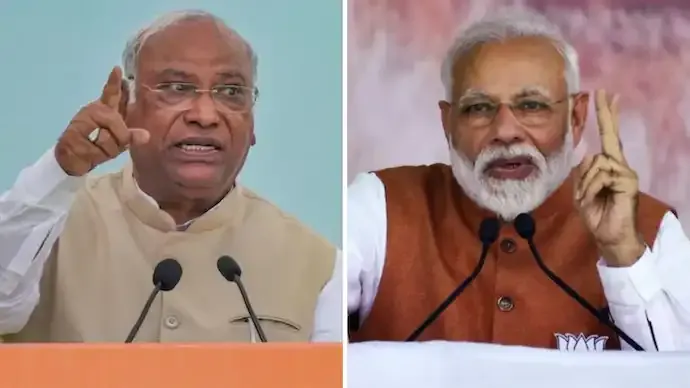
The political debate over India’s foreign policy and energy security intensified on January 6, 2026, after the Congress launched a fresh attack on Prime Minister Narendra Modi over claims that India had agreed to reduce its oil imports from Russia under pressure from the United States. The remarks come in response to statements attributed to US President Donald Trump, suggesting that New Delhi had adjusted its energy sourcing decisions following discussions with Washington.
Congress president Mallikarjun Kharge questioned the Prime Minister’s approach, alleging that India’s national interests were being compromised in the face of external influence. Kharge argued that decisions related to strategic resources such as crude oil should be guided solely by India’s economic and geopolitical priorities, not by pressure from any foreign power.
Referring to Trump’s remarks on Russian oil, Kharge claimed that he had come across an audio clip in which the US President suggested that the Indian Prime Minister listens to him and respects his views. According to Kharge, such statements raise serious concerns about India’s strategic autonomy. He asserted that if such claims were true, they would indicate undue influence over India’s sovereign decision-making.
Escalating his criticism, the Congress chief used a popular cultural reference to underline his point, suggesting that the US leadership appeared satisfied with India’s alleged compliance. He warned against what he described as an emerging tendency among powerful nations to intimidate others into aligning with their global agendas. Kharge maintained that India, as a major global player, should not appear hesitant or submissive in the face of such pressure.
Kharge further argued that energy security is a critical national issue, especially at a time when global oil markets remain volatile due to ongoing geopolitical conflicts and supply disruptions. He emphasised that affordable energy imports are essential for maintaining economic stability, controlling inflation, and supporting industrial growth. Any move perceived as limiting India’s options, he said, could have long-term consequences for the economy.
The Congress leader also questioned the broader implications of altering oil import strategies based on diplomatic considerations. He stated that India had successfully diversified its energy sources in recent years to protect itself from global shocks, and any reversal of this approach would need to be transparently explained to the public.
Sharpening his rhetoric, Kharge said the electorate did not mandate the Prime Minister to “nod” to foreign leaders, but to safeguard India’s interests on the global stage. He urged the government to take a firm stand and clearly communicate its position on Russian oil imports, dispelling speculation and restoring confidence in India’s independent foreign policy.
The controversy adds to ongoing political sparring over India’s diplomatic balancing act amid shifting global alliances. While the government has repeatedly stated that its foreign policy decisions are guided by national interest, the opposition continues to question whether recent developments reflect increasing external pressure.
As global energy politics grow more complex, the issue of Russian oil imports is likely to remain a flashpoint in domestic political debates, with calls for greater clarity and accountability from the government.
Prev Article
Markets Open Steady Amid Global Geopolitical Tensions and New RBI Lending Rules
Next Article
Pakistan ISI’s New Low: 15-Year-Old Arrested in Pathankot for Espionage Activities