Shopping cart
Your cart empty!


Your cart empty!
Terms of use dolor sit amet consectetur, adipisicing elit. Recusandae provident ullam aperiam quo ad non corrupti sit vel quam repellat ipsa quod sed, repellendus adipisci, ducimus ea modi odio assumenda.
Lorem ipsum dolor sit amet consectetur adipisicing elit. Sequi, cum esse possimus officiis amet ea voluptatibus libero! Dolorum assumenda esse, deserunt ipsum ad iusto! Praesentium error nobis tenetur at, quis nostrum facere excepturi architecto totam.
Lorem ipsum dolor sit amet consectetur adipisicing elit. Inventore, soluta alias eaque modi ipsum sint iusto fugiat vero velit rerum.
Sequi, cum esse possimus officiis amet ea voluptatibus libero! Dolorum assumenda esse, deserunt ipsum ad iusto! Praesentium error nobis tenetur at, quis nostrum facere excepturi architecto totam.
Lorem ipsum dolor sit amet consectetur adipisicing elit. Inventore, soluta alias eaque modi ipsum sint iusto fugiat vero velit rerum.
Dolor sit amet consectetur adipisicing elit. Sequi, cum esse possimus officiis amet ea voluptatibus libero! Dolorum assumenda esse, deserunt ipsum ad iusto! Praesentium error nobis tenetur at, quis nostrum facere excepturi architecto totam.
Lorem ipsum dolor sit amet consectetur adipisicing elit. Inventore, soluta alias eaque modi ipsum sint iusto fugiat vero velit rerum.
Sit amet consectetur adipisicing elit. Sequi, cum esse possimus officiis amet ea voluptatibus libero! Dolorum assumenda esse, deserunt ipsum ad iusto! Praesentium error nobis tenetur at, quis nostrum facere excepturi architecto totam.
Lorem ipsum dolor sit amet consectetur adipisicing elit. Inventore, soluta alias eaque modi ipsum sint iusto fugiat vero velit rerum.
Do you agree to our terms? Sign up
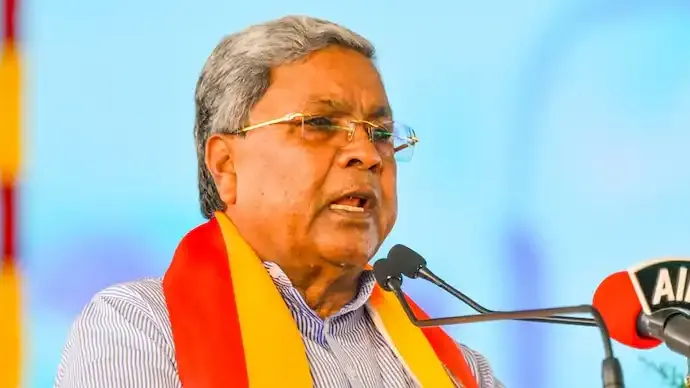
Karnataka Chief Minister Siddaramaiah has strongly opposed Kerala’s proposed Malayalam Language Bill, 2025, arguing that language promotion should not turn into coercion, especially in regions inhabited by linguistic minorities. His remarks come amid growing political friction between Karnataka and Kerala over the Bill’s proposed application in border districts such as Kasaragod.
The Malayalam Language Bill, tabled by Kerala’s Left Democratic Front government, seeks to make Malayalam the compulsory first language in schools, administration, and public communication. A key point of contention is its proposed application even in Kannada-medium schools located in Kerala’s border areas, where Kannada-speaking communities have historically lived, studied, and worked.
In a statement posted on X, Siddaramaiah said India’s unity is built on respect for linguistic diversity and the constitutional right of citizens to learn in their mother tongue. He described the proposed law as a “coercive approach” that undermines the cultural identity and educational choices of linguistic minorities.
“For children of linguistic minorities, language is not merely a subject. It is identity, dignity, access, and opportunity,” the Chief Minister said. He warned that forcing a single first-language choice would place unnecessary academic pressure on students, reduce confidence, restrict language options, and weaken minority-run educational institutions.
Highlighting the situation in Kasaragod, Siddaramaiah noted that generations of residents in the border belt have pursued education in Kannada-medium schools and continue to use Kannada in daily life. Local representatives, he said, have consistently indicated that a large majority of families prefer Kannada as the medium of instruction and script. “This is not a threat to Malayalam,” he added, “but a reflection of India’s plural and inclusive culture.”
The Karnataka Chief Minister cited constitutional safeguards, pointing to Articles 29 and 30, which protect the rights of linguistic minorities, and Articles 350A and 350B, which mandate facilities for instruction in the mother tongue and oversight of minority language protections. Reiterating his stance, he said, “Promotion cannot become an imposition,” and warned that Karnataka would oppose the Bill through all constitutional means if it is enacted in its present form.
Parallelly, the Karnataka Border Areas Development Authority said that Rajendra Vishwanath Arlekar has assured a detailed review of the Bill after a delegation submitted a memorandum seeking its reconsideration. The Authority described the proposed law as unconstitutional and contrary to the interests of Kannada-speaking minorities, noting that a similar Bill had earlier been returned by the President.
The issue has also triggered a political slugfest, with BJP leader R Ashoka accusing the Congress of maintaining double standards on linguistic rights. In a social media post, Ashoka questioned the silence of Priyanka Gandhi, alleging that while she is vocal on issues affecting Kerala, she remains quiet when Kannadigas face discrimination in border regions.
Ashoka argued that linguistic freedom and humanitarian concerns should not be selectively applied and accused Congress leaders of prioritising political convenience over the cultural identity of Kannadigas. He also claimed that Karnataka’s interests had previously been compromised on inter-state issues and warned that public silence on the language question was being closely watched.
The Malayalam Language Bill has been referred to a subject committee in Kerala, but opposition from Karnataka has turned it into a broader debate on federalism, linguistic rights, and constitutional balance. As the political rhetoric intensifies, the issue is likely to remain a flashpoint in inter-state relations in the coming weeks.
59
Published: Jan 09, 2026

All India Story is your trusted source for comprehensive and up-to-the-minute news coverage across India. Bringing you the latest on politics, business, technology, entertainment, sports, and more, we are dedicated to keeping you informed with accurate, engaging, and insightful stories from every corner of the nation.