

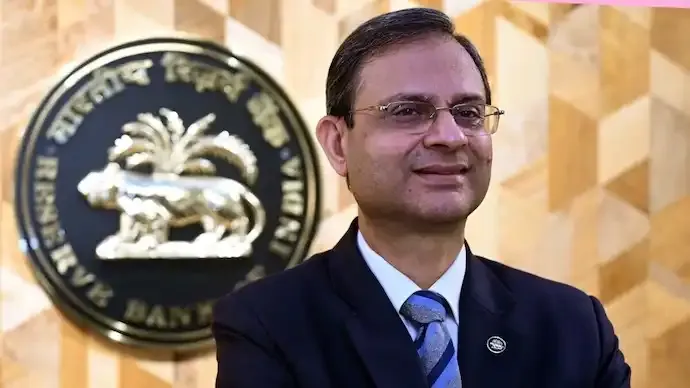

The Reserve Bank of India has clarified its approach to managing the Indian rupee after the currency weakened to around ₹95 against the United States dollar.
RBI Governor Sanjay Malhotra stated that the central bank does not aim to maintain any fixed exchange rate level and will instead allow the currency to move based on market forces.
Official website: https://www.rbi.org.in

Focus on Managing Volatility, Not Fixing Rates
The RBI has reiterated that its primary objective is to control excessive volatility rather than dictate the direction of the rupee.
Key points from the RBI’s stance:
- No fixed exchange rate target
- Market-driven currency movement
- Intervention only during sharp fluctuations
This approach aligns with India’s broader policy of maintaining a flexible exchange rate system.
Rupee Hits Record Low Amid Global Pressures
The Indian rupee recently touched a record low of around ₹95 per US dollar and declined by more than 4% during the March quarter.
The depreciation has been driven by several global factors, including:
- Rising crude oil prices
- Global economic uncertainty
- Capital outflows and currency pressures
These external factors continue to influence currency movements.
Global Factors Driving Currency Movement
According to the RBI, the rupee’s movement is largely influenced by global developments rather than domestic policy alone.
Key external drivers include:
- Oil price fluctuations
- Geopolitical tensions
- Changes in global capital flows
As a result, the central bank prefers a balanced approach instead of aggressive intervention.
What RBI Intervention Means
While the RBI does not target a specific rate, it may intervene in the forex market to:
- Prevent excessive volatility
- Maintain orderly market conditions
- Protect economic stability
Such interventions are typically limited and aimed at smoothing sudden fluctuations.
Impact on Economy and Markets
A weaker rupee can have mixed effects on the economy:
Positive impact:
- Boosts exports by making them more competitive
Negative impact:
- Increases import costs, especially crude oil
- Adds pressure on inflation
The RBI’s approach aims to balance these effects while ensuring overall economic stability.
Outlook for Rupee Movement
The RBI is expected to continue monitoring global developments closely. Currency movements will likely remain influenced by external factors, with the central bank stepping in only when necessary.
This strategy reflects a cautious and flexible approach to managing one of the key indicators of economic health.






Conversation
Be kind and stay on topic. Comments are moderated; abuse, spam and personal attacks are removed. Report a problem