
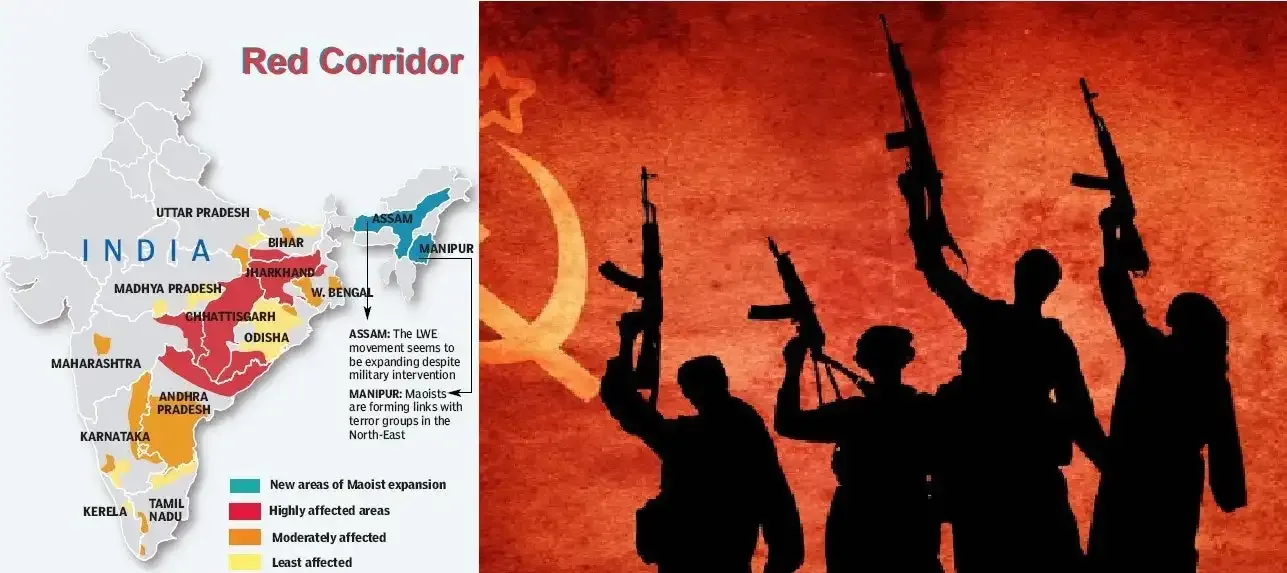
For decades, large parts of central and eastern India were affected by Naxal insurgency, forming what was widely known as the Red Corridor. This belt once stretched across multiple states, with insurgents aiming to build a continuous zone of influence from southern India to regions near Nepal.
At its peak, the situation on the ground was extremely challenging. Remote districts remained cut off, roads were frequently targeted with explosives, and governance struggled to reach deeply forested areas. The idea of a Naxal-free India seemed distant and difficult to achieve.
Shift in Ground Reality
In recent years, this long-standing security challenge has seen a major turnaround. Regions like Bastar, Bijapur, and Abujhmad—once considered the core operational zones of Maoist groups—have witnessed significant changes.
Sustained security operations combined with improved coordination between central and state forces have played a major role in reducing insurgent activity. Areas that were once inaccessible are now seeing better connectivity and administrative presence.
Role of Intelligence and Security Strategy
One of the major factors behind this shift has been the strengthening of intelligence networks. Security forces have adopted more precise and coordinated strategies, allowing them to target insurgent groups effectively.
Continuous operations in key regions have weakened the organizational structure of Maoist networks. Several strongholds have been dismantled, and the movement’s operational capacity has significantly declined over time.
Local Engagement and Development Push
Apart from security measures, efforts to engage local communities have also contributed to this transformation. Development initiatives such as road construction, access to healthcare, education, and employment opportunities have helped reduce local support for insurgent activities.
By improving governance and addressing basic needs, authorities have been able to build trust among residents in previously affected areas.
Abujhmad: A Symbolic Breakthrough
The region of Abujhmad, once seen as an impenetrable stronghold, represents a key milestone in this effort. Increased presence of security forces and administrative outreach has helped bring this area into the mainstream.
This progress reflects a broader shift in how the challenge of Naxalism is being addressed—not just through force, but through a balanced approach combining security and development.
Challenges That Still Remain
Despite significant progress, some pockets of Naxal activity continue to exist. Remote regions with difficult terrain still pose operational challenges. Additionally, underlying socio-economic issues such as poverty, lack of infrastructure, and limited opportunities remain areas of concern.
Experts believe that while the influence of Naxalism has reduced, sustained efforts will be necessary to ensure long-term stability and prevent any resurgence.
Looking Ahead
India’s approach towards tackling Naxalism has evolved over time, moving from reactive measures to a more comprehensive strategy. The decline of the Red Corridor marks an important milestone, but continued focus on development, governance, and security will be crucial in maintaining this progress.






Conversation
Be kind and stay on topic. Comments are moderated; abuse, spam and personal attacks are removed. Report a problem